

More news on this day
Egypt is joining Morocco, Mauritius, Kenya and South Africa at the forefront of a powerful new shift in global tourism, as fresh data shows African destinations smashing visitor records and competing head to head with the world’s most established travel markets.
Get the latest news straight to your inbox!
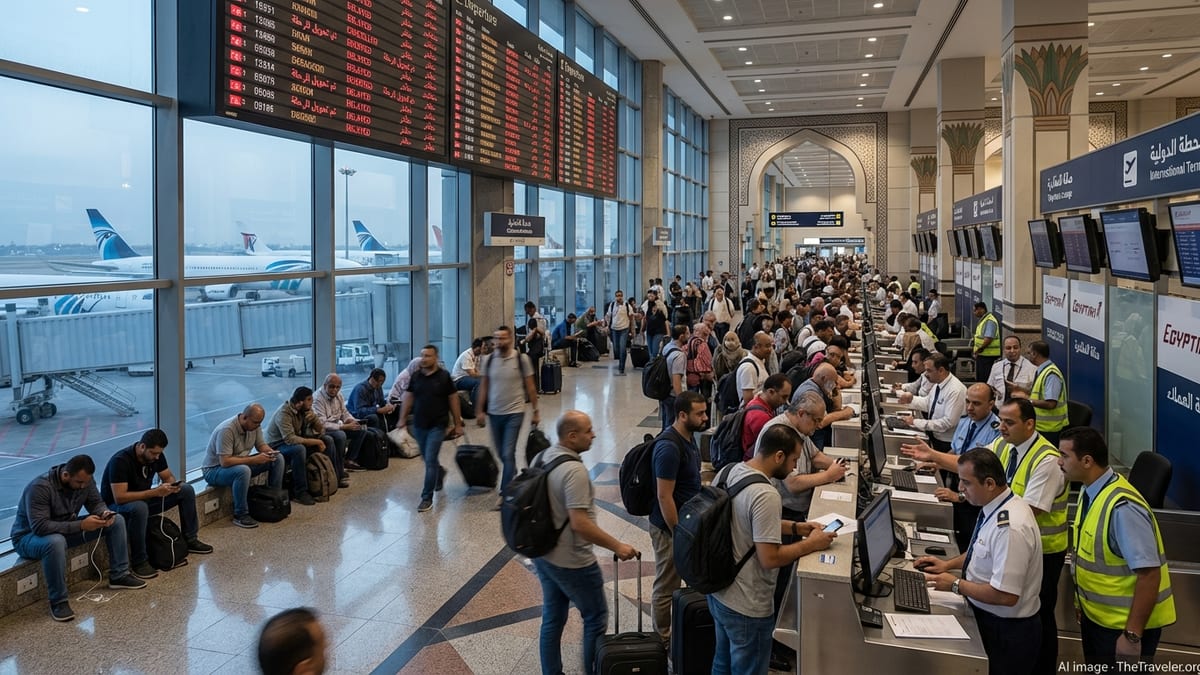
Record-Breaking Arrivals Signal Africa’s Tourism Moment
Across Africa, a wave of new visitor records is redrawing the global tourism map, with Egypt now firmly aligned alongside Morocco, Mauritius, Kenya and South Africa as one of the continent’s headline destinations. Publicly available information from international tourism bodies and government releases points to double-digit growth in arrivals across many of these markets since the pandemic, outpacing the global average and helping to anchor a broader resurgence in long-haul travel.
Morocco has emerged as Africa’s most visited destination, with the Ministry of Tourism reporting 17.4 million visitors in 2024, a rise of about 20 percent on 2023 and well above pre-pandemic levels. The country’s performance has been highlighted in recent United Nations tourism rankings and has helped position North Africa as a serious rival to traditional Mediterranean hotspots. Analysts note that Morocco’s roadmap targeting tens of millions more visitors by 2030 is setting a benchmark for structured, long-term destination planning across the continent.
Egypt is now moving in similar territory. Government figures and economic assessments show that the country welcomed about 14.9 million international visitors in 2023, its highest total at the time, followed by an estimated 15.7 million in 2024 and further gains into 2025. Sector analysis suggests that arrivals climbed again to around 19 million in 2025, underscoring Egypt’s rapid recovery from the pandemic shock and its emergence as one of the world’s fastest-growing major tourism destinations.
Further south, Mauritius, Kenya and South Africa are adding scale and diversity to this African tourism surge. South Africa continues to receive several million international visitors annually, acting as a primary gateway for long-haul travelers to the continent, while Mauritius has rebuilt its market as a high-yield Indian Ocean destination and Kenya has consolidated its status as East Africa’s leading safari hub. Together with Egypt and Morocco, these countries are now widely cited in industry reports as the core powerhouses shaping Africa’s tourism growth narrative.
Egypt’s Tourism Strategy Targets Global Top Tier
Egypt’s inclusion among Africa’s leading tourism powerhouses is underpinned by a deliberate strategy to expand capacity, diversify products and lengthen visitor stays. Government communications and multilateral economic reviews indicate that tourism has been prioritized as a pillar of national growth, with investment flowing into airports, roads and hospitality infrastructure from the Mediterranean coast to the Red Sea and Upper Egypt.
Recent years have seen a strong focus on easing access through expanded visa options, digital platforms and broader airline connectivity. According to sector briefings and investment notes, Egypt aims to attract around 30 million foreign visitors annually by the end of the decade, effectively doubling recent peaks. Forecasts from international risk and credit firms point to continued growth in arrivals and overnight stays through 2026, supporting that ambition.
At the product level, Egypt is moving beyond its traditional image as a purely heritage destination. While the pyramids and Nile cruises remain central, tourism planners are promoting the Red Sea as a global diving and beach destination, spotlighting desert adventure routes, wellness retreats and cultural festivals designed to pull visitors beyond the classic Cairo and Luxor circuit. The long-anticipated full opening of the Grand Egyptian Museum, referenced frequently in government and media coverage, is expected to reinforce the country’s position on the world cultural tourism map.
This acceleration is not without challenges. External shocks, including regional tensions and shifting travel advisories, continue to test the resilience of Egypt’s visitor economy. Nonetheless, industry data shows that upgraded travel guidance from several key outbound markets in 2024 and 2025, reflecting improved security perceptions in main tourist areas, has supported bookings and encouraged tour operators to scale up capacity into Egyptian resorts and cultural hubs.
Morocco and South Africa Set Benchmarks for Scale and Diversity
Morocco and South Africa remain the reference points for scale and product diversity in African tourism, providing useful comparisons for Egypt’s newly energized push. Morocco’s record of 17.4 million tourists in 2024 placed it well ahead of its pre-2019 performance and secured its status as the most visited African destination by international arrivals. Tourism authorities there are working to extend stays and increase average spending by blending city breaks, desert circuits, coastal resorts and mountain adventure into cross-regional itineraries.
Publicly available tourism strategies show that Morocco has aligned its sector roadmap with major aviation investments and a strong branding campaign built around safety, accessibility and cultural depth. International tourism organizations have also selected the country as a host for thematic offices and high-level industry events, citing its role as a platform for tourism investment across the wider continent.
South Africa, meanwhile, continues to dominate the conversation around African city, wine and wildlife tourism. Before the pandemic it routinely ranked among the top global long-haul destinations, and recent arrivals data indicate a steady rebuilding of that position. Johannesburg and Cape Town serve as regional air hubs feeding safari circuits in Kruger and surrounding reserves, while the Western Cape’s wine routes, coastal drives and urban experiences give the country an unusually broad product mix.
Analysts point out that South Africa’s and Morocco’s experiences carry important lessons for their continental peers, particularly around marketing, air access and product diversification. Their trajectories suggest that large African destinations can compete directly with southern Europe, the Caribbean and parts of Asia for high-value international travelers, especially when supported by stable policies and coordinated public and private investment.
Kenya and Mauritius Punch Above Their Weight in Premium Segments
Kenya and Mauritius offer a different but complementary model, showing how relatively smaller destinations can drive outsized regional impact by focusing on premium niches. Kenya has reinforced its image as East Africa’s gateway, with tourism ministry reports and independent economic data showing international arrivals reaching nearly 2 million in 2023 and rising further in 2024. Earnings from these visitors ran into the billions of dollars, reflecting both higher per-trip spending and strong demand for wildlife and coastal experiences.
In Kenya, flagship products include the Maasai Mara’s world-famous migration season, the beaches of the Indian Ocean coast and a growing circuit of high-end conservancies that blend conservation finance with luxury hospitality. Recent reports, however, have also highlighted concerns about the environmental and social pressures linked to rapid tourism expansion, including strain on wildlife corridors and affordability challenges for local residents in prime destinations.
Mauritius has taken a more compact but equally targeted approach, positioning itself as a high-end island escape for European, African and Asian markets. Visitor numbers surpassed one million in recent reporting periods, a significant figure given the country’s small size, while tourism’s share of GDP and employment remains among the highest in the region. Public statements from the Mauritian authorities emphasize sustainability, marine protection and upmarket resort development as core pillars of the island’s value proposition.
Both Kenya and Mauritius are increasingly integrated into multi-country African itineraries marketed by international tour operators. Travel trade analysis shows rising interest in combining classic safari or beach stays with short breaks in cities like Cairo, Marrakech or Cape Town, tying these powerhouses together in the eyes of long-haul travelers and airline planners.
Shifting Global Flows and the Rise of an African Travel Corridor
The combined performance of Egypt, Morocco, Mauritius, Kenya and South Africa is reshaping how airlines, tour operators and digital platforms design global travel networks. Airline schedules and tourism investment reports indicate that carriers are adding capacity into North and East Africa to capture demand from Europe, the Middle East, Asia and the Americas, often using African hubs as connectors between regions.
Industry data suggest that Africa still accounts for a relatively small share of global arrivals compared with Europe or Asia, but the growth rates achieved by these leading destinations are drawing sustained attention. International tourism barometers highlight that several of them have not only recaptured pre-pandemic volumes but moved significantly beyond, at a time when some competing regions remain closer to recovery rather than expansion.
The rise of these five powerhouses is also encouraging broader regional cooperation. Recent African Union and United Nations Economic Commission for Africa papers on aviation and tourism have stressed the importance of aligning air liberalization, visa regimes and investment frameworks to unlock an integrated African travel corridor. In these studies, Egypt, Morocco, Mauritius, Kenya and South Africa feature prominently as anchors for intra-African and intercontinental routes.
For travelers, the implications are increasingly visible. Multi-stop African journeys that combine Pharaonic sites with Atlantic surf towns, Indian Ocean lagoons, wildlife reserves and cosmopolitan cities are being promoted across mainstream travel media and booking platforms. As Egypt steps decisively into the same bracket as Morocco, Mauritius, Kenya and South Africa, Africa’s role in the global tourism system looks set to grow from niche to indispensable in the years ahead.