

More news on this day
Egypt’s holiday industry is being reshaped by an energy crunch that has brought summer power cuts, strict conservation rules and rising fuel costs, forcing hotels and tour operators to rethink how they keep visitors cool, connected and comfortable.
Get the latest news straight to your inbox!
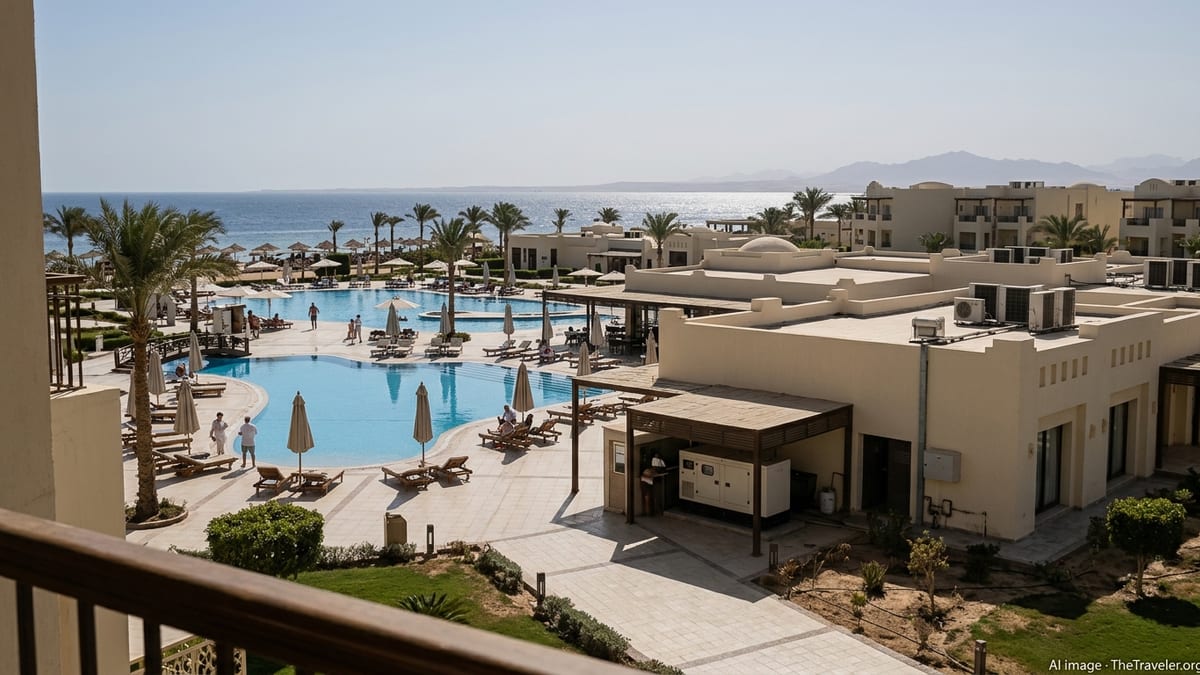
Blackouts Cast a Shadow Over a Tourism Boom
Egypt has been enjoying one of its strongest tourism recoveries on record, with publicly available data indicating close to 19 million international arrivals in 2025, up sharply from the post-pandemic years. Hotel pipelines in Red Sea resorts such as Hurghada, Sharm El Sheikh and Marsa Alam were expanded on the assumption that visitor numbers would keep climbing.
At the same time, the country has slipped into an energy squeeze. A combination of surging electricity demand, intense summer heat, rising domestic gas consumption and weaker gas output has left the power system under strain. Reports from 2023 and 2024 described rolling blackouts that affected households and businesses across many cities, and analysis by international agencies suggests the underlying imbalance between supply and demand has remained difficult to close.
By 2025, the government had moved to bridge what officials describe as a gap between available generation and peak demand, including the import of additional liquefied natural gas cargoes and fast-tracking renewable projects. Yet for the tourism sector, the legacy of scheduled outages and the prospect of more extreme heat seasons has created a new operational risk that intersects directly with visitor expectations.
Travel market overviews note that while headline arrival numbers remain robust, the energy constraints and their impact on basic services are emerging as a factor that tour operators and investors now weigh alongside security, pricing and global demand trends.
Hotels Turn to Generators as Grid Struggles
In the Red Sea governorate, resort developers have been vocal about the limits of the existing power network. Coverage from local business media in 2025 highlighted warnings from the Marsa Alam Investors Association that thousands of new hotel rooms could not be fully brought online without upgrades to the regional grid. Some existing properties were reported to be relying heavily on diesel generators to keep air conditioning and desalination plants running during periods of weak supply.
Generators provide a lifeline for upscale hotels that market uninterrupted comfort, but they come with steep costs. Diesel fuel is more expensive than grid power, ties operations to volatile global energy prices and complicates efforts to position Egypt as a low-carbon destination. Industry observers note that the widespread use of private generators in resort zones undercuts national goals to curb emissions and expand renewables in line with climate commitments.
Smaller guesthouses and budget accommodations are more exposed. Without the capital to install large backup systems, these businesses can struggle to guarantee power during peak heat, affecting everything from refrigeration and internet connectivity to basic lighting and fans. This creates a two-tier experience in which high-end resorts shield guests from the grid’s fragility, while more modest properties have less room to maneuver.
Publicly available commentary from travelers suggests that major tourist hubs have generally maintained stable electricity within hotel compounds, but reports of intermittent cuts in surrounding neighborhoods underscore how closely tourism quality is tied to the resilience of local infrastructure.
Conservation Rules Reach Into Holiday Spaces
To stabilise the system, Egypt has rolled out a series of nationwide energy conservation measures. A plan announced in 2025 called for stricter controls on air conditioning in public facilities, rules on lighting for commercial signage and streets, and greater use of energy-saving bulbs in government buildings. Complementary policies target more efficient cooling technologies in buildings and industry, including hotels.
These measures are gradually reshaping the tourism environment. Resorts and city hotels face mounting pressure to keep thermostats at higher set points, invest in more efficient chillers and insulation, and scale back non-essential lighting. In practice, that can mean warmer lobbies, dimmer façades at night and tighter management of air conditioning in common areas outside peak occupancy times.
For visitors used to heavily air-conditioned spaces, the shift can be noticeable, especially during heatwaves. Tour operators are beginning to advise clients to be prepared for higher outdoor temperatures and occasional adjustments to indoor comfort levels. Some packages now foreground early-morning and evening activities to avoid midday heat when cooling loads and grid stress are highest.
Policy documents from international organisations working with Egypt also point to a broader push for “sustainable cooling” that goes beyond short-term rationing. Over time, stricter building codes, low-energy appliances and rooftop solar could help ease pressure on the grid, but retrofitting the existing hotel stock along the Nile and Red Sea will take sustained investment.
Investment Plans Meet On-the-Ground Constraints
Egypt’s medium-term development plans assign a central role to both tourism and the energy sector. The national budget framework for 2025 and 2026 envisages tens of billions of Egyptian pounds in public investment for electricity and renewable energy, alongside large sums earmarked for urban development and water infrastructure. The ambition is to support economic growth while improving quality of life in fast-growing cities and resort corridors.
Analyses by multilateral institutions and research bodies, however, note that tariffs do not yet fully recover the cost of power generation and grid upgrades. This limits the financial space for rapid expansion of capacity and modernisation of networks in areas that host energy-intensive resorts. While renewables already play a growing role in Egypt’s generation mix, experts point out that new plants, transmission lines and storage will need to keep pace with rising demand from air conditioning, desalination and electrified transport.
Energy-focused market reports published in early 2025 highlight that Egypt’s goal of sourcing at least 40 percent of its electricity from renewables by 2030 remains achievable but will require strong private sector participation. For hotel and resort investors, this is prompting interest in on-site solar, battery storage and efficiency retrofits that can hedge against future grid instability and higher tariffs.
Sector observers say that how quickly these investments materialise will influence Egypt’s ability to keep adding hotel capacity without repeating the cycle of shortages and emergency measures that characterised the summers of 2023 and 2024.
Holidaymakers Adjust Expectations as Sector Adapts
For prospective visitors, the energy situation in Egypt is becoming another practical consideration alongside visa rules, insurance and regional security. Travel advisories from several countries continue to describe Egypt as a major tourism destination while drawing attention to high summer temperatures and occasional disruptions to essential services, including electricity, in some regions.
Tourism operators report that questions about heat, power cuts and hotel backup systems are appearing more frequently in customer communications, particularly for families and older travelers. Many package providers now reassure clients that established resorts typically maintain continuous power, while also recommending that guests carry backup chargers, confirm air conditioning details when booking and plan sightseeing during cooler times of day.
The evolving energy landscape is also nudging the sector toward more climate-aware marketing. Campaigns that once focused almost exclusively on year-round sunshine and low prices increasingly reference sustainability credentials, such as energy-efficient room designs, solar installations and certifications for green operations. This aligns with trends in key European source markets, where tour operators are under pressure to demonstrate that their products are compatible with emission-reduction goals.
As Egypt works to stabilise its power system and expand renewable capacity, its holiday industry is likely to keep operating in a constrained energy environment. How effectively hotels, resorts and policymakers adapt to those limits will shape both visitor experiences and the long-term competitiveness of one of the country’s most important sources of foreign currency.