

More news on this day
Eindhoven Airport in the southern Netherlands will close to all air traffic for several months in 2027 as part of an extensive infrastructure overhaul, a move set to disrupt low cost and regional travel across the Benelux while paving the way for a more modern, higher capacity gateway.
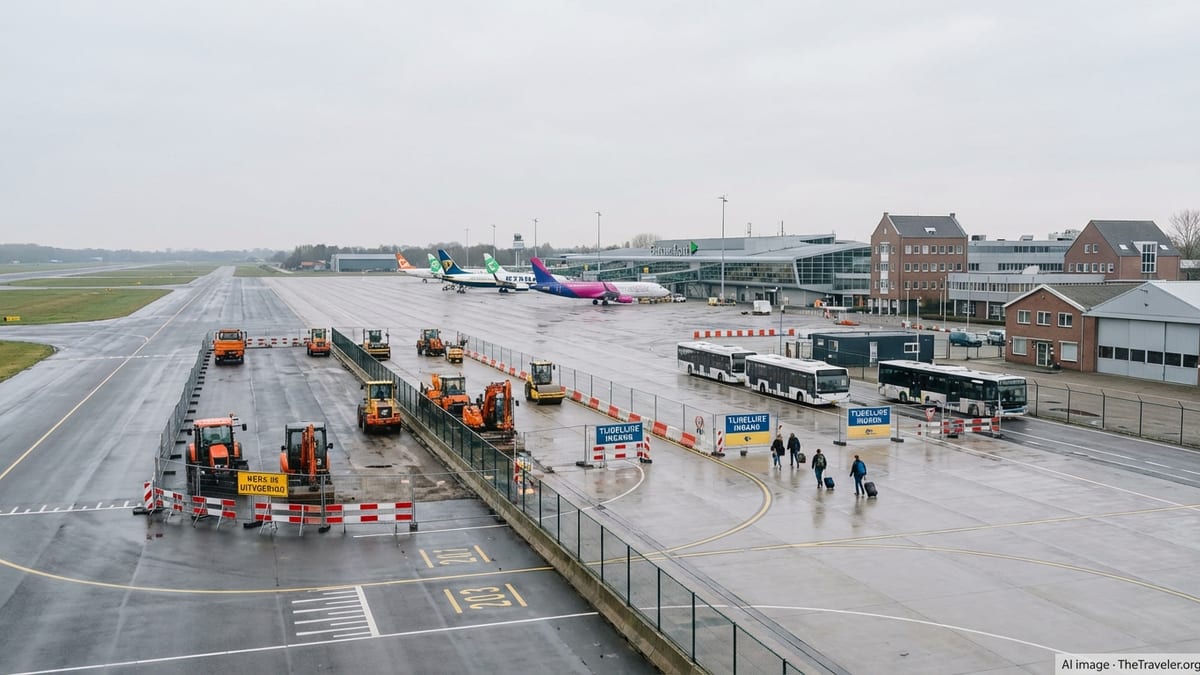
Runway Works Force Months-Long Shutdown
Airport and aviation industry sources confirm that Eindhoven will suspend all civil operations between 1 February and 19 July 2027 to allow for major airside construction. The airport, which serves as a key base for Ryanair, Transavia and Wizz Air, currently handles more than 300 scheduled departures each week, primarily to leisure destinations across Europe. Closing the airport completely for nearly six months is seen as the only way to deliver the works safely and within a predictable timeframe.
The core of the project is a full resurfacing of the single runway, which has reached the point where piecemeal night closures and short maintenance windows are no longer sufficient. Engineers will remove and replace the runway surface, upgrade drainage and strengthen load bearing layers to accommodate intensive narrowbody traffic and occasional military operations from the co located Royal Netherlands Air Force base.
In parallel, the airport will construct a new parallel taxiway to ease congestion on the existing layout. Today, aircraft often need to backtrack on the runway, adding to delays and limiting capacity during peak hours. A full length taxiway will allow arrivals and departures to move more efficiently between apron stands and the runway, cutting ground times and reducing fuel burn.
The project also includes the installation of a Category III instrument landing system. This advanced landing aid will enable aircraft to operate in much lower visibility than is currently possible, an important step for an airport that frequently experiences fog and low cloud in winter months. Combined with updated lighting and navigation infrastructure, the new system is expected to improve reliability and reduce weather related diversions once operations resume.
Terminal Expansion and Passenger Experience Upgrades
While the runway and taxiway dominate the construction timetable, Eindhoven Airport is also using the 2027 shutdown to push ahead with terminal expansion and interior reconfiguration. Plans call for enlarging the departures and arrivals areas, adding new security lanes equipped with more efficient scanning technology and expanding gate and seating capacity to relieve crowding during busy holiday periods.
Security lanes are expected to be upgraded to newer scanning systems that allow passengers to keep liquids and electronics inside their bags, mirroring changes underway at larger European hubs. This shift should shorten queues and create a smoother flow through the central search area, a persistent pinch point during peak summer operations at Eindhoven.
Additional work in and around the terminal is likely to include improvements to baggage handling, more flexible boarding gate layouts and incremental upgrades in retail and food and beverage areas. The goal, according to Dutch aviation planners, is to bring the airport’s facilities in line with the growth it has experienced over the past decade, during which low cost carriers have turned the regional airfield into a major leisure gateway.
Local stakeholders in the Eindhoven region have long argued that any capacity growth must be balanced against noise, emissions and quality of life for surrounding communities. The overhaul will therefore be closely watched by municipalities and resident groups that sit on the airport’s consultation bodies, which focus on liveability and sustainable development around the airfield.
Disruption for Low Cost Travelers Across the Region
The 2027 closure will have a disproportionate impact on budget conscious travelers from the southern Netherlands, northern Belgium and western Germany, many of whom rely on Eindhoven as a convenient alternative to Amsterdam Schiphol. Leisure routes to Spain, Italy, Eastern Europe and the Mediterranean, as well as popular city breaks, will need to be retimed, relocated or temporarily suspended while the runway is out of service.
Ryanair, Transavia and Wizz Air will be forced to redraw their Benelux networks for the first half of 2027. Some routes are likely to be shifted to other Dutch airports where slots are available, while others may move to Belgian or German fields that can absorb additional low cost traffic. Airlines will also face complex crew and aircraft planning challenges, as Eindhoven based planes and staff must be repositioned during the shutdown.
Travel agencies and online booking platforms expect a wave of rebookings and schedule changes once carriers publish their adjusted summer 2027 timetables. Passengers who typically plan early will be encouraged to pay close attention to departure airport details and to allow extra time for surface travel to alternative gateways. Insurance providers, meanwhile, may see elevated demand for policies that cover schedule disruptions linked to infrastructure works.
The Royal Netherlands Air Force, which uses Eindhoven as a strategic transport and tanker hub, will also need to relocate operations during the works. Military planners are expected to distribute flying to other Dutch air bases and possibly to partner facilities abroad, although precise arrangements have not yet been detailed publicly.
Key Alternatives: Schiphol, Rotterdam and Regional Gateways
For passengers based in or near Eindhoven, Amsterdam Schiphol will be the most obvious alternative during the 2027 closure. Though farther away, Schiphol offers a vastly larger network of European and intercontinental destinations, along with frequent rail connections from Eindhoven and other Brabant cities. However, its status as a congested hub means securing low cost fares or short haul capacity at peak times may be challenging.
Rotterdam The Hague Airport, another regional field with a strong focus on leisure routes, is likely to absorb some displaced traffic, particularly to Mediterranean sun destinations. Its more compact terminal and smaller route map will appeal to travelers prioritizing simplicity, though capacity limitations could restrict the number of flights that can be relocated there from Eindhoven.
Passengers in the border areas of the Netherlands, Belgium and Germany may also turn to airports such as Maastricht Aachen, Brussels Charleroi, Brussels Airport, Düsseldorf and Weeze, all of which have established low cost or charter operations. For some routes, especially those served by a single carrier from Eindhoven, airlines may choose to maintain presence in the regional market by shifting flights to one of these nearby gateways for the duration of the works.
Surface transport links will have a significant influence on which alternatives prove most popular. Rail and motorway connections from Eindhoven to Amsterdam, Rotterdam, Brussels and Düsseldorf are relatively strong, but journey times and ticket prices will vary. Travel experts recommend factoring in total door to door time rather than simply comparing flight durations when assessing substitute routes for 2027.
How Travelers Can Prepare for the 2027 Shutdown
With the closure dates already announced, frequent users of Eindhoven Airport have nearly a year to adjust their plans. Aviation analysts suggest that travelers first identify which of their regular routes may be affected in the February to July 2027 window, then map out potential alternatives from other airports that match their budget and scheduling needs.
Passengers who prefer Eindhoven for its compact size and quick processing times may find it worth traveling slightly farther by train or car to similarly sized airports rather than automatically defaulting to a large hub. Monitoring airline announcements over the next 12 to 18 months will be essential, as carriers progressively finalize and publish revised summer schedules.
Travel planners also advise allowing additional time for connections, particularly for itineraries that combine low cost flights with separate rail or bus segments. During the transition, a conservative approach to transfers can help mitigate the risk of missed departures due to heavier traffic on alternative routes or unfamiliar airport layouts.
Once the works are completed and Eindhoven reopens in July 2027, passengers can expect a more resilient airport with upgraded safety margins, better bad weather performance and a terminal that is closer aligned with long term growth in regional demand. For now, however, the focus for travelers is on navigating a disruptive but time limited closure that underscores the scale of Europe’s wider airport modernisation drive.