

Emergency medical care is a critical consideration for any expatriate evaluating the United Arab Emirates as a work or family relocation destination. The UAE offers comparatively advanced emergency services and modern hospital infrastructure, but access, costs, and procedures differ from many expats’ home systems. Understanding how emergency care works in practice helps prospective residents assess personal risk tolerance, insurance adequacy, and everyday preparedness before committing to a move.
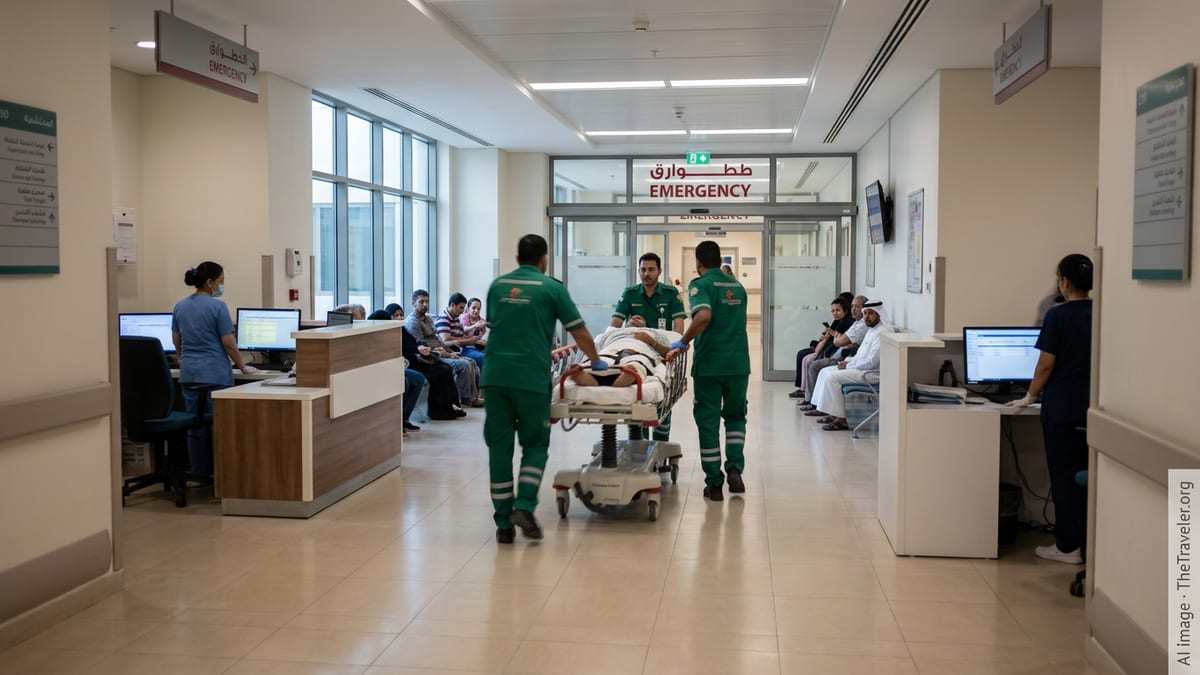
Emergency Medical System Overview in the UAE
The UAE operates a centralized emergency response system with short, three-digit numbers for all critical services. Medical emergencies are typically reached either by calling 999, which connects to the police and can dispatch all emergency services, or 998, which connects directly to ambulance services in most emirates. These lines are staffed 24/7 and can generally support callers in both Arabic and English, which is important for expatriate residents.
Ambulance provision is primarily a government function, delivered through entities such as the Dubai Corporation for Ambulance Services in Dubai and National Ambulance or local health authorities in Abu Dhabi and the northern emirates. These providers operate modern fleets that include standard ambulances and, where necessary, specialized units and air ambulances for severe trauma or remote incidents. Response time targets are often in the range of a few minutes for urban callouts, and anecdotal reporting from residents suggests that response is generally rapid in major cities.
Emergency departments are widely available across the country in both government and private hospitals. In practice, expatriates may be transported by ambulance to the nearest appropriate government facility, but many also access emergency departments directly at private hospitals, especially in large cities. The overall system is designed to stabilize patients first and address payment and insurance administration after initial life-saving care.
For relocation planning, the key implication is that core emergency medical infrastructure is robust in urban areas such as Dubai, Abu Dhabi and Sharjah. However, expats living in more remote communities should verify the nearest emergency-capable hospital, typical travel times, and any on-site clinic capabilities, as these factors materially affect real-world access in serious incidents.
Calling an Ambulance and On-Scene Care
In a medical emergency, expatriates are expected to contact emergency services via 999 or 998 rather than drive themselves unless explicitly advised otherwise. Call handlers typically ask for the caller’s location, nature of the emergency, level of consciousness, breathing status and any known underlying conditions. Location accuracy is especially important in high-rise neighborhoods and new developments, so expats should be familiar with their building name, community, and nearby landmarks.
Upon arrival, ambulance crews generally consist of trained paramedics or emergency medical technicians who can provide advanced first aid, oxygen therapy, cardiopulmonary resuscitation, and basic trauma management. Ambulances are equipped to deliver pre-hospital stabilization but definitive treatment is always provided in hospital settings. For expatriates used to systems where non-urgent ambulance use is discouraged or chargeable, it is important to understand that in the UAE emergency ambulance deployment is intended for time-critical or potentially serious conditions, including suspected heart attacks, strokes, major trauma, breathing difficulties and severe allergic reactions.
There has been ongoing public discussion about whether ambulance transport itself is charged separately or funded by the government. The prevailing pattern is that emergency ambulance response is either free at the point of use or low cost for residents, with charges more likely to be recovered indirectly through hospital billing or insurance where applicable. However, regulations also allow for fee schedules for ambulance services, particularly for non-residents or for inter-emirate transfers. As a result, expats should not assume all ambulance use is cost-free in every scenario, even if no payment is requested at the scene.
For those relocating with elderly relatives or individuals with chronic cardiac or respiratory conditions, it is prudent to confirm in advance how local ambulance services recognize do-not-resuscitate orders, advance directives and existing medical devices, and to keep written summaries of medical histories accessible for paramedics.
Emergency Departments, Triage and Care Pathways
On arrival at a hospital emergency department in the UAE, patients are typically triaged by nursing staff who assess vital signs, symptoms and injury severity. Cases are categorized into multiple priority levels, with life-threatening emergencies such as cardiac arrest, severe trauma or respiratory failure seen immediately, while minor injuries or non-urgent complaints may wait considerably longer during busy periods. This prioritization is similar to many Western systems and applies regardless of nationality.
Registration usually occurs soon after arrival unless the patient is critically ill. Expatriates should expect to provide an Emirates ID if resident, or passport details if visiting, along with health insurance information and an emergency contact. In major emergencies, registration may be completed by companions while the patient receives immediate care. Hospitals then proceed with diagnostic tests such as blood work, X-rays, ultrasound or CT imaging, followed by treatment which may include medication, suturing, fracture management or emergency surgery.
Government hospitals and private hospitals both operate emergency departments, but workflows and comfort levels may differ. Government facilities often act as primary receiving centers for severe trauma and complex emergencies. Private hospitals are frequently used for less complex emergencies by insured expats seeking shorter waiting times or particular language capabilities. Once a patient is stabilized, they may be discharged with prescriptions and follow-up recommendations, admitted to an inpatient ward, or transferred to another facility with specialized capabilities.
Expatriates relocating with children should note that pediatric emergency care is available in major cities, but not all hospitals have dedicated pediatric intensive care units. Families with high-risk children may wish to identify in advance which facilities near their residence have pediatric emergency specialists on call and appropriate intensive care capacity.
Costs of Emergency Medical Care for Expats
Emergency medical care in the UAE is high quality but can be expensive without adequate insurance. Fee structures vary between emirates, between government and private hospitals, and by case complexity, but several general ranges are informative for planning. For minor emergencies, such as uncomplicated infections or small injuries treated in an emergency department, total billed costs in government facilities may often fall in the approximate range of 500 to 1,500 dirhams, while equivalent visits in private hospitals can reach 1,500 to 4,000 dirhams or more, depending on diagnostics and medication prescribed.
In Abu Dhabi, published cost analyses suggest emergency room encounters can start around 600 dirhams for basic care and rise to tens of thousands of dirhams when surgery, intensive care, or complex imaging is involved. Major emergencies such as heart attacks, strokes or serious trauma can rapidly generate total charges in the tens of thousands to well over 100,000 dirhams once hospital stays, specialist procedures and follow-up are included. These figures illustrate why comprehensive insurance is considered essential rather than optional for medium to long term expatriate stays.
Ambulance fees, when charged, are relatively modest compared with hospital costs but can still be material for uninsured patients or visitors. Historical fee schedules in parts of the UAE have indicated amounts in the hundreds of dirhams for ambulance transport, with higher charges for inter-emirate transfers or advanced life support. There is also an important distinction between true emergencies and non-emergency patient transport. Non-urgent private ambulance or medical transport services, for example for clinic-to-home transfers, are typically chargeable on a commercial basis and not treated as emergency benefits.
Expats evaluating a relocation should model worst-case scenarios rather than relying solely on routine outpatient costs. A conservative planning assumption is that a single serious emergency for an uninsured individual could easily exceed the equivalent of several months’ salary for many mid-level professionals. Budgeting for adequate insurance coverage, emergency savings and potential co-payments is therefore a core part of relocation risk management.
Health Insurance, Legal Requirements and Emergency Coverage
Health insurance plays a central role in how emergency medical costs are ultimately borne in the UAE. In emirates such as Dubai and Abu Dhabi, health insurance is mandatory for residents, with employers usually responsible for providing at least a basic plan for sponsored employees. Dependents and domestic workers must also be insured, but responsibility for arranging and paying for coverage may rest with the sponsor or individual, depending on local regulations and employment terms.
Regulators set minimum benefits for compliant health insurance plans, and emergency care is a required component. In Dubai, for example, basic plans established under health authority rules must cover emergency treatment, at least until the patient is stabilized. Similar principles apply in Abu Dhabi’s system. However, coverage limits, co-insurance percentages, and network restrictions differ significantly between low-cost and comprehensive plans. Some basic policies may require co-payments of 20 to 30 percent for certain emergency services or apply annual benefit caps that could be reached in the event of a major incident.
Another consideration is whether a hospital is within an insurance network. In an emergency, patients may be taken to the nearest suitable facility regardless of network status. Insurers often treat true emergencies at out-of-network hospitals more flexibly, but not always at the same reimbursement levels as in-network care. Expatriates should review policy wording on “emergency out-of-network coverage” and clarify with insurers how claims are handled when an ambulance transports them to a non-network facility.
Visitors and new arrivals who have not yet activated residency visas may not be covered by employer-sponsored insurance and must rely on travel insurance or pay out of pocket. A relocation plan that includes a period of overlapping private travel insurance and local medical coverage can reduce exposure during the initial months. For long-term expatriates, it is important to verify whether policies include or exclude air ambulance and medical evacuation benefits, particularly if preferred definitive treatment would be in another country.
Quality, Language Access and Cultural Considerations
The UAE has invested heavily in hospital infrastructure, advanced diagnostic technology and specialist recruitment, resulting in emergency departments that compare favorably with high-income countries. Many facilities are accredited by international bodies and employ multinational staff, including a significant proportion of physicians and nurses trained abroad. For expatriates, this often means access to emergency care delivered in English and, in some hospitals, additional languages common among resident communities.
Nevertheless, there can be differences in clinical practice styles and expectations. For example, some expatriates report a lower threshold for ordering imaging or laboratory tests than in their home systems, which can be reassuring in terms of thoroughness but also increases cost. Others note that emergency departments can become crowded during peak times, extending waiting periods for non-critical cases despite rapid care for life-threatening conditions. As in most systems, the perceived quality of communication and bedside manner can vary by facility and individual clinician.
Cultural and legal norms also influence emergency encounters. In general, emergency teams prioritize life-saving treatment over consent formalities when a patient is unconscious or incapacitated, but family decision-making plays a strong role, especially for ongoing treatment decisions after stabilization. There are also restrictions around certain medications and substances that may be routine in other countries but controlled or prohibited in the UAE. Carrying or having recently used such substances could create legal complications if detected in emergency contexts.
For families, it is important to understand policies on accompaniment in emergency rooms and pediatric wards, as some facilities limit the number of relatives who can stay with a patient during treatment for safety and infection control reasons. Prospective expatriates who consider continuous family presence essential should inquire about practices at likely hospitals in their chosen emirate.
Practical Preparedness for Expats in the UAE
Effective use of the UAE’s emergency medical system depends not only on infrastructure but also on individual preparedness. At a minimum, expatriates should memorize or store the key emergency numbers 999 and 998, ensure they can clearly describe their address, and know the names of the nearest emergency-capable hospitals. Those living in high-rise complexes should verify how security or concierge staff assist emergency responders in reaching units quickly.
Carrying an Emirates ID, insurance card, and a brief medical summary can significantly streamline emergency registration and clinical decision-making. Individuals with chronic conditions such as diabetes, heart disease, epilepsy or severe allergies should consider wearing medical alert bracelets or carrying wallet cards listing diagnoses, medications and emergency contacts. Parents may wish to keep similar information for children in school bags and with caregivers.
Practical household preparation includes a well-stocked first-aid kit, basic knowledge of cardiopulmonary resuscitation and choking response, and clarity within the family about who will call emergency services, who will meet the ambulance at building entrances, and who will accompany a patient to hospital. In compounds or remote villas, it is particularly important to share accurate GPS coordinates or map locations with regular visitors and domestic staff.
From a financial preparedness perspective, expatriates should review insurance emergency coverage annually, track any changes to co-pay levels or coverage caps, and maintain an accessible cash or credit buffer for upfront hospital deposits if required. Employers’ HR and mobility teams can be useful sources of information on recommended hospitals within corporate insurance networks and any corporate protocols for workplace emergencies.
The Takeaway
For most expatriates, the UAE offers a reliable and comparatively advanced emergency medical care environment, particularly in major urban centers. Ambulance services are generally responsive, hospital infrastructure is modern, and English-speaking staff are widely available. At the same time, emergency care is expensive without robust insurance, and the financial consequences of a serious incident can be substantial for underinsured or uninsured individuals.
Relocation decisions should therefore factor emergency medical care into both risk and cost calculations. Key assessment questions include: the distance and travel time to the nearest emergency-capable hospital, the adequacy of employer-provided insurance in true worst-case scenarios, the availability of pediatric and specialist emergency services for dependents, and the family’s own level of emergency preparedness. Expats who enter the UAE with clear knowledge of emergency numbers, hospital options, coverage limits and practical protocols are better positioned to benefit from the strengths of the system while mitigating its financial and logistical risks.
FAQ
Q1. What emergency number should expats in the UAE call for an ambulance?
In most situations, expats should call 998 to reach ambulance services directly or 999 to reach the police, who can then dispatch an ambulance along with other emergency responders as needed.
Q2. Are ambulance services free for expatriates in the UAE?
Ambulance response for genuine emergencies is often provided without payment at the scene, but fees can be recovered later through hospital billing or insurance, and non-residents or non-emergency transports may face separate charges.
Q3. Will emergency departments treat me if I cannot show insurance immediately?
Hospitals prioritize stabilization in life-threatening emergencies and typically proceed with urgent care even if insurance details are not immediately available, but patients remain financially responsible for costs once stabilized.
Q4. How much does an emergency room visit usually cost in the UAE?
For minor emergencies, total charges often range from roughly 500 to 1,500 dirhams in government hospitals and 1,500 to 4,000 dirhams or more in private facilities, with serious cases costing significantly higher.
Q5. Does basic health insurance in Dubai or Abu Dhabi cover emergencies?
Mandatory basic plans in these emirates are required to cover emergency treatment at least until the patient is stabilized, but coverage limits, co-payments and network restrictions vary and should be checked carefully.
Q6. Can I choose which hospital the ambulance takes me to?
In life-threatening situations, ambulance crews typically transport patients to the nearest appropriate facility rather than honoring specific hospital preferences, although in less critical cases patient choice may be considered.
Q7. Are English-speaking doctors and nurses available in UAE emergency rooms?
Yes, English is widely used in UAE healthcare, and most urban emergency departments have multinational staff who can communicate effectively with English-speaking expatriates.
Q8. What documentation should I carry to be prepared for a medical emergency?
Expats should carry an Emirates ID or passport, health insurance card, and a brief summary of any chronic conditions, medications and allergies, ideally including emergency contact details.
Q9. How are children handled in UAE emergency departments?
Children are triaged and treated in emergency departments, and large urban hospitals often have pediatric specialists, but not all facilities have full pediatric intensive care units, so parents should identify suitable hospitals in advance.
Q10. Does emergency care in the UAE include medical evacuation to another country?
Hospital-based emergency care focuses on treatment within the UAE; medical evacuation abroad, if needed, is usually arranged through specialized providers and may only be covered if the expat’s insurance policy specifically includes evacuation benefits.