


More news on this day
Emirates is accelerating the race to redefine premium economy, unveiling an upgraded seat with electric recline, privacy features and wireless charging that moves the cabin closer to business-class levels of comfort and blurs traditional boundaries between fare classes.
Get the latest news straight to your inbox!
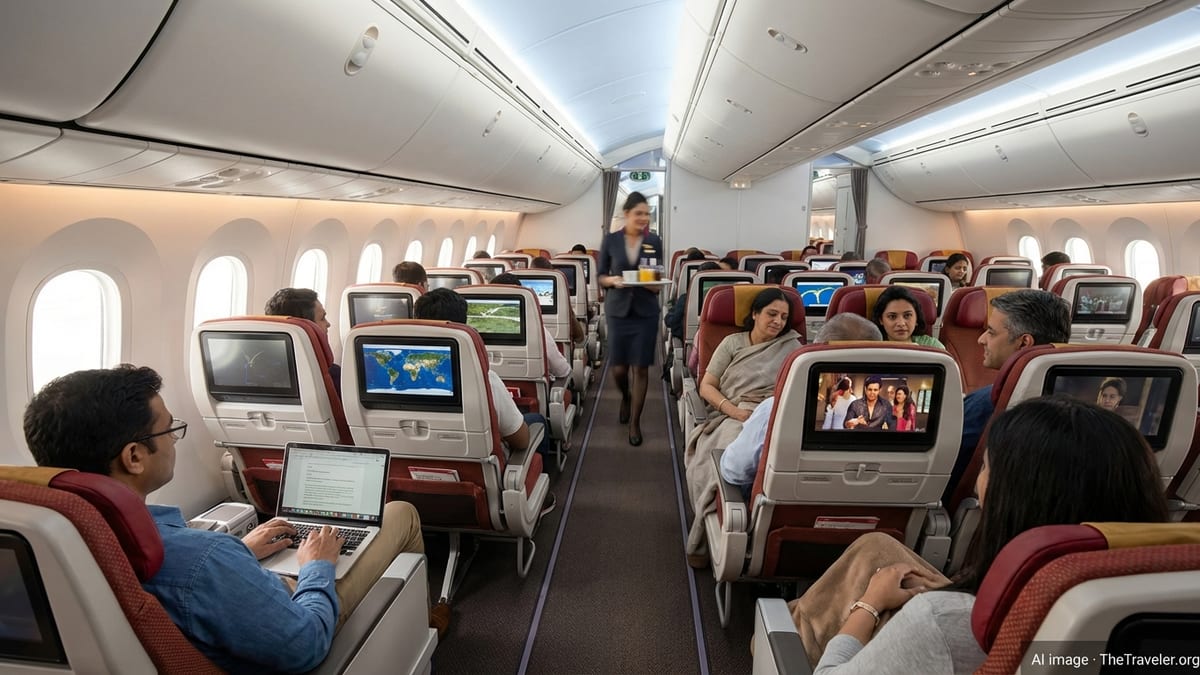
Emirates Adds Electric Recline and Privacy to Premium Economy
Emirates has introduced what industry coverage describes as the world’s first electric premium economy seat, signaling a new phase in the competitive push to elevate comfort between economy and business. Reports indicate that the latest seat design, revealed in early September 2026, adds electric recline controls, full-height privacy-style elements and integrated wireless charging, building on the airline’s existing premium economy product on select Airbus A380 routes.
According to recent product coverage, the refreshed seat continues Emirates’ focus on a more spacious cabin environment, with a 2-4-2 layout, wider cushions, deeper recline and a leg rest that together aim to offer a noticeably different experience from standard economy. The design uses upgraded upholstery and stitching details that mirror the visual language of the airline’s business class, underscoring an intent to narrow the perceived gap in comfort while maintaining a differentiated service level.
Publicly available information shows that the carrier’s premium economy has already attracted industry recognition, with the cabin winning regional and global awards for comfort and overall product quality in 2024 and 2025. The move to electric recline and added tech features appears positioned to keep the product competitive as rival airlines refine their own offerings in this lucrative cabin segment.
Emirates’ strategy also reflects a broader shift toward four-class widebody configurations, where premium economy occupies a dedicated space between economy and the airline’s well-known lie-flat business class. By adding features that historically appeared only in higher cabins, the carrier is betting that travelers will pay a moderate surcharge for enhanced rest and privacy without the full price of business-class suites.
American Airlines Positions Premium Economy as “Domestic First” at Altitude
American Airlines was the first major United States carrier to roll out a true international-style premium economy cabin across its widebody fleet, completing installations several years ago on Boeing 787s, Boeing 777s and select Airbus aircraft. Airline and traveler reports describe the hard product as closely resembling domestic first class, with wider recliner seats, footrests and a significantly increased seat pitch compared with the main cabin.
On long haul routes, American positions premium economy as a distinct step up from Main Cabin and Main Cabin Extra, but still clearly below the airline’s Flagship Business suites, which feature lie-flat seating in a 1-2-1 configuration. Guidance published for customers emphasizes that the seat itself is the primary differentiator, along with upgraded meals, amenity kits and priority services, while business class continues to offer more privacy, enhanced dining and lounge access.
American’s latest widebody refurbishment program for its Boeing 777-300ER fleet increases the proportion of premium seating, with additional business and premium economy seats replacing the previous first-class cabin. According to the airline’s public materials, this shift acknowledges a sustained rise in demand from premium leisure travelers willing to pay extra for comfort but not always for the highest cabin.
By treating premium economy as a hybrid between domestic first class and long-haul business, American has carved out a product that is functionally closer to business-class comfort than traditional economy. Wider seats, expanded legroom and enhanced soft-product touches give travelers a business-lite experience, particularly appealing on overnight transatlantic and transpacific flights where fully flat beds may be seen as optional rather than essential.
Lufthansa Leans on Space and Soft-Product Upgrades
Lufthansa has steadily invested in premium economy over the past decade, and recent coverage of its latest cabins on aircraft such as the Airbus A350 highlights a focus on space-efficient comfort. Industry reports describe a 2-3-2 layout that reduces the number of middle seats compared with the 3-3-3 configuration typical in standard economy, increasing shoulder room and perceived privacy.
Analyses of Lufthansa’s cabin economics have noted that premium economy has become one of the carrier’s most productive products in terms of revenue per square meter, outperforming even business class on that metric in some assessments. This performance has encouraged the airline to maintain and refine the cabin as part of its broader “Allegris” long-haul overhaul, which is rolling out new seats and upgraded amenities across all classes.
In 2026, Lufthansa introduced a refreshed onboard experience across its long-haul network that also touches premium economy. According to the carrier’s newsroom information, passengers in this cabin now receive an expanded selection of pastries or cake and more frequent beverage service, including a new digestif offering. These service enhancements complement the existing hardware, which already offered larger personal screens, more generous recline and dedicated cabin zones separate from economy.
By combining a comparatively spacious seating layout with premium-inspired food and beverage options, Lufthansa positions premium economy as a value alternative to business class, particularly on high‑fare transatlantic routes where fully flat seats can command prices well above 4,000 dollars. The result is a product that aims to capture both cost-conscious business travelers and premium leisure passengers looking for comfort without the highest fare.
Premium Economy Edges Closer to Business-Class Comfort
Across Emirates, American Airlines and Lufthansa, a consistent theme is the migration of business-class style features into premium economy. Recliner seats with significant pitch, adjustable leg rests and enhanced cushioning form the baseline. On top of this, carriers are layering larger in-flight entertainment screens, improved connectivity, upgraded dining and, in Emirates’ latest move, electric recline controls and wireless device charging.
Industry data and consulting analyses suggest that this evolution is being driven by the rise of premium leisure travel and a more price-sensitive corporate market. Research into airline premium cabin revenue indicates that premium cabins, including premium economy, are capturing a growing share of both seats and revenue in North America and Europe, even as traditional corporate demand has shifted. Airlines are therefore rebalancing cabin layouts to offer more intermediate options between basic economy and the highest-end business products.
For travelers, the practical effect is a tier that increasingly resembles older-generation business class, especially on overnight flights. While lie-flat seats and enclosed suites remain a dividing line, legroom, seat width and overall ambiance in premium economy are gradually approaching what many airlines offered as business class in previous decades. This is especially visible on newer aircraft where noise levels are lower and cabin lighting is more carefully designed.
The convergence also raises questions about how far airlines can push premium economy without undercutting business class yields. So far, carriers appear to be threading the needle by keeping seat designs as enhanced recliners rather than lie-flat pods, while differentiating with service elements such as lounge access, bedding quality and à la carte dining in business. Emirates’ electric premium economy seat, for example, delivers a step-change in comfort but stops short of the fully flat, all-aisle-access layout standard in its flagship business cabin.
What This Means for Travelers and Airline Strategy
The premium economy strategies of Emirates, American and Lufthansa offer a window into how global airlines are rethinking their cabin hierarchies. Each carrier uses hardware and service choices to address slightly different markets, from Emirates’ focus on high-touch design and technology to American’s emphasis on a familiar domestic first-style seat and Lufthansa’s bet on spacious layouts and targeted soft-product upgrades.
For travelers, the message is that paying for premium economy increasingly buys a qualitatively different experience, not just a few extra inches of legroom. Dedicated cabins, more supportive seats and refined catering narrow the comfort gap with business class enough that many long-haul passengers are willing to trade a flat bed for significant savings. This dynamic is particularly strong on routes where business fares have surged, making intermediate cabins a compelling compromise.
From an airline economics perspective, premium economy offers a way to monetize cabin space more efficiently, especially on widebody aircraft. Industry studies indicate that these cabins can generate higher revenue density than standard economy and, in some cases, even outperform business class on a per-square‑meter basis. That financial logic helps explain why carriers continue to allocate more real estate to premium economy even as they debut ever more luxurious business-class suites.
As Emirates adds electric functionality and tech-forward details, and as American and Lufthansa expand and refine their own products, premium economy appears set to play an even larger role in long-haul network planning. The result is a competitive arms race in comfort where the traditional lines between cabins are increasingly defined not just by space, but by how closely each product approximates the experience once reserved for business class.
Travel + Leisure on Emirates’ new electric premium economy seat
American Airlines details its latest premium-heavy 777-300ER