


More news on this day
Emirates has emerged as one of the world’s least cancellation-prone airlines, with recent operational data showing that the Dubai-based carrier maintains an exceptionally high rate of completed flights even amid global disruption.
Get the latest news straight to your inbox!
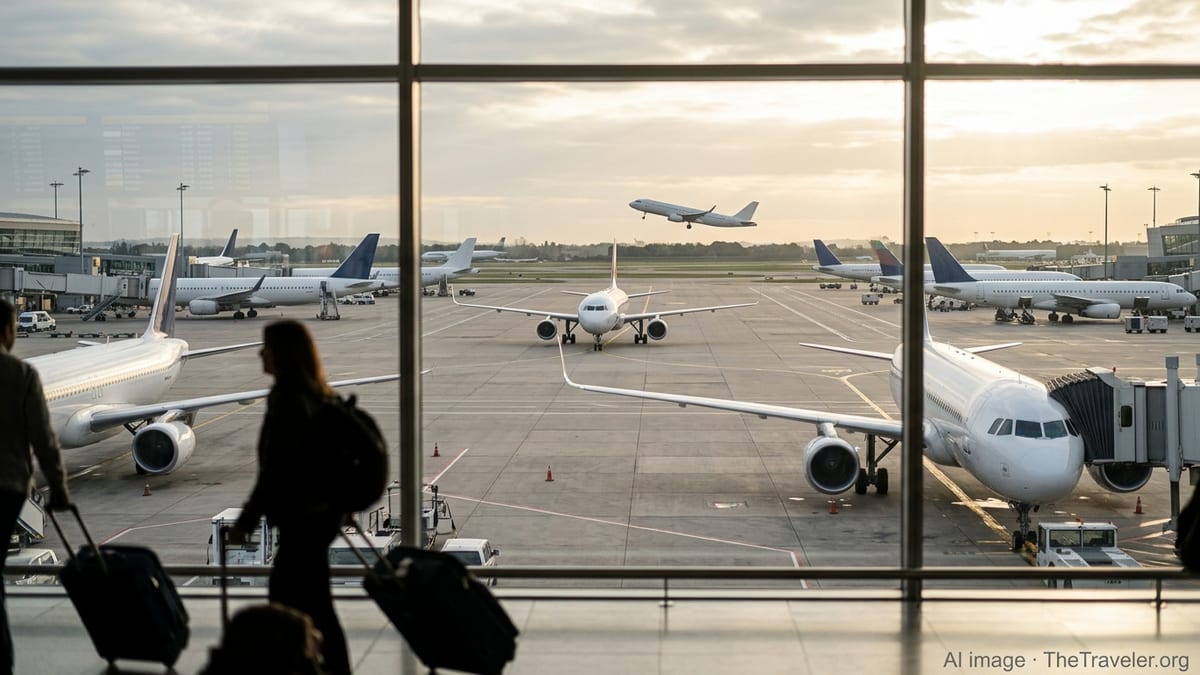
Global analytics highlight cancellation resilience
Recent on-time performance reviews compiled by aviation analytics firm Cirium and other industry trackers indicate that Emirates records one of the lowest flight cancellation rates among major international airlines. While much public attention often focuses on punctuality and customer service, completion factor, the percentage of scheduled flights that actually operate, has become an increasingly important reliability metric for travelers and corporate travel buyers.
Data from Cirium’s annual on-time performance reviews shows Emirates consistently achieving a completion factor above 99 percent across hundreds of thousands of flights in its global network. This places the airline in a small group of long-haul carriers that cancel only a fraction of one percent of services in a typical year, a performance level that becomes more notable when measured against the operational complexity of hub-and-spoke schedules through Dubai.
Industry coverage notes that Emirates’ record compares favorably with many large network airlines in North America and Europe, where weather, congested airspace and infrastructure constraints can drive cancellation spikes. While no major carrier is immune to disruption, publicly available figures show that Emirates has avoided sustained waves of cancellations that have affected some competitors in recent years.
Analysts point out that the airline’s focus on widebody operations, standardized fleets and long-haul scheduling contributes to a more stable operation, particularly compared with carriers that run dense domestic networks with frequent short sectors. The model gives Emirates additional options to recover from delays without resorting to large-scale cancellations.
Middle East and Africa rankings underscore reliability
Regional breakdowns from Cirium’s reports for the Middle East and Africa place Emirates within the top tier of carriers for both on-time arrivals and completion factor. In the most recent full-year data set available, Emirates appears alongside airlines such as Qatar Airways, Saudia and Etihad Airways in a group of major Gulf and regional operators posting completion factors close to, and in some cases above, 99.5 percent.
Within this cohort, Emirates handled one of the highest volumes of flights, with more than 170,000 services analyzed in the most recently published annual review. Despite the scale of its operation, the airline’s cancellation rate remained low relative to regional peers, reinforcing the perception of the Dubai hub as a stable connecting point for long-haul traffic between Europe, Asia, Africa and the Americas.
Sector observers note that Middle East carriers as a group have invested heavily in schedule integrity and operational resilience in recent years. Emirates’ performance is often cited as an example of how centralized hubs, modern airport infrastructure and coordinated ground operations can reduce the need to cancel flights when systems come under stress.
For travelers choosing routings via the Gulf, these regional rankings provide a data-backed indication that itineraries involving Emirates are statistically less likely to be canceled than many alternative options, particularly on intercontinental journeys that would be difficult or costly to rebook at short notice.
How Emirates compares with global peers
When viewed against global benchmarks, Emirates’ low cancellation rate stands out among large long-haul operators. While some low-cost and regional airlines in specific markets have posted slightly lower cancellation percentages, these carriers typically operate smaller fleets and networks. Industry comparisons suggest that Emirates is among a limited number of global airlines combining a very high completion factor with extensive long-haul coverage.
Publicly reported performance data for North American carriers, for example, shows annual cancellation rates that can range from under 1 percent for the best performers to several percentage points for those experiencing operational or weather-related difficulties. By contrast, Emirates’ completion figures in recent years have remained broadly in the upper 99 percent range, even as the global aviation system has faced repeated shocks.
Europe’s major network airlines have at times seen disruption from labor actions, air traffic control issues and tight capacity at key hubs, all of which can translate into cancellations. While Middle East carriers are not entirely insulated from such pressures, reports indicate that Emirates has so far managed to keep outright cancellations contained to comparatively low levels, relying more on schedule adjustments and aircraft swaps to protect its operation.
Aviation analysts caution that direct, one-to-one comparisons can be complicated by differing definitions of cancellation windows, schedule buffers and reporting standards. Nevertheless, cross-regional data sets consistently position Emirates among the group of global airlines least likely to cancel a scheduled flight, especially on trunk long-haul routes.
Operational strategy behind the low cancellation rate
Sector commentary links Emirates’ low cancellation profile to several structural and strategic choices. The airline operates a relatively streamlined widebody fleet centered on Airbus A380s and Boeing 777s, which simplifies maintenance, crew training and scheduling. This homogeneity allows more flexibility to substitute aircraft when technical issues arise, reducing the need to cancel flights outright.
The Dubai hub model also plays a role. With coordinated arrival and departure banks and significant ground resources concentrated at a single primary base, Emirates can re-time connections, reassign aircraft and adjust rotations in ways that are more complex for multi-hub airlines. This centralized control, combined with modern airport infrastructure, contributes to keeping completion factors high.
Observers additionally highlight investment in operational planning, including sophisticated disruption-management tools and close monitoring of weather, airspace constraints and airport conditions along key corridors. These systems support decisions such as preemptive retiming or consolidating capacity on certain routes while still operating the majority of scheduled services.
While passengers may still experience delays or schedule changes, the overall strategy appears geared toward operating flights wherever feasible rather than canceling them, particularly on high-demand long-haul sectors where rebooking options are limited and costly.
What it means for passengers and the market
For travelers, an airline’s likelihood of canceling flights can be as important as its record on punctuality or onboard service. The data-driven picture emerging from published performance reviews suggests that passengers booking with Emirates face a comparatively low risk that their flight will be canceled, an appealing factor for long-haul and connecting journeys that are difficult to replace at short notice.
Corporate travel managers and tour operators increasingly scrutinize cancellation and completion statistics when drafting preferred-carrier agreements. Emirates’ strong track record in this area is likely to support its position in negotiated corporate contracts and group travel programs, particularly for itineraries involving time-sensitive business travel or complex multi-stop trips.
From a competitive standpoint, the carrier’s reliability record strengthens Dubai’s status as a global transit hub, giving it an advantage in markets where travelers can choose multiple one-stop options between continents. As long as published data continues to show a low incidence of cancellations, Emirates is expected to leverage this performance as part of its broader value proposition to both leisure and business customers.
Industry observers note that the coming years will test the resilience of all major airlines as traffic growth, geopolitical tensions and infrastructure constraints put pressure on global networks. For now, available figures place Emirates firmly among the world’s least likely airlines to cancel a scheduled flight, a distinction that carries increasing weight in an era of heightened travel uncertainty.