


More news on this day
Efforts to cut flight delays across the UK are set to take a major step forward next month, with a revamped regulatory process for changing airspace due to take effect on October 1, 2026, as the aviation system faces renewed scrutiny following recent air traffic control disruption.
Get the latest news straight to your inbox!
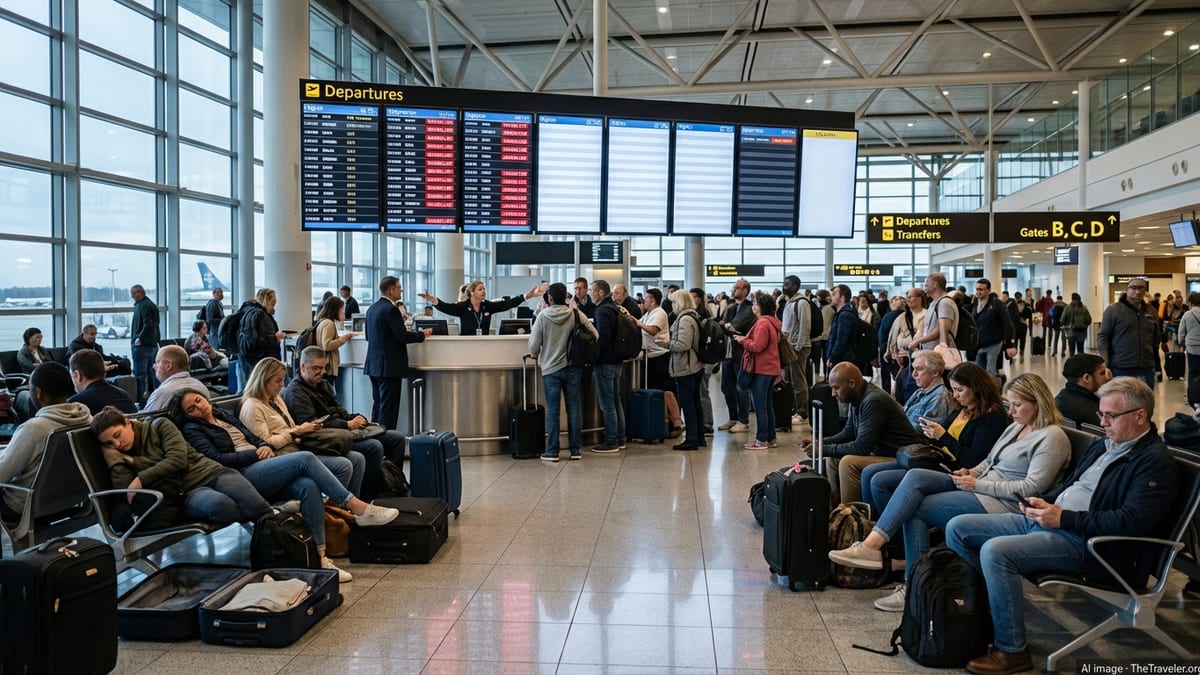
What changes on October 1 and why it matters for delays
Publicly available information from the UK Civil Aviation Authority (CAA) shows the regulator has updated its Airspace Change Process to reflect new government policy, with the revised framework coming into force on October 1, 2026. The change centers on CAP1616, the rulebook that governs how airports and air navigation service providers propose, consult on, and seek approval for new flight paths and airspace structures.
According to published coverage and regulator material, the October update is designed to reduce administrative friction for lower-impact proposals while keeping safety oversight and consultation requirements in place. The CAA has framed the reform as a way to move changes through the system more efficiently, particularly where proposals are less likely to affect communities or significantly alter flight behavior.
For travelers, the relevance is indirect but important: airspace design affects how aircraft are routed into and out of busy airport systems, how efficiently traffic can be sequenced at peak times, and how much capacity can be extracted from constrained corridors. When those constraints bite, delays often show up as aircraft holding patterns, extended taxi times, and late arrivals that cascade through airline schedules.
The new CAP1616 version 6 and how it speeds the pipeline
CAA guidance indicates that all new airspace change proposals submitted after October 1 will follow CAP1616 version 6. The regulator’s airspace-change portal material also notes that the process uses defined “stages” and “gateways,” with the CAA assessing whether sponsors have met the required standards before a proposal can move forward.
Version 6 is positioned as a streamlined and more proportionate process, with particular emphasis on making it easier to handle lower-impact or shorter-term changes without forcing every proposal through the most burdensome pathway. The CAA has also indicated that consultation remains a core feature, with opportunities for community feedback continuing to be built into the process.
One practical detail for sponsors is timing: the CAA has indicated that supporting materials aligned with the new version, including an updated statement-of-need form, are due shortly after the October 1 start date. That matters because the “statement of need” is the early trigger that defines the operational problem a change is trying to solve, such as congestion, inefficient arrivals, or conflicts between routes.
How the reform fits into UK airspace modernisation and UKADS
The October CAP1616 update sits inside a broader UK airspace modernisation effort that has been moving toward a more centralized design approach. Government and regulator publications describe the UK Airspace Design Service (UKADS) as a “single guiding mind” intended to help deliver modernised airspace at scale, starting with the complex London terminal area that influences operations at airports including Heathrow, Gatwick, Stansted, Luton, and London City.
CAA material indicates UKADS is being provided by NATS (En Route) plc, the organization responsible for UK en-route air traffic control. Publicly available CAA documentation also shows that NATS’ licence was modified in 2026 to require it to provide UKADS, with the modification taking effect in early May 2026.
In practical terms, the combination of a centralized design service and a faster, clearer regulatory pathway is intended to make it easier to coordinate changes that interact across multiple airports, rather than forcing each airport to progress highly interdependent proposals in isolation. That coordination is especially relevant in the London area, where routes overlap and where even small inefficiencies can ripple into large blocks of delay during busy periods.
Why urgency is rising after recent ATC disruption
The push to reduce delays is landing at a moment when resilience is under pressure. Recent published reporting described a major disruption linked to a technical problem affecting the UK air traffic control system, leading to large-scale cancellations and ongoing knock-on delays as airlines and airports worked to reposition aircraft and crews.
While the October 1 regulatory update is not a quick fix for technical failures, it is part of the longer-term effort to improve how the airspace system is designed and adapted as demand evolves. Modernisation initiatives typically aim to reduce bottlenecks, enable more predictable flows, and create more efficient routings that can also help when disruption forces controllers to manage uneven traffic patterns.
For passengers, that distinction matters: the new rules do not guarantee fewer delays from day one, but they are intended to reduce the time it takes to make and approve the kinds of airspace changes that can improve capacity and cut routine holding, especially around the busiest hubs.
What travelers can realistically expect next
The October 1 milestone is best understood as an enabling step rather than an immediate operational change at the airport gate. Airspace redesign projects can take years from early definition through consultation, assessment, implementation, and post-implementation review, particularly when flight behaviors below certain altitudes are affected and community impacts must be evaluated.
Still, a more agile approval framework can influence what comes next: airports and air navigation service providers can advance targeted, lower-impact changes more quickly, and larger, system-level redesign work can proceed with clearer regulatory expectations. Over time, that can support improvements such as more direct routings, better sequencing into congested terminals, and fewer airborne holds during peak arrival banks.
Travelers planning UK trips this autumn should treat October 1, 2026 as a policy change date rather than a promise of instant punctuality gains. The more immediate determinants of delay will remain familiar: weather, runway constraints, airline scheduling buffers, and day-to-day air traffic management decisions. But the regulatory change is designed to make it easier to reshape the underlying airspace architecture that governs how efficiently the whole system runs.