


More news on this day
As tensions between the United States and Iran escalate across the Gulf region, UAE residents are being urged to follow fast-changing guidance on flight operations, airspace risks and regional travel, as airlines and regulators adjust routes and schedules in response to the widening conflict.
Get the latest news straight to your inbox!
US–Iran conflict: what is happening around the Gulf today
Recent days have seen a sharp increase in military activity between the United States and Iran following months of on-and-off ceasefire efforts. Published coverage describes a pattern of missile and drone exchanges, including US strikes on Iranian targets and retaliatory Iranian attacks on American facilities and regional infrastructure. This has unfolded against the backdrop of a broader war that has already disrupted shipping, energy flows and airspace use across the Gulf.
Reports indicate that missile launches and air operations have taken place in and around several Gulf states, with particular focus on areas near the Strait of Hormuz, a narrow waterway vital for global oil and gas shipments. Analysis by regional and international media notes that shipping traffic through the strait has fallen significantly in recent weeks as commercial operators reassess the risks to vessels and crews.
Maritime security bulletins issued by industry bodies and government agencies continue to highlight repeated attacks or attempted interference with commercial vessels in the Persian Gulf, Strait of Hormuz and Gulf of Oman. While these advisories are primarily aimed at shipowners and seafarers, the same pattern of military activity that threatens shipping is also driving caution in the aviation sector and informing state and airline risk assessments.
For UAE residents, the key takeaway is that the conflict remains active, with a likelihood of further episodes of escalation and de-escalation rather than a clear, lasting resolution in the immediate term. That volatility is shaping how airlines, aviation regulators and foreign ministries frame their guidance on travel to, from and through the Gulf.
How US–Iran tensions are affecting flights to and from the UAE
Despite the conflict, publicly available flight-tracking data and industry reporting show that UAE airspace remains open as of early August 2026, with major carriers such as Emirates, Etihad Airways, flydubai and Air Arabia continuing to operate the bulk of their scheduled services. Earlier in the crisis, UAE airports experienced brief suspensions and reduced capacity, but local aviation authorities and airport operators have generally kept hubs in Dubai, Abu Dhabi and Sharjah functioning.
However, the operating environment has become more complex. Aviation risk monitoring platforms note that airspace over Iran and parts of the adjacent Gulf has been subject to intermittent restrictions and rerouting since the start of the conflict. To keep schedules running, UAE-based airlines have been using defined corridors, adjusted flight levels and revised routings that steer clear of higher-risk zones while preserving connectivity as far as possible.
At the same time, a number of non-Gulf carriers have scaled back their presence in the region. Regional media report that some European and Asian airlines have suspended or reduced flights to Dubai, Abu Dhabi, Riyadh and other Gulf cities, citing security concerns, insurance limitations and regulatory guidance from their home states. These decisions have created knock-on effects for transit passengers who previously relied on indirect routings via European hubs into the UAE.
Operationally, this means UAE residents may still find seats on local carriers for most key routes, but they should be prepared for potential day-to-day adjustments, including re-timings, aircraft changes or rerouting to avoid sensitive airspace. It also increases the importance of monitoring flight status closely in the 24 hours before departure.
European and US advisories: what they mean for UAE airspace
Regulators have taken a cautious stance on Gulf overflights in response to the US–Iran conflict. An updated conflict-zone bulletin from the European Union Aviation Safety Agency in July advised European operators to avoid or carefully assess flights through the airspace of the UAE, Qatar, Bahrain and Kuwait due to what it described as a high risk to civil aviation from potential military activity. The notice highlighted concerns that missiles or drones could traverse these areas at various altitudes, compressing warning times for civil aircraft.
In the United States, the Federal Aviation Administration maintains restrictions and advisories for US operators regarding Iranian airspace and certain overwater regions of the Persian Gulf and Gulf of Oman. The FAA’s publicly available list of prohibitions and background information underscores the risk of misidentification of civil aircraft in conflict zones and the potential for rapidly changing threat levels. While these measures primarily govern US-registered carriers, they are widely studied by global airlines and insurers when drawing up their own risk assessments.
Specialist aviation risk services that aggregate government notices and industry information currently describe UAE airspace itself as open but subject to dynamic risk, especially during periods of intensified fighting. They point out that while the UAE has not been a direct target of major strikes in recent months, its proximity to active areas and its role as a major hub require constant coordination between civil aviation authorities and military actors operating in the region.
For travelers, these advisories do not mean that flying to or from the UAE is inherently unsafe, but they do indicate that flight paths, schedules and airline choices may shift at short notice as operators respond to any new military developments. Passengers should expect airlines to exercise significant flexibility, prioritizing safety and regulatory compliance over maintaining previous routings.
Flight updates and practical steps for UAE travelers
Local and regional news outlets have documented a rolling pattern of selective cancellations and changes on certain short-haul Gulf routes in recent days. Flights between UAE airports and destinations such as Kuwait and Bahrain have seen temporary suspensions or reduced frequencies by multiple carriers, often described as due to operational or security-related considerations. Some European airlines have suspended services entirely on select Gulf routes during periods of heightened tension.
In contrast, UAE carriers have generally maintained core long-haul networks to Europe, Asia, Africa and the Americas, using alternative routings where necessary. Travel industry updates emphasize that while the overall system is functioning, travelers may encounter longer flight times as aircraft detour around closed or restricted airspace. In some cases, passengers booked on foreign airlines are being re-accommodated onto partner or codeshare services operated by Gulf carriers.
Given this fluid situation, residents planning to travel are advised to check their booking and flight status directly with their airline rather than relying on third-party summaries. Many carriers are offering limited-fee or fee-free options to rebook, reroute or request travel credits when flights are materially affected by airspace restrictions or security concerns. Travel insurance policies with disruption coverage may also provide additional flexibility for itineraries involving multiple Gulf-region stops.
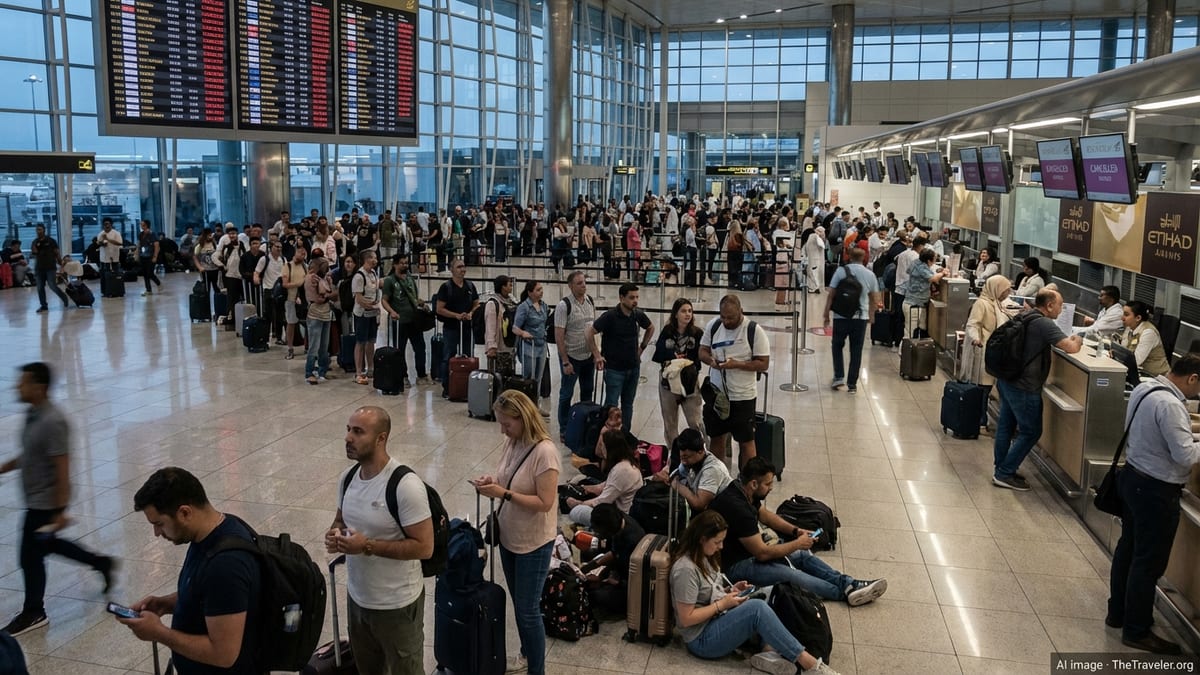
At the airport level, travelers should allow extra time for check-in and security, particularly on routes that cross or approach conflict-affected areas. While UAE airports continue to process high passenger volumes, enhanced operational checks and occasional congestion due to rerouted traffic can lengthen processing times, especially during peak hours.
Travel advisories for UAE residents heading abroad
Foreign ministries in Europe, North America and parts of Asia have updated their travel advisories for the broader Gulf and Middle East region in light of the US–Iran hostilities. Although the UAE is widely treated as a separate case from active conflict zones, many governments now include strengthened language urging citizens to exercise a high degree of caution when transiting nearby waters or airspace, and to stay alert to changes in regional security conditions.
For UAE residents who are citizens of other countries, it is important to consult the latest bulletin from the relevant foreign ministry or consular service for their nationality, particularly if their trip involves onward travel to states closer to the conflict or sea routes near the Strait of Hormuz and the Red Sea. Some advisories specifically discourage non-essential travel to areas adjacent to active military operations or to ports and coastal regions where commercial shipping has been targeted.
Even when no formal warning is in place for a particular destination, publicly available guidance from travel risk firms suggests incorporating additional contingency time into itineraries, avoiding tight connections on complex routings and regularly reviewing news coverage in the days before departure. Passengers with mobility issues, families traveling with young children or those on critical business trips may wish to favor more direct flights on carriers with robust disruption-management policies.
Ultimately, while the UAE’s airports remain operational and its airlines are working to sustain connectivity amid the US–Iran conflict, the environment is more unpredictable than in previous years. UAE residents can reduce the impact of sudden changes by staying closely informed, remaining flexible with their plans and treating official advisories and airline announcements as essential parts of their travel preparation.