

More news on this day
Australia’s secluded Wolgan Valley conservation resort is being reborn as Emirates Wolgan Valley, a Ritz-Carlton Lodge, with new investment, intensified helicopter access and upgraded off-road adventure transfers designed to pull high-end travelers deeper into the Blue Mountains wilderness.
Get the latest news straight to your inbox!
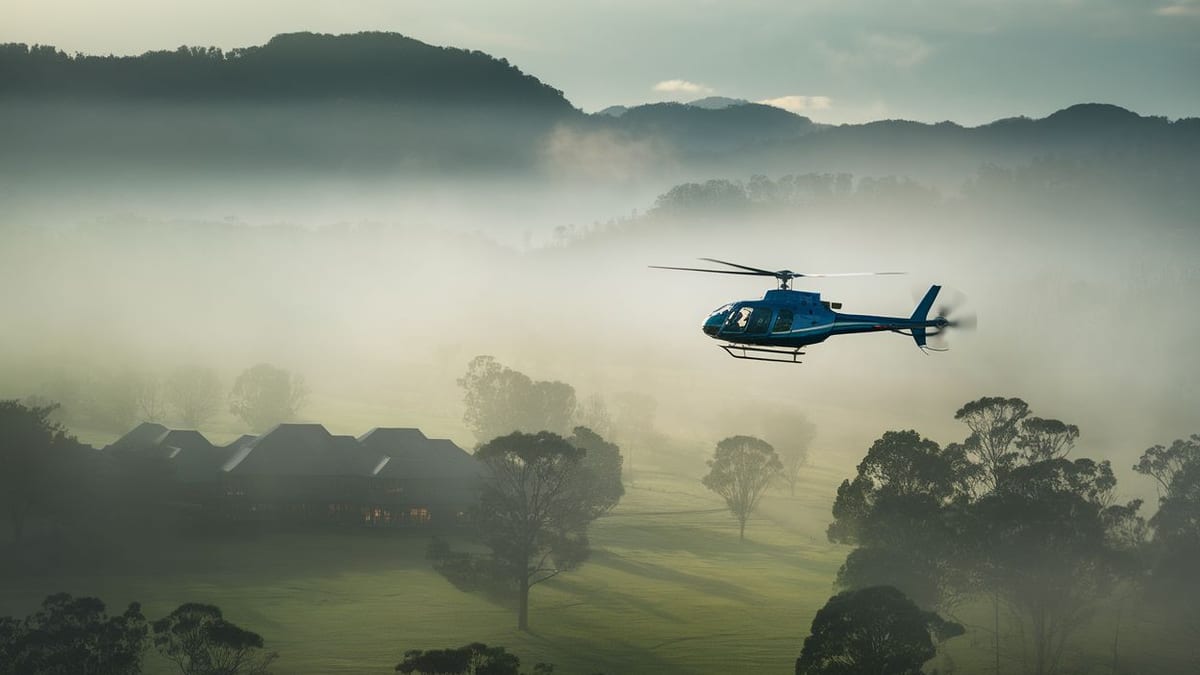
Image by International Hotels News, Hotel Industry & Hospitality News
From One&Only Retreat To Flagship Ritz-Carlton Lodge
Publicly available information shows that Emirates has signed an agreement with Marriott International to reopen its long-closed Wolgan Valley resort as Emirates Wolgan Valley, a Ritz-Carlton Lodge in mid-2026. The property, on a 7,000‑acre wildlife conservancy in the Greater Blue Mountains, will become the debut location for a new sub-brand of nature-focused Ritz-Carlton Lodges.
The lodge will retain a small 40-key inventory, positioning it firmly in the ultra-luxury, low-impact category. Reports indicate Emirates has already invested around 150 million Australian dollars in the site since 2006 and has committed a further 50 million Australian dollars for the latest transformation. The new Ritz-Carlton identity is expected to layer the brand’s polished service and contemporary design onto an existing framework of conservation-led hospitality.
The resort previously operated under the Emirates One&Only Wolgan Valley flag before prolonged access disruptions and regional challenges saw operations pause. Travel trade commentary suggests the fresh alignment with Marriott’s flagship luxury brand is intended to restore Wolgan Valley’s global profile and secure new feeder markets through the Marriott Bonvoy network.
Destination planners note that the relaunch also comes as New South Wales continues to push premium regional tourism, using high-end, small-footprint properties as anchors for nature and adventure itineraries beyond Sydney.
Helicopter Movements Surge As Sky Becomes The Front Door
As the resort prepares to return to market, the skies above the valley are set to get busier. The official project documentation highlights helicopter access as a core entry option alongside four-wheel-drive transfers, and local trade sources describe a step-change in the role of aviation at the property compared with its previous operating model.
While the pre-closure resort relied primarily on road transfers from Sydney with limited scenic flights, the revived Emirates Wolgan Valley is being framed as a helicopter-forward destination. Aviation planners and luxury agents indicate that projected movements for private and charter helicopters are expected to at least triple compared with historic volumes, driven by increased demand from time-poor, high-spend guests and by the practical need to bypass road constraints.
This uptick is expected to be enabled by tighter partnerships with specialist helicopter operators out of Sydney and regional bases, along with improved helipad infrastructure at or near the lodge. Industry observers note that the combination of short flight times from Sydney’s airports and dramatic escarpment scenery on approach appeals strongly to international visitors connecting off long-haul services.
For luxury travel designers, the helicopter now effectively becomes the lodge’s front door, turning arrival and departure into curated experiences rather than simple transfers, and positioning Wolgan Valley alongside remote island resorts where access by air is part of the value proposition.
Adventure Transfers Replace Simple Road Access
The way guests arrive by land is also being reimagined. Following the extended closure of Wolgan Valley Road and ongoing access constraints, public documents state that four-wheel-drive vehicles will approach the lodge via the rugged Donkey Steps route. What began as a contingency has been repositioned as a feature, recast as part of the lodge’s adventure narrative rather than an inconvenience.
Under this model, the final leg of the journey is marketed as an off-road immersion in the landscape, with steep sections, creek crossings and close encounters with native flora and fauna. Travel planners anticipate that the lodge will fold these segments into hosted “adventure transfers,” turning a logistical challenge into branded storytelling about conservation, rewilding and the property’s remote setting.
Such experiential transfers are increasingly common in high-end safari and wilderness lodges, where sunrise game drives from an airstrip or boat rides through mangroves form a guest’s first impression. By aligning with this global trend, Emirates Wolgan Valley aims to shift perceptions of access from barrier to benefit, appealing to travelers seeking a sense of discovery within a controlled, comfortable framework.
At the same time, tourism analysts point out that the shift to curated adventure transfers places a premium on vehicle quality, guiding standards and safety protocols, all of which will be viewed as part of the lodge’s luxury credentials.
Conservation Estate Underpins High-End Wilderness Positioning
Beyond transfers and branding, the core asset remains the 7,000‑acre conservation reserve that surrounds the lodge. Publicly available material notes that Emirates has overseen the planting of more than one million native trees on the property and the restoration of historical structures dating back to the early nineteenth century, positioning the new lodge within a wider story of regeneration.
The reimagined Ritz-Carlton Lodge is expected to continue the previous emphasis on low-density development, with freestanding villas spaced across the valley floor, dark-sky conditions and limited night lighting to protect wildlife corridors. This approach aligns with rising global demand for “quiet luxury” experiences in nature, where privacy, stillness and environmental credibility rank alongside spa menus and tasting menus.
Analysts in the luxury segment suggest that the conservation narrative will be a key differentiator in a crowded market of high-end Australian stays, particularly for international visitors who pair city stays in Sydney with immersive, landscape-driven extensions. The lodge’s proximity to hiking, wildlife viewing and stargazing experiences is likely to feature heavily in marketing to North American and European guests.
Local business groups also highlight the potential for the revived resort to support regional suppliers in areas such as artisan food, wine, guiding services and wellness, intertwining the conservation story with economic benefits for nearby communities.
Strategic Lift For New South Wales Luxury Tourism
For New South Wales, the reopening of Wolgan Valley under the Ritz-Carlton Lodge banner is being framed within a broader push to consolidate the state’s position in global luxury tourism. Industry commentary notes that securing the world’s first Ritz-Carlton Lodge in a regional location is a symbolic win, helping to rebalance visitor flows beyond metropolitan Sydney.
Travel trade partners expect the property to feature in flagship itineraries that link Sydney’s harbourfront hotels with Blue Mountains wilderness, coastal retreats and premium wine regions. The combination of helicopter connectivity and off-road adventure transfers gives itinerary designers new tools to sell New South Wales as a state where world-class hospitality and dramatic landscapes are tightly interwoven.
The project also reinforces an emerging pattern of airline-hospitality collaborations, with Emirates leveraging its aviation network and premium customer base to support a destination-focused asset. Observers suggest that if the Wolgan Valley model succeeds, it could provide a template for similar lodge developments in other nature-rich regions.
As Emirates Wolgan Valley, a Ritz-Carlton Lodge moves towards its planned mid-2026 opening, interest from luxury advisors and repeat guests of the former resort signals that the valley’s next chapter will be watched closely, both as a case study in post-closure revival and as a bellwether for helicopter-led, adventure-style access to high-end wilderness stays.