

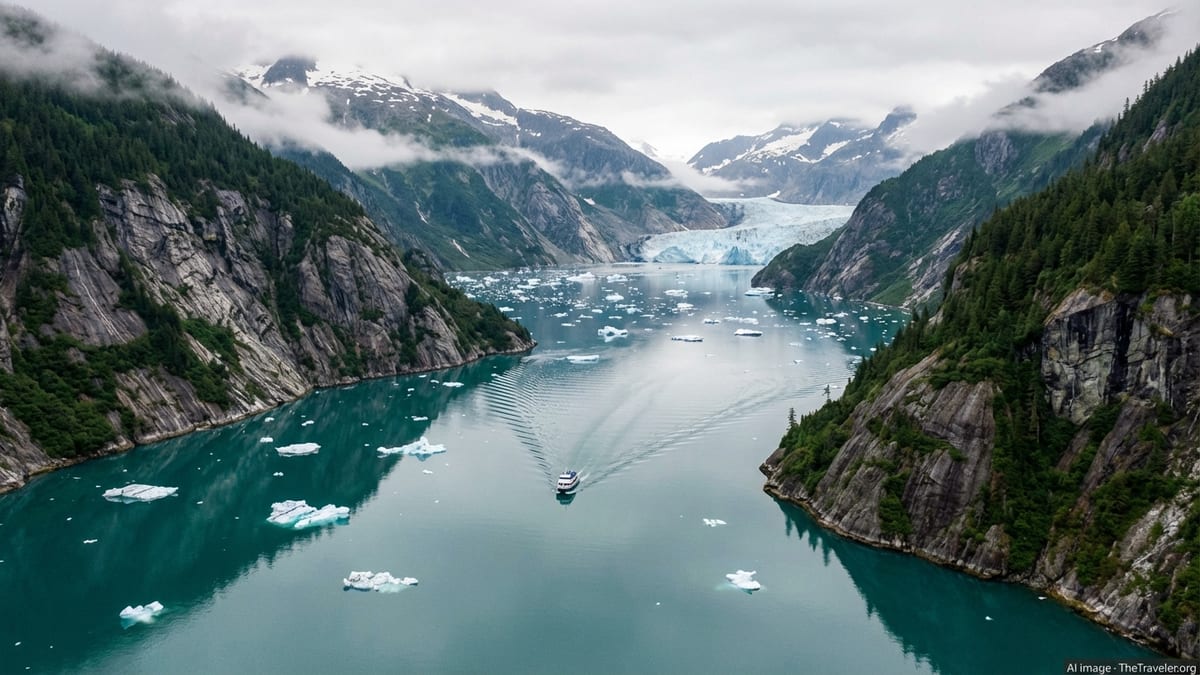
Endicott Arm is one of Southeast Alaska’s most spectacular glacier fjords, a long, narrow waterway cut deep into the Coast Mountains and filled with drifting ice, waterfalls, and wildlife. For many travelers on an Inside Passage cruise, this secluded arm and its tidewater Dawes Glacier become the quiet highlight of an Alaska itinerary. This guide explains what to expect, how to choose the right cruise or excursion, and how to experience Endicott Arm’s fragile ecosystem responsibly.
Understanding Endicott Arm and Its Glacier-Carved Fjord
Endicott Arm is part of the Tracy Arm Fords Terror Wilderness, a federally designated wilderness area within the Tongass National Forest in Southeast Alaska. The wilderness protects more than 650,000 acres of rugged terrain, including two main fjords: Tracy Arm to the north and Endicott Arm to the south. These steep, narrow inlets were carved by massive glaciers that once filled the valleys and retreated over thousands of years, leaving behind vertical granite walls, hanging valleys, and deep, cold water.
Endicott Arm stretches for roughly 30 miles from Holkham Bay to the head of the fjord, where Dawes Glacier flows down from the Juneau Icefield into the sea. The waterway is typically choked with floating ice of all sizes, from small chunks to house-sized bergs, which can influence how close vessels can safely approach the glacier face. Even when ice limits access, the journey along the fjord is a scenic experience in its own right, with waterfalls tumbling from snowfields and low clouds wrapping the mountain ridges.
Because Endicott Arm lies within a remote, roadless region, nearly all visitors arrive by boat. Large cruise ships sail into the arm on scenic cruising days when the ship does not dock in a town, while smaller expedition vessels and day boats can weave deeper among the ice. Conditions vary by season, weather, and ice, so itineraries often keep some flexibility, and cruise lines may substitute Endicott Arm for Tracy Arm or vice versa when navigation requires it.
Travelers who understand Endicott Arm as a living, changing glacial system tend to appreciate it more fully. The glacier is constantly reshaping the landscape, calving ice into the sea, and influencing the marine ecosystem that thrives in the nutrient-rich, cold waters at the head of the fjord.
Dawes Glacier: Tidewater Ice and Calving Spectacle
Dawes Glacier is the crown jewel at the head of Endicott Arm. This tidewater glacier flows directly from the Juneau Icefield and terminates in the ocean, where chunks of ice regularly break away in a process known as calving. On a good day, visitors may see and hear sections of ice tumble into the fjord, creating dramatic splashes and low, thunderous booms that echo off the rock walls.
The glacier face is often a dazzling blue, especially in overcast weather that softens the light and highlights compressed, ancient ice. From a distance, the face appears like a frozen cliff several stories high, riddled with fractures and towers that signal ongoing movement. Icebergs in front of the glacier can create both a barrier and an attraction, forming a maze that smaller boats may navigate while larger ships hold back at a safe distance in more open water.
Calving activity fluctuates with temperature, tides, and the glacier’s internal dynamics, so there is no guaranteed level of action at any particular time. Captains typically idle or slowly maneuver in front of Dawes Glacier to give passengers ample time to watch and photograph the scene. It is wise to dress warmly, bring a hat and gloves, and plan to spend long stretches outside on deck to make the most of the experience.
Because a tidewater glacier is inherently unstable, vessels keep a cautious buffer from the face, especially when large ice blocks are about to fall or when hidden underwater ice could pose a hazard. This safety margin also helps reduce disturbance to wildlife that uses the ice as resting or pupping habitat.
Wildlife of Endicott Arm: Seals, Whales, and Birds
Endicott Arm is rich in wildlife, especially marine mammals that depend on the fjord’s cold, nutrient-laden waters. Harbor seals are among the most commonly seen animals here. They often haul out on ice floes near the glacier to rest, give birth, and nurse their pups in late spring and early summer. Wildlife agencies and scientists highlight Endicott Arm and nearby fjords as important pupping habitat, where the concentration of ice offers some protection from predators such as killer whales.
Visitors may notice seals sprawled on the ice like pale, spotted logs, occasionally lifting their heads to look around or sliding into the water with minimal splash. Because seals are sensitive to disturbance, responsible captains maintain distance, slow speeds, and predictable movements that reduce the chance of flushing animals from the ice. Regulations and guidelines emphasize avoiding close approaches, limiting noise, and steering clear of areas with heavy ice cover where seals are likely to rest.
Beyond seals, the broader region around Endicott Arm and Holkham Bay can offer sightings of humpback whales during summer and early fall. These whales frequent feeding grounds throughout Southeast Alaska, and it is not uncommon for cruise ships transiting Stephens Passage or the approaches to the fjord to encounter blows, tail flukes, or the cooperative feeding behavior known as bubble-netting. Orcas also patrol the area at times, and patient observers scanning from open decks improve their chances of spotting dorsal fins.
Birdlife adds another layer of interest. Bald eagles often perch in shoreline trees or soar above the fjord, while seabirds such as kittiwakes and gulls work the water near tide rips and upwellings. The steep cliffs and nearby forested slopes create habitat for a variety of species, and travelers who bring binoculars or a telephoto lens can make the most of fleeting sightings along the route.
Choosing an Alaska Cruise or Small-Boat Excursion
Most travelers experience Endicott Arm as part of a larger Alaska cruise itinerary, often departing from Seattle, Vancouver, or a Southeast Alaska port like Juneau. Major cruise lines schedule scenic cruising days into either Tracy Arm or Endicott Arm, with the final choice sometimes influenced by ice conditions, weather, or safety advisories. In recent seasons, cruise lines have occasionally pivoted to Endicott Arm when landslides or dense ice have limited safe access to Tracy Arm, illustrating how the two fjords serve as interchangeable glacier experiences in some itineraries.
Large ships provide an accessible, comfortable way to see the fjord, with multiple viewing decks, enclosed lounges, and hot drinks always nearby. The tradeoff is that the vessel may not be able to approach as close to the glacier as smaller boats can, particularly in heavy ice. Some cruise lines address this by offering optional small-boat glacier excursions, where passengers disembark to join a nimble tour vessel that meets the ship and carries them deeper into the ice for several hours of close-up exploration.
Independent travelers based in Juneau or nearby communities may also find day trips on smaller boats that venture into Endicott Arm when conditions permit. These tours typically involve long days on the water, with commentary from local captains and naturalists who know the tides, wildlife behaviors, and safe navigation routes. While such trips are subject to weather and ice, they can provide a more intimate and flexible experience, stopping for whales, seals, or waterfalls along the way.
When choosing a cruise or excursion, it is worth inquiring how often the company operates in Endicott Arm, what type of vessel they use, and how they approach wildlife viewing and environmental practices. Companies that emphasize naturalist interpretation and follow recognized whale and seal viewing guidelines tend to provide both richer information and more responsible experiences.
Best Time to Visit and What Conditions to Expect
The primary season for visiting Endicott Arm aligns with the broader Alaska cruise season, typically from May through early September. Each part of this period offers slightly different conditions and highlights. In May and June, snow still clings to the higher slopes, and the fjord often carries substantial ice near the glacier. This is also the main harbor seal pupping season, when mothers use the ice floes as nursery platforms and pups rest at their sides. Cooler air temperatures during early season sailings can make time on deck brisk, but the snowy scenery is often at its most dramatic.
July and August generally bring somewhat milder temperatures and longer days, though weather remains unpredictable and can shift quickly between sun, clouds, fog, and rain. Ice conditions may open up, allowing vessels to get closer to Dawes Glacier, but this varies year to year. This period also aligns with peak humpback whale activity in many parts of Southeast Alaska, so travelers may combine glacier views with more frequent whale sightings in adjacent channels.
By early September, nights grow longer and cooler again, and some cruise lines begin winding down their Alaska schedules. Late-season visits can feel quieter, with fewer ships overall, but weather can be more unsettled and some wildlife sightings less frequent. Throughout the season, rain is common, and the surrounding temperate rainforest thrives on heavy precipitation. Travelers should be prepared for damp, cool conditions even in midsummer and embrace the mist and low cloud that give the fjord its moody character.
Because Endicott Arm is a dynamic glacial environment, ice and safety assessments by captains or pilots drive day-to-day decisions about how far into the fjord a vessel will proceed. Flexibility is essential. Viewing the fjord’s waterfalls, cliffs, and wildlife along the way can be just as rewarding as time in front of the glacier itself.
What to Pack and How to View the Fjord Like a Pro
Thoughtful packing can make a striking difference in comfort and enjoyment during an Endicott Arm visit. On any sailing, temperatures on open decks feel cooler than the air temperature due to wind and ship movement, so layered clothing is essential. A moisture-wicking base layer, warm mid-layer such as fleece or light insulated jacket, and a waterproof outer shell provide flexibility for shifting conditions. A warm hat, gloves, and wool or synthetic socks help keep extremities comfortable during long periods outdoors.
Footwear should be closed-toe, stable, and ideally water resistant. Ship decks can be wet and occasionally slick from spray or rain. Many visitors find that simple hiking shoes or boots with good traction are more practical than casual sneakers. For those especially sensitive to the cold, hand warmers can make a morning in the wind more pleasant.
From a viewing perspective, binoculars transform the experience, turning distant seals, goats, or eagles into clear subjects rather than distant specks. Photographers may favor a zoom lens in the 70 to 200 millimeter range or similar, which provides flexibility for both landscape frames and wildlife. A lens hood can help manage drizzle and flare, and keeping a microfiber cloth in a pocket allows quick clearing of raindrops from lenses or phone screens.
On big ships, part of “seeing like a pro” involves scouting vantage points in advance. The bow, forward observation lounges, and sheltered side decks all offer different perspectives as the ship maneuvers. Arriving early to chosen viewing spots, especially as the vessel nears the glacier, ensures rail-side positions and unobstructed views. Having a hot drink in an insulated mug, plus a small daypack with extra layers, makes it easier to stay outside through changing weather rather than retreating indoors during key moments.
Responsible Travel and Marine Wildlife Guidelines
Endicott Arm and its wildlife depend on a delicate balance in which glaciers, ice, and marine life interact. As visitation has grown, agencies such as NOAA have published guidelines for viewing whales and seals in Alaska’s glacial fjords. These recommendations emphasize maintaining generous distances, avoiding sudden changes in speed or direction, and limiting time close to animals in order to minimize disturbance.
Harbor seals in particular are vulnerable during the pupping season from roughly mid May through late June. Research has shown that when boats pass too close or move unpredictably, seals can flush from the ice into the water, potentially separating pups from their mothers or forcing animals into cold water before they are ready. To reduce these risks, guidance encourages vessels to slow down, keep hundreds of yards away from hauled out seals when practical, and avoid transiting through dense ice where seals are likely to be resting even when none are immediately visible.
For whales, federal regulations in Alaska prohibit approaching within a set distance of humpback whales and forbids behavior that changes their natural activities. Responsible operators follow these rules and additional voluntary codes of conduct that limit the number of vessels around a whale at once, cap viewing time, and stress predictable, low speed approaches. Travelers can support these efforts by choosing companies that advertise compliance with established guidelines, listening to naturalist briefings, and resisting the urge to pressure crew for closer encounters.
On board, small individual actions also matter. Simple steps such as using reusable bottles or mugs, securing loose items that could blow overboard, and following instructions about staying behind railings in icy conditions help protect both the environment and passenger safety. Viewing Endicott Arm as a protected wilderness rather than a simple backdrop sets a respectful tone that benefits future travelers and the wildlife that depend on the fjord.
The Takeaway
Endicott Arm offers one of Southeast Alaska’s most intimate encounters with the power of ice, ocean, and time. Whether approached on a large cruise ship or a nimble day boat, the fjord reveals itself gradually in layers of mist, waterfalls, and icebergs that hint at the massive forces still shaping the landscape. Dawes Glacier provides a focal point, but the journey through the arm and the chance to share space with seals, whales, and soaring eagles give the experience its depth.
Thoughtful planning, from choosing itineraries that prioritize time in the fjord to packing warm layers and binoculars, can turn a scenic cruise day into the highlight of an Alaska trip. Equally important is traveling with a sense of responsibility, supporting operators who follow wildlife guidelines and adopting low impact habits on board. In a region where glaciers are changing and wildlife faces growing pressures, mindful visitors play a small but meaningful role in preserving the magic they have come to see.
For travelers who crave raw landscapes, quiet moments broken only by the crack of calving ice, and a deeper understanding of the Inside Passage, Endicott Arm delivers a powerful, humbling experience. It is at once accessible through mainstream cruise itineraries and wild enough to feel like the edge of the map, an enduring reminder of Alaska’s vast and fragile beauty.
FAQ
Q1. Where is Endicott Arm located in Alaska?
Endicott Arm lies in Southeast Alaska within the Tracy Arm Fords Terror Wilderness, southeast of Juneau, extending inland from Holkham Bay toward Dawes Glacier.
Q2. How is Endicott Arm different from Tracy Arm?
Both are narrow glacier fjords in the same wilderness area, but Endicott Arm ends at Dawes Glacier, while Tracy Arm leads to the twin Sawyer Glaciers. Cruise lines may visit either, depending on conditions.
Q3. What is the best time of year to visit Endicott Arm?
The main season runs from May through early September. Early season offers dramatic snow and seal pupping, while mid to late summer can bring milder temperatures and more frequent whale activity nearby.
Q4. Will my cruise ship always reach Dawes Glacier?
Not always. Ice, weather, and safety assessments determine how far vessels can travel. Captains may stop short of the glacier face if ice conditions or visibility make closer approach unsafe.
Q5. What wildlife am I most likely to see in Endicott Arm?
Common sightings include harbor seals on ice floes, bald eagles along the shoreline, and sometimes humpback whales or orcas in surrounding waters. Wildlife encounters vary by day and season.
Q6. Do I need special gear to enjoy the fjord from a cruise ship?
No technical gear is required, but warm layers, a waterproof jacket, hat, gloves, and binoculars greatly improve comfort and viewing, especially on open decks near the glacier.
Q7. Are there specific rules for viewing whales and seals?
Yes. Federal regulations and guidelines in Alaska require minimum distances from whales and encourage slow speeds and generous buffers around seals to avoid disturbing their natural behavior.
Q8. Can I visit Endicott Arm on a day trip from Juneau?
In some seasons, small-boat operators based near Juneau run long day trips into Endicott Arm when conditions allow, though availability and routes depend on weather, ice, and demand.
Q9. Is seasickness a concern inside the fjord?
Waters inside the fjord are generally more sheltered than open ocean, but motion can still occur. Sensitive travelers may wish to use standard seasickness remedies or precautions.
Q10. How can I travel more responsibly in Endicott Arm?
Choose operators who follow marine wildlife guidelines, minimize waste on board, use reusable containers, and respect crew instructions about safety, distances, and noise around wildlife.