

For many travelers, the defining memory of an Alaska cruise is not a port town or a shore excursion but the quiet awe of gliding through a narrow fjord toward a creaking wall of blue ice. Along the Inside Passage, two of the most talked-about glacier days are scenic cruising in Tracy Arm and in nearby Endicott Arm, home to Dawes Glacier. Cruise lines often list them together or substitute one for the other, which leaves many would-be passengers wondering which fjord actually delivers the better experience. The answer depends less on a simple winner and more on what kind of Alaska moment you are hoping to have.
Understanding Tracy Arm and Endicott Arm
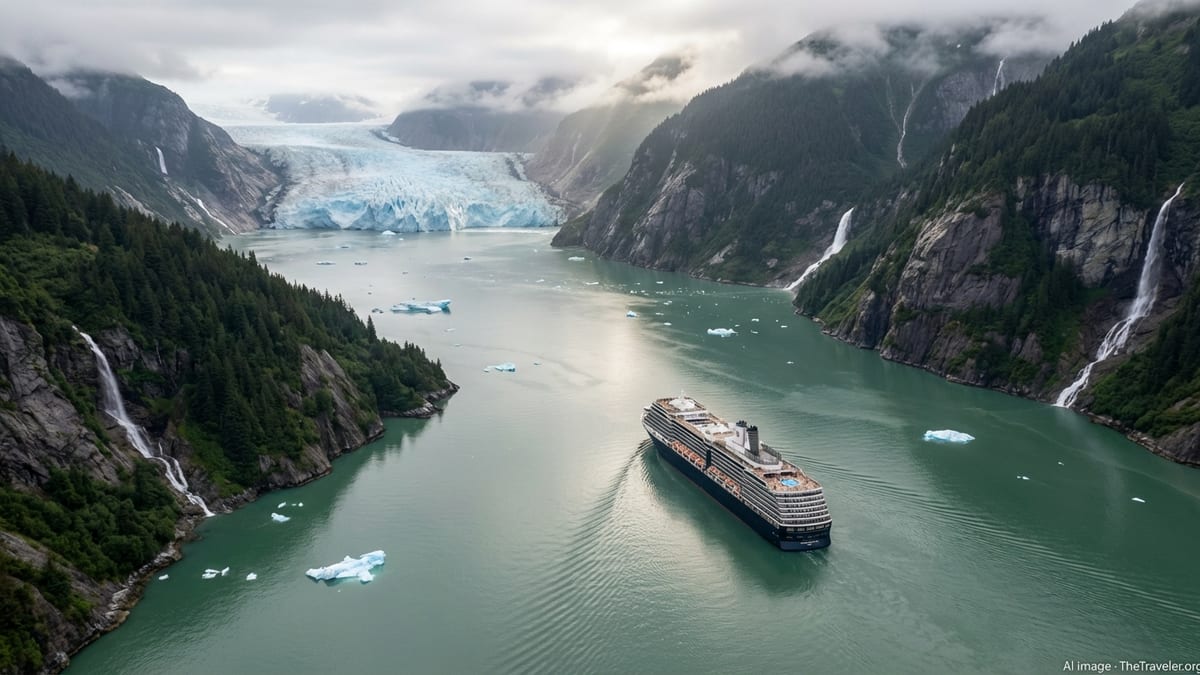
Tracy Arm and Endicott Arm sit side by side off Holkham Bay, around 45 to 50 miles south of Juneau, inside the Tongass National Forest and the protected Tracy Arm–Fords Terror Wilderness. Both are classic U-shaped fjords carved by ancient glaciers, each stretching for more than 30 miles with sheer rock walls that rise thousands of feet from the sea. In summer, their waters are typically dotted with floating ice from actively calving tidewater glaciers at their heads.
Tracy Arm ends at the twin Sawyer Glaciers, North Sawyer and South Sawyer, known for vivid blue ice and dramatic calving that sends chunks of glacier crashing into the sea. However, the fjord narrows considerably and is often choked with ice as you get closer to the glacier faces, especially on colder or earlier-season days. As a result, large cruise ships seldom reach the very end of Tracy Arm, relying instead on distant viewing or smaller excursion boats to get passengers closer.
Endicott Arm has a similar length and character but culminates at Dawes Glacier, a massive tidewater glacier roughly 600 feet high and about a mile wide at its face. Cruise lines highlight Dawes as a marquee glacier because the wider fjord and ice conditions generally allow big ships to approach closer to the glacier itself. In practice, Endicott Arm has become a frequent alternative when Tracy Arm’s tight entrance or S-curves are blocked by heavy ice.
Both fjords offer steep cliffs laced with waterfalls, hanging glaciers clinging to ridgelines, and dense temperate rainforest on lower slopes. From a purely scenic standpoint, they are sisters, with Tracy Arm often described as the narrower and more dramatic corridor, and Endicott Arm as the more consistently accessible route to a truly imposing glacier front.
Scenery and Glacier Viewing: What You Actually See
When travelers compare Tracy Arm and Endicott Arm, what they usually mean is how close they will get to a glacier and how impressive the ice looks from the ship’s rail. On this dimension, Endicott Arm and Dawes Glacier usually have a practical advantage for big-ship cruisers. The fjord’s shape and typical summer ice conditions often let ships edge in relatively near the glacier face, sometimes pausing and pivoting in front of Dawes so guests on both sides can see the crumbling blue wall and listen to the rumble of calving ice.
Tracy Arm’s glaciers are smaller in surface area but are famously intense in color because the dense ice contains fewer air pockets. When conditions allow smaller boats to reach them, the twin Sawyer Glaciers can be spectacular, punctuating the fjord with tall pinnacles, crevasses, and floating icebergs sculpted into intricate shapes. On a dedicated small-ship or catamaran excursion from Juneau or from a larger vessel at anchor, Tracy Arm can rival or surpass Endicott for immersive glacier views.
On large cruise ships, however, Tracy Arm often delivers more of a scenic fjord day than a close-up glacier encounter. Lines routinely note in their fine print that access to Sawyer Glacier is ice- and weather-dependent. In some seasons, ships are forced to turn around well short of the glacier face because the channel becomes clogged with bergy bits and larger floes. That can still be beautiful, with emerald water, cliffs, and waterfalls, but travelers set on a towering glacier right in front of the bow may find Endicott Arm more reliable.
If you imagine your ideal Alaska photo as a ship framed against a huge, vertical wall of ice, Endicott Arm with Dawes Glacier is often the better bet. If your dream is a more intimate, almost enclosed-feeling fjord, with tight S-bends and countless waterfalls cascading down narrow rock walls, Tracy Arm can feel more dramatic, particularly on a smaller vessel that can navigate further in.
Wildlife, Atmosphere, and Time of Year
Both fjords lie inside a rich coastal ecosystem, so wildlife encounters can be excellent whether your itinerary lists Tracy Arm or Endicott Arm. Harbor seals frequently haul out on ice floes in front of both Sawyer and Dawes glaciers, especially in late spring and early summer when pupping season peaks. Cruise lines sometimes reference these fjords as key breeding grounds for harbor seals, and it is common to see mothers and pups resting on small icebergs as the ship drifts past.
Humpback whales, orcas, and Dall’s porpoises are most often spotted on the approach through Stephens Passage and Holkham Bay rather than deep inside the narrow arms, though small-boat tours sometimes encounter marine mammals throughout the fjords. Along the steep slopes, passengers occasionally glimpse mountain goats clinging to impossibly steep ledges or black bears foraging near the shoreline. Bald eagles frequently perch on trees or rocky outcrops, scanning for fish.
Weather plays a major role in how either fjord feels. Both areas receive heavy precipitation, with frequent mist and drizzle even in midsummer. Low clouds can lend a moody, ethereal character as waterfalls emerge from veils of fog and distant peaks disappear into gray. On clearer days, sunlight catches the ice and water in vivid hues of turquoise and jade. Summer temperatures on fjord days often sit in the mid-30s to low-50s Fahrenheit, and it drops noticeably as ships push deeper into the arms, so warm, waterproof layers matter regardless of which fjord you visit.
Seasonality also influences access. In early May and sometimes into June, lingering winter ice can make Tracy Arm more challenging for large ships. By peak season in July and August, ice has typically broken up, improving the odds of deeper scenic cruising in both arms, though each year is different. For travelers booking early or late in the Alaska cruise season, Endicott Arm’s reputation as a more consistently navigable route is one reason many lines now feature it prominently on Inside Passage itineraries.
Ship Size, Itineraries, and How You Get There
One of the most practical differences between Tracy Arm and Endicott Arm lies in how your chosen cruise line and ship can operate in each fjord. Many mainstream lines list Tracy Arm or Endicott Arm as “scenic cruising” rather than a port, meaning you stay onboard while the ship spends several hours navigating the fjord. In schedules and brochures, you will often see “Tracy Arm Fjord” or “Endicott Arm and Dawes Glacier” used somewhat interchangeably, with footnotes explaining that the actual route may vary depending on ice.
Because Tracy Arm is both narrower and more sharply curved near its upper reaches, more lines have shifted toward Endicott Arm as their primary glacier day in this region. Endicott’s wider channel can be easier for big ships to maneuver, and Dawes Glacier’s expansive face makes for a straightforward, dramatic finale. Some itineraries even label the day “Scenic Cruising Tracy Arm or Endicott Arm” to signal that captains may switch between them based on conditions and maritime guidance.
Smaller expedition and adventure ships, along with high-speed catamarans operating as shore excursions, can penetrate deeper into Tracy Arm, getting closer to the Sawyer Glaciers than the typical large vessel can manage. This makes Tracy Arm particularly attractive for travelers who prioritize a small-ship or day-cruise experience over the amenities of a big resort-style vessel. Meanwhile, mainstream cruise lines highlight Endicott Arm on routes that must balance scenic experiences with safety, schedules, and the turning radius of large ships.
When comparing itineraries, read the fine print and recent traveler reports carefully. Some schedules list only the fjord name, while others spell out that a small-boat transfer or catamaran excursion is offered to reach Sawyer or Dawes more closely. If close glacier access is essential for you, focusing on cruises that specifically mention Endicott Arm with Dawes Glacier, or that include a dedicated small-boat Tracy Arm excursion from Juneau or from the main ship, can reduce disappointment.
Onboard Experience: Noise, Crowds, and Viewing Spots
Whether you sail Tracy Arm or Endicott Arm, your personal experience is heavily shaped by how you position yourself on the ship and how you like to enjoy scenery. On big ships, scenic fjord days typically begin early, with many passengers heading to top decks or the bow to claim rail space as the vessel enters the narrow channels. Public announcements may point out wildlife or key viewpoints, sometimes accompanied by commentary from onboard naturalists or park rangers, depending on the line.
Endicott Arm days can feel more predictable because captains have a clearer sense of how close they can typically get to Dawes Glacier. They may slowly rotate the ship in front of the glacier, allowing people on balconies and open decks on both port and starboard sides to enjoy equal views. Tracy Arm days, especially when ice conditions are uncertain, can involve more course adjustments and a turning point that comes earlier than some guests expect. That can lead to a sense of anticlimax for travelers who anticipated a towering glacier directly ahead, even when the fjord scenery has been excellent.
In practice, the more enclosed feel of Tracy Arm can heighten the sense of wilderness and isolation when conditions are favorable. The S-bends, cliffs close enough to study in detail, and waterfalls tumbling almost beside the hull can make the experience feel more intimate. Endicott Arm, while still a narrow fjord by global standards, often feels slightly more open. Many travelers describe the approach to Dawes Glacier as a slow reveal, with the glacier peeking around a bend before the ship emerges into a broad basin of ice-choked water.
For both fjords, interior lounges with floor-to-ceiling windows, forward observation decks, and aft-facing terraces become prime real estate. Travelers who prefer a quieter experience often retreat to less-used decks or to their own balconies, moving from side to side as the ship turns. Binoculars make a clear difference here: the ability to zoom in on harbor seals, goats, or calving ice transforms a glacier day from a distant postcard into a living, detailed experience, regardless of which arm you visit.
Reliability, Substitutions, and Managing Expectations
A recurring theme in recent seasons is that itineraries listing Tracy Arm sometimes pivot to Endicott Arm at short notice when ice becomes problematic. Some lines now acknowledge this directly in their destination descriptions, referring to Endicott as an alternative with similar scenery and, in some ways, a more reliable route to a glacier face. Travel forums and trip reports from recent years often mention last-minute switches announced onboard as captains respond to real-time ice and safety assessments.
From a planning standpoint, that means anyone booking an itinerary marketed around Tracy Arm should be prepared for the possibility of visiting Endicott Arm instead. Fortunately, few passengers feel shortchanged when the substitute is a close-up encounter with Dawes Glacier under good conditions. In fact, many ship photographers and naturalists quietly prefer Endicott days because of the consistent opportunity to showcase a massive glacier front in the daily program and marketing images.
The reverse can also happen, though less commonly: when Endicott Arm is choked with ice or conditions are better in Tracy Arm, captains may opt for Tracy instead. That flexibility is part of what makes cruising in this region safe but also inherently variable. Weather, ice, and even recent landslide activity in steep fjord walls can influence navigational decisions from one week to the next.
For travelers, the key is to treat fjord and glacier listings as intentions rather than guarantees. If your heart is set on Tracy Arm specifically, consider adding a dedicated small-boat or catamaran tour from Juneau that focuses only on that fjord, independent of your main cruise route. If your priority is a high likelihood of seeing a huge tidewater glacier up close from the comfort of a balcony or top deck, leaning toward itineraries that highlight Endicott Arm and Dawes Glacier is usually the safer choice.
Who Should Choose Endicott Arm vs Tracy Arm?
Choosing between Endicott Arm and Tracy Arm is less about which fjord is objectively better and more about which aligns more closely with your travel style, tolerance for uncertainty, and ship preferences. Endicott Arm tends to suit travelers who value a reliable, big-ship-friendly glacier day with strong odds of a classic, head-on view of a towering ice wall. Families and first-time cruisers who want that unmistakable glacier photograph, without the need to book extra tours, will likely feel well served by a Dawes Glacier itinerary.
Tracy Arm, by contrast, appeals strongly to those drawn to narrow fjords and a sense of exploration. On a small-ship cruise or dedicated day tour, Tracy Arm can be one of the most thrilling scenic experiences in Southeast Alaska, with steep granite faces tightening around the vessel and icebergs scattered throughout jade-colored water. Travelers willing to layer a catamaran excursion on top of a mainstream cruise, or those choosing an expedition line with a smaller vessel, often rate Tracy Arm as a highlight precisely because it feels slightly less predictable and more adventurous.
Budget can also play a role. Itineraries that include a Tracy Arm Fjord catamaran or similar small-boat excursion typically add to overall trip cost, though they can deliver some of the closest glacier encounters short of helicopter landings or guided trekking. Endicott Arm scenic days are usually included as part of the base itinerary, with no extra charge beyond the cruise fare itself, which can make them appealing for travelers trying to keep add-ons to a minimum.
Finally, consider your personal threshold for crowding and structure. Endicott Arm glacier days on large ships often follow a well-rehearsed pattern, with scheduled commentary, predictable rotations in front of the glacier, and a steady flow of passengers moving between decks and buffets. Tracy Arm on a smaller vessel, with fewer people aboard and captains able to linger near waterfalls or ice floes at will, can feel more spontaneous, with closer contact to both the landscape and the crew guiding you through it.
The Takeaway
When weighing Endicott Arm against Tracy Arm on an Alaska cruise, travelers are really choosing between two versions of a similar dream: gliding through a wilderness of stone, ice, and water in search of a living glacier. Both fjords run for more than 30 miles through protected wilderness south of Juneau, both are lined with waterfalls and hanging glaciers, and both host harbor seals, eagles, and the occasional bear or mountain goat. From a pure scenery standpoint, there is no clear loser.
Endicott Arm, with its wide basin and towering Dawes Glacier, is generally the stronger choice for travelers on large mainstream cruise ships who want a high likelihood of seeing a massive tidewater glacier right off the bow without arranging extra excursions. Tracy Arm, particularly when explored by smaller vessels or day boats from Juneau, can feel more intimate and adventurous, offering narrow passages, vivid blue ice, and a heightened sense of being tucked deep into the mountains.
The most practical advice is to treat listed fjords as flexible, influenced by ice and weather, and to match your trip style to the experience each arm is best at delivering. If you can, build room in your plans for both: a big-ship Endicott Arm day with Dawes Glacier, and a smaller-boat foray into Tracy Arm to meet the Sawyer Glaciers up close. For many travelers, the combination becomes the true answer to which Alaska cruise experience is better, turning an either-or question into a richly rewarding both-and.
FAQ
Q1. Is Endicott Arm or Tracy Arm better for seeing a glacier up close from a large cruise ship?
Endicott Arm is usually better for big ships because the fjord’s shape and ice conditions more often allow close approaches to Dawes Glacier, giving many passengers a direct, dramatic view.
Q2. Why do some itineraries list “Tracy Arm or Endicott Arm” instead of just one?
Cruise lines build in flexibility so captains can choose the safer or more accessible fjord based on current ice and weather, which often leads them to substitute Endicott Arm for Tracy Arm or vice versa.
Q3. Can a cruise ship always reach Sawyer Glacier in Tracy Arm?
No, large ships frequently turn around before reaching Sawyer Glacier because the upper part of Tracy Arm can be narrow and heavily packed with ice, especially early in the season.
Q4. Which fjord is more scenic overall?
Both are stunning, but many travelers describe Tracy Arm as feeling narrower and more dramatic, while Endicott Arm is praised for its broad basin and the imposing face of Dawes Glacier.
Q5. Do I need to book a separate excursion to get close to the glaciers?
For Tracy Arm, a small-boat or catamaran excursion often brings you much closer to the Sawyer Glaciers, while Endicott Arm’s Dawes Glacier is frequently visible at close range directly from the large cruise ship.
Q6. When is the best time of year to visit these fjords?
Midseason months like July and August generally offer milder weather and more navigable ice, but conditions change year to year, and early-season sailings may face more ice in both fjords.
Q7. Will I see wildlife in either Endicott Arm or Tracy Arm?
Wildlife is never guaranteed, but harbor seals on ice floes, bald eagles, and occasional whales, mountain goats, or bears are commonly spotted in and around both fjords.
Q8. How cold does it feel during a fjord and glacier day?
Expect temperatures often in the 30s to low 50s Fahrenheit, with colder air closer to the glacier, so warm layers, hats, gloves, and waterproof outerwear are important in both fjords.
Q9. Is one fjord better for travelers prone to seasickness?
Inside these sheltered arms, seas are usually calm, and differences between Endicott and Tracy Arm are minor, though the approach through open channels can occasionally be choppier.
Q10. If I can only choose one, which fjord should I prioritize?
If you are on a large mainstream ship and want the best chance at a close glacier view without extra cost, choose an itinerary with Endicott Arm. If you value a narrow, adventurous-feeling fjord and can book a small-boat tour, Tracy Arm may feel more special.