


More news on this day
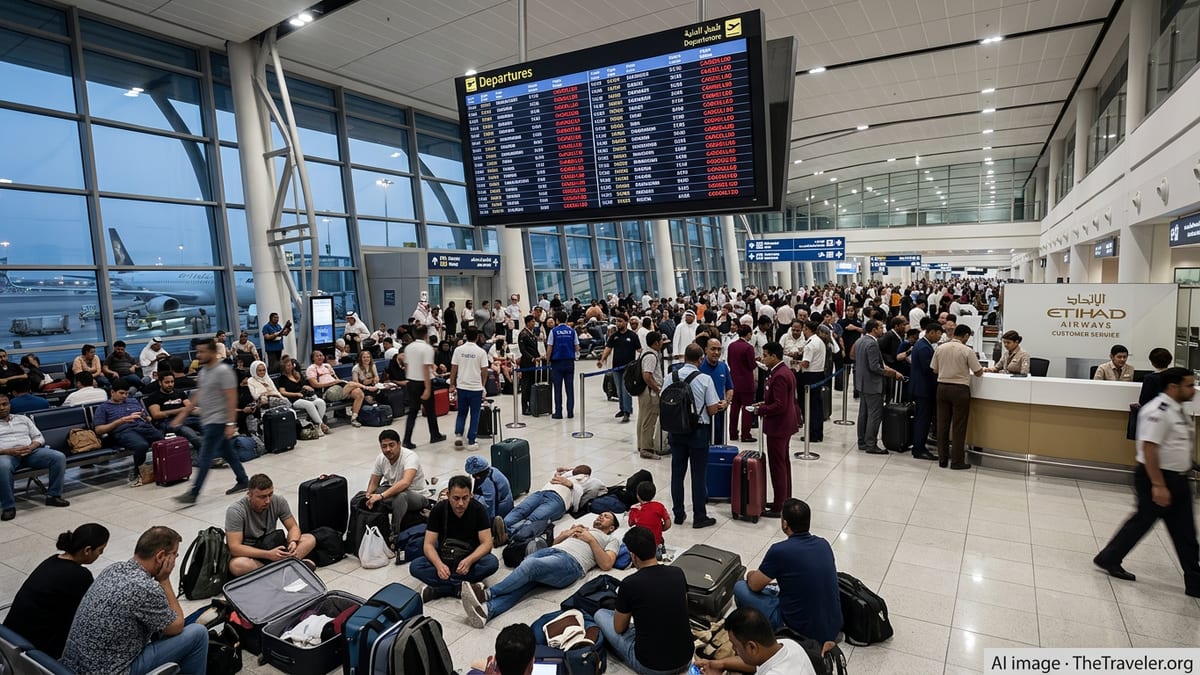
Travel between Oman and Abu Dhabi has been hit by fresh disruption after two Etihad Airways services on the busy Oman–Abu Dhabi corridor were cancelled, adding to a year of intermittent schedule changes across the Gulf.
Get the latest news straight to your inbox!
What Is Known About the Latest Cancellations
Publicly available flight-tracking data and airport departure boards indicate that two Etihad flights on the Oman–Abu Dhabi route were recently cancelled, interrupting what is normally a high-frequency schedule between the Omani capital and the UAE’s main hub. These cancellations affect services that connect Muscat and Abu Dhabi, a key short-haul link used by both point-to-point travellers and long-haul transit passengers.
Data compiled from flight-status platforms shows at least one Muscat–Abu Dhabi service marked as cancelled in the last forty-eight hours, while historical records for the same flight pair reflect a pattern of occasional disruption aligned with wider regional airspace issues. Combined with earlier suspensions of Etihad operations to and from Abu Dhabi during periods of heightened regional tension, the latest changes underscore the fragility of Gulf aviation schedules this year.
While Oman’s airspace remains open, specialist regional risk reports and earlier Gulf-wide aviation advisories describe a patchwork of restrictions, reroutings, and airline-specific decisions that can lead to ad hoc cancellations. The affected Etihad flights appear to fit within this broader pattern, rather than being linked solely to technical or weather-related causes.
The cancellations are particularly notable because Etihad has been expanding its footprint in Oman, including the launch of new seasonal services to Salalah, which makes interruptions on its long-established Muscat link more visible to the traveling public.
Impact on Passengers Traveling via Muscat and Abu Dhabi
The immediate impact of the two flight cancellations is felt by passengers who had planned to use Abu Dhabi as a connecting hub. Etihad’s Muscat–Abu Dhabi services feed into long-haul departures to Europe, North America, and Asia, so even a single cancellation can cause missed connections and rebookings across multiple continents.
Accounts shared in public traveler forums over recent months describe how regional airspace constraints have already extended flight times or forced last-minute schedule changes on journeys involving Abu Dhabi and overflights near Oman. In some cases, travellers reported delays attributed to routing around restricted areas or waiting for updated clearances, illustrating how events in the wider Gulf region can cascade down to short sectors such as Muscat–Abu Dhabi.
For passengers in Oman, disruption on the Etihad route reduces same-day options to reach Abu Dhabi and onward global destinations. Muscat remains well connected through Oman Air and other Gulf carriers, but the loss of specific Etihad rotations can still mean longer layovers, overnight stays, or complete date changes for those holding through-tickets on the airline.
Given that Abu Dhabi’s role as a connecting hub relies on tight transfer windows, the cancellation of even two flights can create concentration points of stranded or delayed passengers, especially at peak travel times such as school holidays and the busy khareef season for Salalah-bound traffic.
How This Fits Into a Year of Gulf Airspace Disruption
The latest Oman-related cancellations come against a backdrop of months of upheaval in Gulf aviation. Earlier this year, Etihad’s published travel updates and regional media coverage documented periods when all scheduled commercial flights to and from Abu Dhabi were temporarily suspended due to regional airspace closures, with operations only resuming in phases as conditions allowed.
Independent aviation and maritime risk bulletins from March described a complex picture of partially restricted skies in several Gulf states, with Oman’s airspace remaining technically open but some airlines nevertheless choosing to cancel or reroute flights for operational or safety reasons. These advisories noted that passengers were often advised not to travel to airports without confirmed departure times, highlighting the uncertainty that has defined the period.
Oman’s own aviation authorities, in recent seasonal readiness briefings, have emphasized that airports such as Muscat and Salalah remain operational and prepared for increased demand. Those updates list multiple UAE carriers, including Etihad, among the airlines ramping up services into Salalah for the khareef season, underlining the economic importance of reliable air links between the two countries.
Within this regional context, the cancellation of two Etihad services touching Oman is a relatively small but telling example of how quickly localized schedule changes can arise when broader airspace dynamics shift, even if only for a short window.
Options and Advice for Affected Travelers
For passengers booked on the cancelled Etihad flights between Oman and Abu Dhabi, the primary options are rebooking on later Etihad services, rerouting via alternative Gulf hubs, or requesting refunds and managing travel independently. Etihad’s general customer guidance in recent disruption notices has typically included flexibility to change dates or destinations, although specific conditions depend on ticket type and the period of disruption.
Travelers are strongly encouraged to monitor their booking status through official airline channels or mobile apps in the 24 hours before departure, since publicly available schedule data shows that changes can occur close to flight time. Airport departure and arrival boards for Muscat and Abu Dhabi, as well as recognized global flight-tracking platforms, can provide additional confirmation of whether a specific service is operating, delayed, or cancelled.
Where a cancelled flight breaks a longer itinerary, passengers may wish to proactively look at alternative routings through Doha, Dubai, or other regional hubs served from Oman, while keeping any rebooking within the terms of their original ticket. Travel insurance policies that cover missed connections and cancellations due to operational reasons can also help offset the cost of last-minute hotel stays or replacement tickets.
Given the ongoing sensitivity of airspace arrangements in parts of the Middle East, industry analysts and regional risk briefings consistently recommend allowing extra buffer time for connections involving Gulf hubs. Even when skies are open and flights are broadly running, occasional cancellations such as the latest Etihad Oman–Abu Dhabi services show that travellers remain exposed to sudden schedule shifts beyond the control of individual passengers.