

More news on this day
Etihad Airways is preparing a high-profile return to the Bangladeshi market, announcing a new seasonal direct service between Abu Dhabi and Dhaka that is poised to accelerate regional connectivity and deepen travel links between the United Arab Emirates and Bangladesh.
Get the latest news straight to your inbox!
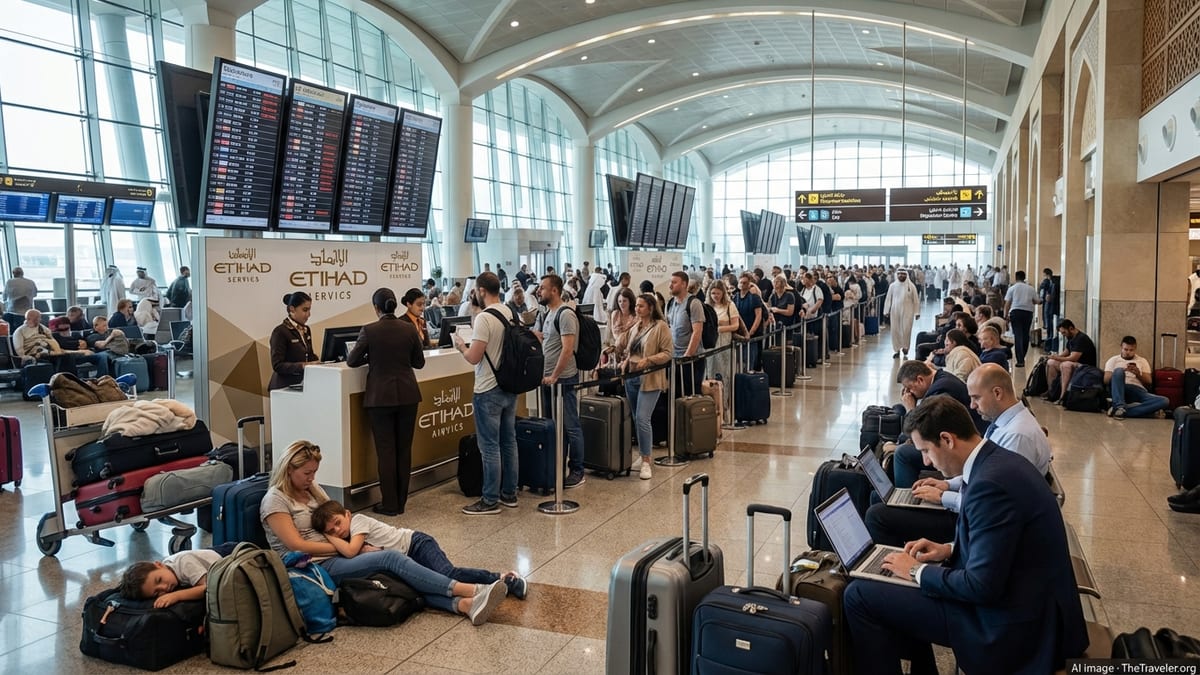
Seasonal Service Marks Etihad’s Return to Dhaka
Publicly available information shows that Etihad Airways will launch nonstop flights between Abu Dhabi and Dhaka from 26 June 2026, restoring a direct link that had been absent from the carrier’s network since it withdrew from the route several years ago. The new operation is structured as a seasonal service, with flights currently scheduled through 24 October 2026, timed around peak summer and holiday demand.
Industry reports indicate that the route will operate multiple times per week, offering a continuous direct connection between Abu Dhabi’s growing hub and Hazrat Shahjalal International Airport in Dhaka. The move is being framed by aviation analysts as a “comeback” for Etihad in Bangladesh, re-establishing a presence in a market that has continued to show robust outbound and inbound traffic despite broader regional disruptions.
The relaunch follows a period in which other Gulf and regional carriers dominated the UAE–Bangladesh corridor after Etihad discontinued its Dhaka flights in 2023. Market observers suggest that the carrier’s re-entry reflects confidence in renewed passenger demand, supported by gradually normalizing operations from Abu Dhabi and a broader expansion drive across key South Asian and African destinations.
According to published coverage, Dhaka’s return to the schedule forms part of a wave of new and resumed routes that Etihad is rolling out as it rebuilds capacity and seeks to strengthen its position among Gulf competitors.
Bolstering UAE–Bangladesh Travel and Diaspora Links
Bangladesh is home to a large expatriate workforce in the United Arab Emirates, and the UAE hosts one of the most significant Bangladeshi communities in the Gulf. Travel publications note that this sizable diaspora underpins consistent two-way traffic, with workers, business travelers, students, and families relying on air connections for both essential and discretionary journeys.
The new Etihad service is expected to provide additional choice on a corridor historically served by a mix of local and Gulf carriers, including nonstop links from other UAE emirates. With Abu Dhabi rejoining the network of cities directly connected to Dhaka, travelers will gain another option for point-to-point travel, potentially easing pressure on peak-season capacity when demand traditionally exceeds available seats.
Observers point out that the timing of the seasonal schedule captures the busy summer travel period, when Bangladeshi residents in the UAE commonly return home for extended family visits, as well as key religious and festival periods. This is anticipated to support both outbound flows from the UAE and inbound tourism and visiting friends and relatives traffic into Bangladesh.
Aviation commentators add that the service may also appeal to Bangladeshi nationals living in other Gulf states or beyond, who may use Abu Dhabi as a connecting point thanks to the carrier’s broader regional network.
Gateway to Wider Network and Enhanced Regional Connectivity
Beyond the point-to-point link between the two capitals, Etihad’s renewed presence in Dhaka is being positioned in industry analysis as a connector to a far wider network. Passengers from Bangladesh will gain access to onward routes via Abu Dhabi to destinations across Europe, North America, the Middle East, and Africa, often with single-stop itineraries that can be competitively timed against rival hubs.
Route analysis platforms highlight that the Abu Dhabi hub offers extensive same-day connections to major European gateways, along with services to North American cities and an expanding network in Africa. For Bangladeshi travelers, this opens additional options for reaching employment centers, educational hubs, and family destinations without relying solely on traditional transfer points such as Dubai or Doha.
The new Dhaka operation is also expected to feed additional traffic into Etihad’s long-haul network, supporting higher aircraft utilization on intercontinental routes. In turn, travelers from Europe and North America seeking to reach Bangladesh will have another connection option via Abu Dhabi, which may become attractive for those prioritizing schedule, pricing, or specific loyalty program benefits.
Travel industry analysts note that the move reinforces Abu Dhabi’s role as a growing alternative hub in the region, offering competition and additional capacity on South Asia corridors that have seen steady growth in recent years.
Strengthening Trade, Cargo, and Economic Corridors
According to airline statements and trade press coverage, the Dhaka service is designed not only for passenger traffic but also to support cargo flows along a key economic corridor between the UAE and Bangladesh. Bangladesh is a significant exporter of ready-made garments and textiles, much of which moves to markets in Europe, North America, and the Middle East by air freight during peak production periods.
Logistics analysts observe that utilizing belly cargo capacity on passenger aircraft between Dhaka and Abu Dhabi allows shippers to tap into fast connections to long-haul freighter and passenger networks. This is especially relevant for time-sensitive goods, high-value textiles, and other exports that benefit from short transit times to global retail centers.
The UAE, in turn, exports machinery, electronics, construction materials, and consumer goods to Bangladesh, and the renewed service is expected to support these flows in both directions. Trade-focused coverage suggests that the new route will further embed Abu Dhabi’s role as a logistics gateway for South Asian cargo, complementing seaport links and overland distribution routes.
Business observers also highlight that enhanced air connectivity typically spurs broader economic activity, from tourism to investment missions and corporate travel, which can contribute to deeper commercial ties between the two countries over the medium term.
Competitive Dynamics and Outlook for the Route
The return to Dhaka places Etihad back into a competitive market segment currently served by Gulf and regional carriers offering a mix of direct and one-stop itineraries. Aviation commentators note that the airline’s strategy of launching the route as a seasonal service allows it to test demand patterns and adjust capacity without committing to year-round operations from the outset.
Industry reports suggest that frequency, schedule timing, and pricing will be key factors in determining the route’s performance, especially during peak travel windows when demand for Bangladesh services is historically strong. Etihad’s product offering on the route, including cabin configuration and onboard services, is also expected to play a role in attracting both leisure and business travelers.
Analysts indicate that if load factors and yields meet expectations during the initial June to October 2026 season, the carrier may consider extending operations or returning with an expanded program in subsequent years. Conversely, the seasonal framework provides flexibility in the event of shifting market conditions, regulatory changes, or broader operational challenges.
For now, the announcement is being viewed in the regional aviation sector as a significant step in Etihad’s ongoing network rebuilding, symbolizing the airline’s renewed ambitions in South Asia and signaling a stronger, more diversified set of options for passengers and businesses linking the UAE and Bangladesh.