

More news on this day
Etihad Airways will deploy its flagship Airbus A380 on daily flights between Abu Dhabi and Bangkok from October 25, 2026, a high-profile upgrade that brings the airline’s ultra-luxury Residence suite to Thailand for the first time and injects significant new capacity into one of the country’s most important long-haul tourism corridors.
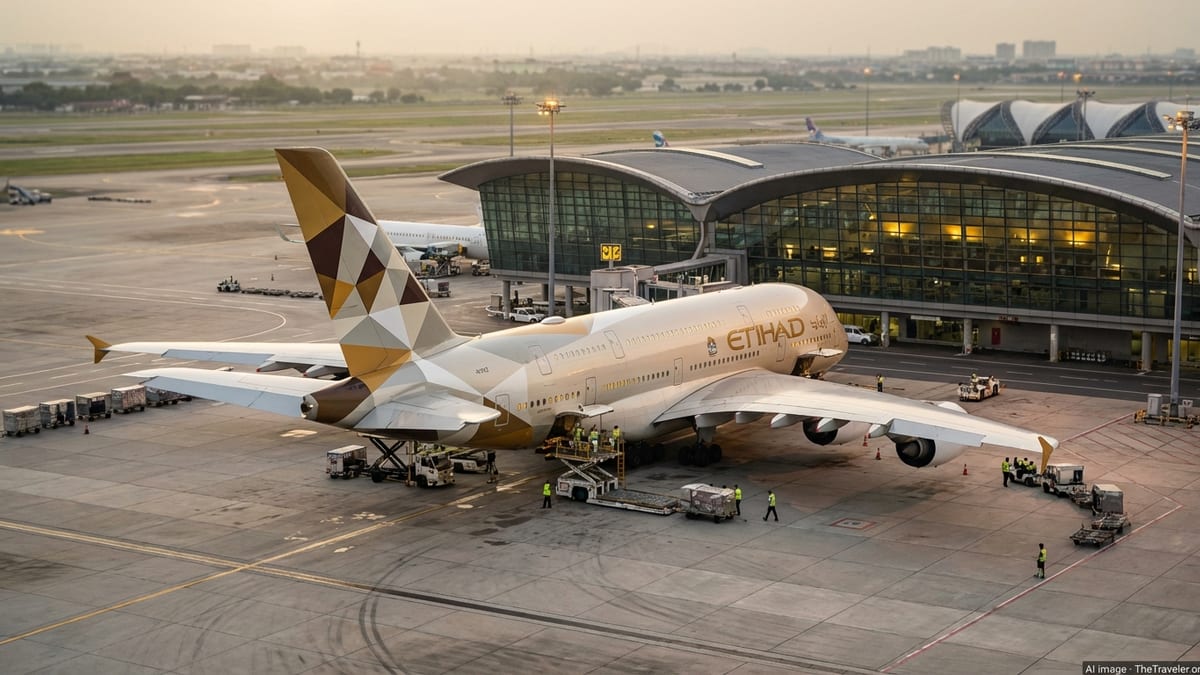
Flagship Superjumbo Debuts on a Strategic Leisure Route
The double decker A380 will take over Etihad’s evening service between Abu Dhabi’s Zayed International Airport and Bangkok’s Suvarnabhumi Airport, scheduled to depart the UAE capital at 21:20 and arrive in Bangkok at 06:35 the following morning. The return leg leaves Bangkok at 08:30 and lands in Abu Dhabi at 12:20, with the rotation operating year-round on a daily basis.
The move marks the first time Etihad has scheduled its largest aircraft into Thailand, elevating Bangkok to the same A380 status as major global hubs already served by the type. Industry analysts note that the timing, aligned with the start of the Northern Hemisphere winter season, is designed to capture strong demand from Europe and the Gulf into Thailand’s peak months, when visitors flock to the country’s beaches and cultural hotspots.
The A380 will replace smaller widebody aircraft currently assigned to the route, delivering a substantial seat increase across all cabins. This allows Etihad to consolidate capacity into a single high-density, high-yield departure that connects smoothly with its banks of European and Middle Eastern flights in Abu Dhabi.
Etihad executives have said Bangkok was among the most requested new A380 destinations from customers, underlining the route’s importance in the carrier’s post-pandemic growth strategy and its pivot toward premium leisure traffic.
Ultra-Luxury Cabins Redefine the Journey to Thailand
Central to the upgrade is the introduction of The Residence, billed as the world’s only three-room suite in commercial aviation. Located on the upper deck, it accommodates up to two guests in a private living room, separate bedroom, and en suite bathroom complete with inflight shower. A dedicated crew team and tailored dining, including champagne, caviar and multi-course menus, position the product firmly in the ultra-luxury segment.
Surrounding The Residence are nine First Apartments, each configured as a self-contained suite with a leather lounge chair, an ottoman that converts into an 80-inch fully flat bed, a personal vanity and access to an exclusive shower room reserved for First guests. The design is aimed at long-haul comfort for high-spend travellers, including premium holidaymakers and corporate clients extending business trips into Thailand.
The upper deck also houses 70 Business Class seats with fully flat beds and direct aisle access, alongside a social lounge area where premium passengers can move around, meet or relax away from their seats during the six to seven hour flight. Throughout the aircraft, high-speed connectivity and upgraded inflight entertainment target a seamless experience for passengers combining work and leisure.
On the main deck, Economy is split between 68 extra-legroom Economy Space seats and 337 standard seats, all featuring fixed-wing headrests and larger pillows designed for overnight comfort. The configuration gives tour operators, group travel planners and price-sensitive travellers more options at different budget levels on the key Abu Dhabi–Bangkok sector.
Boost for Thailand’s Tourism and Premium Travel Market
The A380 deployment arrives as Thailand works to consolidate its tourism recovery and push further into higher-yield segments. Tourism and aviation officials have positioned Bangkok as both a destination in its own right and a gateway to resort areas such as Phuket, Koh Samui and Krabi, which see strong demand from European, Middle Eastern and Indian markets.
With hundreds of additional daily seats, Etihad’s capacity increase is expected to support growth in arrivals, particularly during the November to March high season when hotel occupancy and room rates in Bangkok and the islands reach their annual peaks. Travel industry observers say the combination of more seats and a sharper focus on premium products should help attract higher-spending visitors and lengthier stays.
The move also fits into a wider regional trend, with multiple Gulf and Asian carriers deploying larger aircraft and denser schedules to Thailand to tap into resilient leisure demand. By putting its most prestigious aircraft on the route, Etihad signals confidence not only in Bangkok’s visitor numbers, but also in the city’s ability to sustain robust premium and ultra-premium traffic.
Tour operators in Thailand are expected to package the new A380 service into luxury itineraries, highlighting The Residence, First Apartments and Business Class as part of the overall holiday proposition for honeymooners, families and affluent travellers combining urban stays with beach escapes.
Strengthening Abu Dhabi’s Role as a Connecting Hub
Beyond the point-to-point market, the A380 introduction is designed to reinforce Abu Dhabi’s position as a key connecting hub between Europe, the Middle East and Southeast Asia. The evening departure from the UAE capital is timed to receive inbound passengers from major European gateways and regional cities across the Gulf, who can then connect onward to Bangkok on a single overnight leg.
On the return, the mid-morning departure from Bangkok feeds into early afternoon arrivals in Abu Dhabi, enabling onward same-day connections to Europe, North America and the Middle East. The upgauged aircraft allows Etihad to consolidate connecting traffic flows, improving efficiency while offering a markedly upgraded onboard experience.
Abu Dhabi tourism officials are also expected to benefit. Etihad is promoting stopover programs that encourage passengers bound for Thailand to spend one or more nights in the Emirati capital, effectively turning a single trip into a twin-centre holiday. With the A380 as a marketing draw, the airline can highlight both Abu Dhabi’s cultural attractions and Bangkok’s vibrant urban and beach-linked itineraries in a single proposition.
The strategy aligns with broader efforts to position Abu Dhabi as a premium lifestyle destination in its own right, while using high-profile routes such as Bangkok to anchor long-haul network growth and increase visitor flows through the hub.
Competitive Pressure and Future Growth Prospects
Etihad’s decision places it firmly in the top tier of carriers operating large aircraft into Thailand, alongside rivals that already use the A380 or other high-capacity widebodies on routes to Bangkok. Aviation analysts say the upgrade will intensify competition on fares and product, particularly in premium cabins, on corridors linking Europe and the Middle East with Thailand’s capital.
For travellers, the result is likely to be a broader choice of schedules and cabin experiences at a time when Thailand is pushing to maintain its status as one of the world’s most visited countries. Luxury-focused hotels, resorts and destination management companies are watching the development closely, anticipating increased demand from guests who view the journey as a key part of the overall travel experience.
Looking ahead, industry observers suggest the Bangkok A380 deployment could become a template for Etihad’s growth in other high-potential leisure markets across Asia, where strong demand and premium propensity justify the airline’s most capacious aircraft. If load factors and yields on the route perform as expected after October 2026, similar upgrades on other regional trunk routes are likely to follow.
For now, the arrival of the A380 in Bangkok underscores how closely airline network decisions are tied to tourism strategies, with Etihad’s latest move set to reshape the high-end travel landscape between Thailand, the Gulf and Europe from the 2026 winter season onward.