


More news on this day
European Union leaders have called an urgent meeting with airlines and airport operators in the coming days, responding to mounting reports of hours long queues, missed flights and mounting frustration at major hubs as new border controls strain airport operations across the bloc.
Get the latest news straight to your inbox!
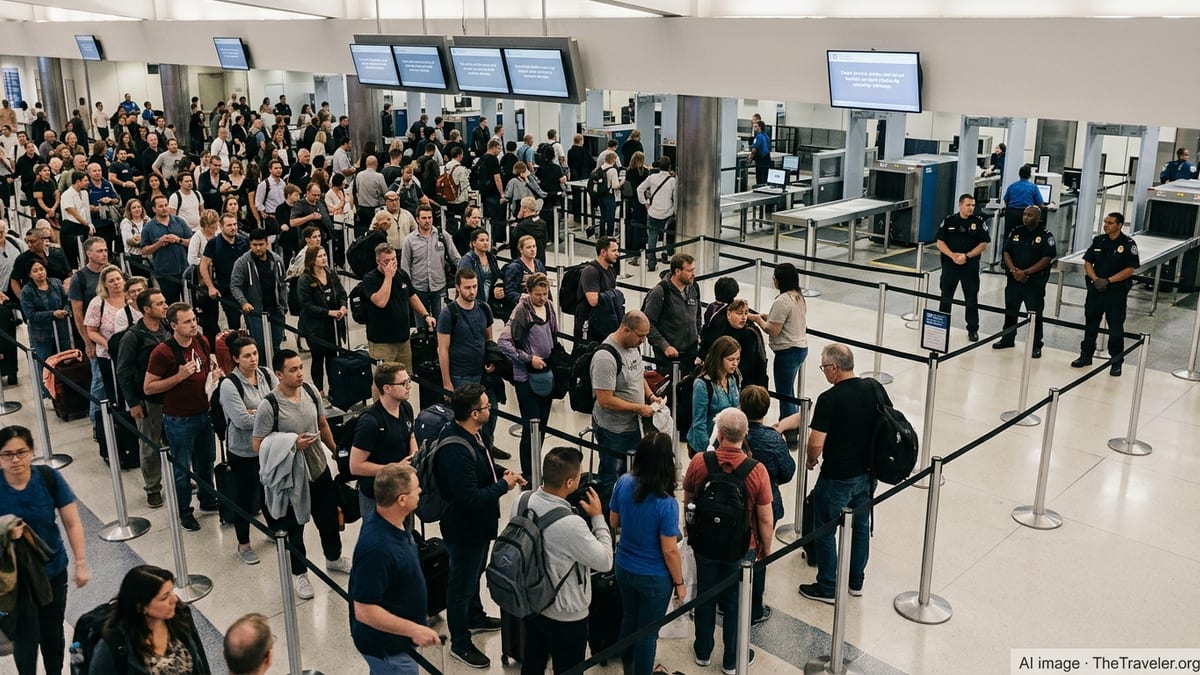
Airport bottlenecks intensify ahead of peak summer travel
Reports from major European hubs describe passengers queuing outside terminals, waiting several hours at passport control and, in some cases, missing flights despite arriving at airports well in advance. Coverage from multiple European outlets indicates that border processing times at some external Schengen checkpoints have stretched to four or even five hours during busy periods, with trade groups warning that conditions could deteriorate further as the main school holiday season begins.
The disruption comes as travel demand across Europe returns to or exceeds pre pandemic levels, leaving many airports operating close to capacity. Aviation industry associations have argued that infrastructure and staffing at border control points have not kept pace with this rebound, creating choke points that ripple through flight schedules and baggage handling.
Some airlines have begun advising passengers on routes to and from non Schengen destinations to arrive at least three hours before departure, even for short haul flights, in an effort to reduce the risk of missed departures. Passenger accounts shared in recent weeks describe confusion at terminals as airport staff attempt to re route lines and manually prioritize travelers for imminent flights.
Industry groups say the pressure is particularly acute at popular leisure gateways serving the Mediterranean, where waves of peak hour arrivals are combining with new biometric checks to slow the flow of travelers through border posts.
New Entry/Exit System under scrutiny
At the center of the current crisis is the European Union’s new Entry/Exit System, or EES, which requires most non EU nationals entering the Schengen area to submit facial images and fingerprints that are then recorded in a central database. Publicly available information shows that the system was designed to strengthen external border security and replace the stamping of passports with digital records of each crossing.
Since the latest phase of implementation began, however, airlines, airports and passenger groups have warned that the additional biometric steps are significantly lengthening processing times at many checkpoints. Industry statements collected by European media describe bottlenecks where travelers must enroll their data at kiosks before approaching a staffed booth, with technical glitches and unfamiliar procedures adding further delays.
Airport and airline associations have repeatedly cautioned Brussels in recent months that the rollout schedule risked coinciding with the busiest travel period of the year. In an earlier joint letter, organizations representing carriers and airports urged EU institutions to delay or phase in the rules more gradually, arguing that many border facilities were not yet physically adapted to handle the new flows.
Reports now indicate that these concerns have intensified, with aviation bodies characterizing the current situation as a “critical point” for some hubs. While industry groups maintain their backing for the objectives of EES, they are pressing for urgent technical fixes, additional staffing and, in some cases, temporary relief from full compliance during peak weeks.
Brussels convenes crisis talks with airlines and airports
Against this backdrop, EU leaders have moved to convene what has been described in published coverage as an urgent meeting with airline and airport representatives. According to European press reports, the session is expected to take place in the coming days in Brussels and will bring together senior figures from carriers, airport operators and border management authorities.
Public statements from the European Commission have so far emphasized that the overall impact of the new border system is considered limited at the EU level, and that responsibility for queue management and staffing primarily lies with national governments. Commission officials have pointed to the obligation on member states to ensure a sufficient number of border guards and adequate infrastructure at their external Schengen checkpoints.
Aviation groups, by contrast, argue that the current experience of passengers shows systemic problems that require coordinated action at EU level. Trade bodies representing airlines and airports have highlighted instances where queues have extended onto tarmac areas and terminal forecourts, raising concerns about both customer welfare and basic safety.
The upcoming talks are expected to focus on short term measures to ease congestion this summer, as well as longer term adjustments to the design and operation of EES. Observers in the travel industry anticipate discussions on potential contingency procedures, such as streamlined processing for families or vulnerable passengers and better advance communication with travelers.
Calls grow for temporary relief and clearer guidance
As scenes of crowded terminals circulate on social media and in regional news reports, calls for temporary relief from strict EES implementation have grown louder. Some carriers argue that suspending certain biometric requirements during peak days, or introducing more flexible enrollment procedures, could help stabilize operations while permanent solutions are developed.
Airline chiefs have also pressed for clearer, unified guidance that can be communicated to passengers across markets. Current advice varies between airports and countries, with some operators recommending arrival times of two hours for short haul flights and others suggesting three or even four hours, particularly for departures to non Schengen destinations.
Consumer groups in several member states have urged authorities to ensure that passengers facing extreme delays at border control are not left to bear the financial consequences of missed flights alone. Legal experts note that existing EU air passenger rights rules focus on airline responsibility for cancellations and long delays, while disruptions linked primarily to border control or state run infrastructure can be more complex to resolve.
For now, travel commentators suggest that passengers planning summer trips through major European hubs should build extra time into their itineraries, pay close attention to guidance from their airlines and airports, and be prepared for longer waits at passport control than in previous years.
What this means for summer travelers
For international visitors heading to Europe in the coming weeks, the evolving situation means that the airport experience may feel different from recent summers. The combination of high demand, new border checks and limited spare capacity means that even small disruptions can quickly cascade into longer queues and schedule knock on effects.
Travel planners advise that passengers connecting through large European hubs consider longer layover times to reduce the risk of missed onward flights if border queues are severe. Families and groups may benefit from organizing travel documents in advance and staying together in lines to avoid additional checks or confusion at control points.
Despite the disruption, flights are largely continuing to operate, and many travelers still complete their journeys with only moderate delays. Industry analysts note that how quickly conditions improve will depend heavily on the outcome of the urgent EU level talks and on the willingness of member states to deploy extra staff and resources at critical airports.
As EU leaders, airlines and airports attempt to stabilize the situation, the coming peak weeks are likely to serve as a pivotal test of Europe’s new border management regime and of the region’s ability to balance security objectives with a smooth travel experience.