


More news on this day
The European Union is pledging to intensify efforts to tackle long queues and disrupted journeys linked to its new Entry/Exit System, as mounting concerns from airlines, airports and travellers coincide with the peak 2026 summer holiday period.
Get the latest news straight to your inbox!
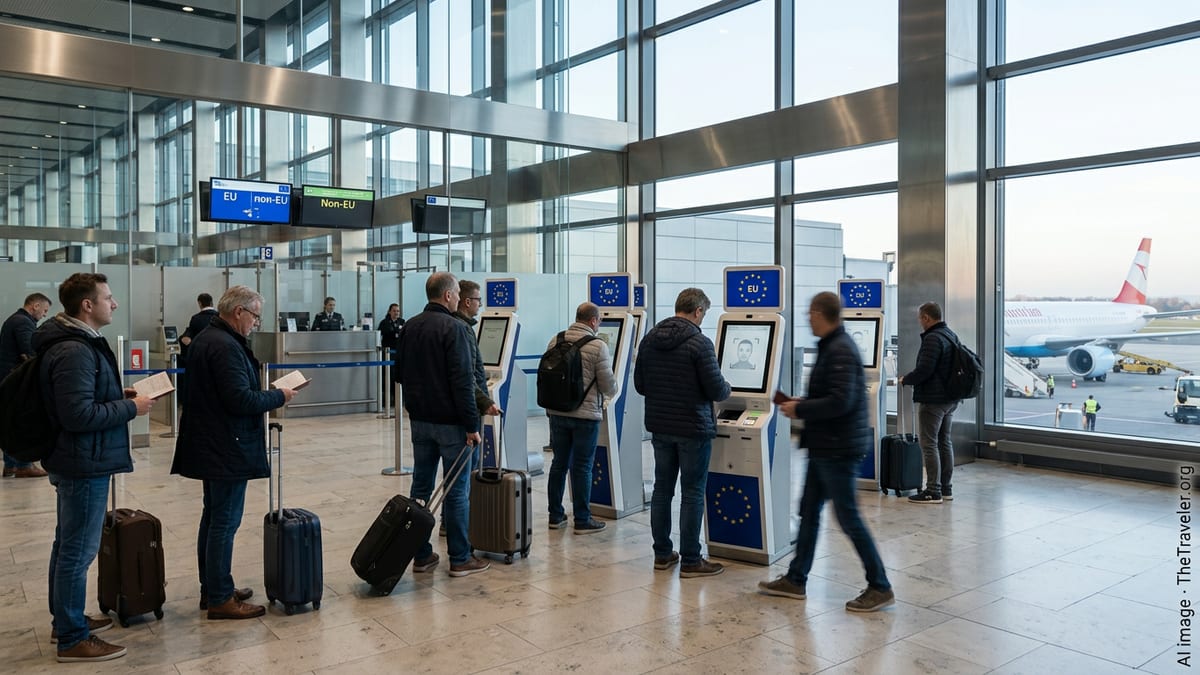
Fresh commitment to reduce EES bottlenecks
Publicly available information indicates that the European Commission has committed to step up work with member states and industry to ease delays caused by the Entry/Exit System, or EES. The digital border database, fully operational across the Schengen Area since April 2026, has been blamed for lengthy queues at some airports and land crossings, particularly during busy travel weekends.
According to recent coverage, Brussels has ruled out suspending the system but is focusing instead on practical steps to improve performance. The stated objective is to preserve the security gains of automated checks while addressing operational flaws that have led to missed flights, crowding at passport control and inconsistent experiences across the bloc.
Reports indicate that nearly 110 million journeys have already been processed through EES, with tens of thousands of travellers refused entry or flagged as potential security concerns since its rollout. While officials present these figures as evidence of the system’s added value, airlines and airports argue that the technical and staffing challenges behind the scenes still require urgent attention.
Flexible rules for summer 2026 travel peak
To ease immediate pressure, new measures for the 2026 summer season allow member states more flexibility in how the system is applied at the border. Coverage in European media describes contingency provisions that permit countries, in certain circumstances, to suspend biometric data capture temporarily and instead rely on faster passport checks when queues reach critical levels.
These provisions are framed as short term tools to manage peak flows rather than a retreat from digital controls. The aim is to avoid scenes of passengers waiting several hours to clear border checks, which were reported at multiple entry points earlier in the year, while IT issues and staff training gaps are resolved.
Industry groups have repeatedly warned that summer traffic volumes could magnify any remaining weaknesses in the system, particularly at major hubs that handle large numbers of non EU passengers. The new flexibility is intended to give border authorities room to react quickly when automated gates slow down or when registration kiosks create bottlenecks for first time users.
Coordinated push with airlines, airports and eu LISA
According to recently published accounts of meetings in Brussels, European air sector representatives, border agencies and the EU agency eu LISA are now engaged in a more structured dialogue on how to stabilise EES operations. Eu LISA, which manages the large scale IT infrastructure behind the system, is expected to refine software, expand monitoring and support member states with technical troubleshooting.
Airlines and airport operators have pressed for clearer guidance on queue management and the use of manual workarounds when automated processes fail. Travel industry associations are also calling for coordinated communication so that passengers understand what to expect on arrival and which documents or biometric checks will be required.
Publicly available briefings suggest that the Commission intends to track performance more closely at problem hotspots and encourage countries to share effective practices. These include dedicated lanes for travellers who have already completed EES enrolment, better staffing plans during peak hours, and improved integration between airline systems and border databases for pre departure checks.
Mixed experience for travellers at EU borders
Since EES became fully operational in April, the experience for travellers has varied widely across the Schengen Area. Reports in European media and travel forums describe some airports processing passengers with minimal disruption, while others have seen queues stretching for hours as border posts adapted to the new biometric registration steps.
Passengers from non EU countries who are visiting the Schengen Area for the first time under the new rules must have their fingerprints and facial image captured in addition to a digital passport scan. Once this initial registration is completed, subsequent crossings should in theory be faster, but anecdotal accounts suggest that system glitches and data mismatches have sometimes forced repeat checks.
Rail and ferry terminals, as well as certain busy road crossings, have also reported congestion during the first months of full EES operation. Travel advice shared by airlines and tourism bodies often urges passengers to head straight to border control after check in and security, rather than linger in the departures area, to account for potential delays.
Balancing security goals with smoother passenger flows
The Entry/Exit System is designed to replace manual passport stamping with a centralised digital record of non EU nationals entering and leaving the Schengen Area. According to official explanations and think tank analyses, the system is intended to improve the detection of overstayers, reduce identity fraud and provide more reliable statistics on border crossings.
The current wave of operational challenges is seen by many observers as a test of whether these security and data benefits can be achieved without undermining the attractiveness of European destinations. Tourism bodies in countries that depend heavily on visitors from outside the EU are watching closely to see whether the new measures to cut delays translate into a visibly smoother experience at border checkpoints.
Looking ahead, EES is also viewed as a foundation for the forthcoming European Travel Information and Authorisation System, which will introduce online pre travel screening for visa exempt visitors. The lessons learned from stabilising EES operations over the 2026 summer season are expected to shape how that next phase of digital border management is planned and communicated to travellers worldwide.