

More news on this day
Hundreds of passengers across Europe faced widespread disruption today as 55 flights were cancelled and 1,086 delayed, with knock-on effects reported in Moscow, London, Munich, Copenhagen and several other major hubs.
Get the latest news straight to your inbox!
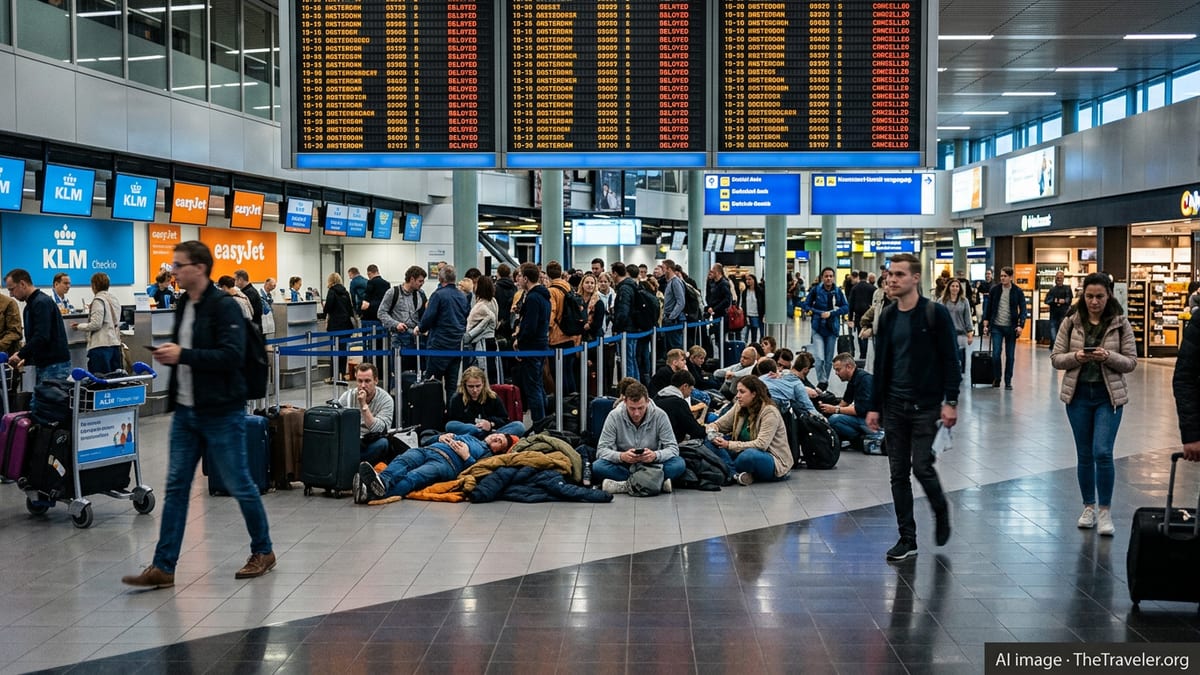
Fresh Numbers Highlight a Difficult Day for European Aviation
Operational data compiled from flight-tracking platforms and industry reports released on April 12 indicate an intense burst of disruption affecting both intra-European and international routes. The headline figures of 55 cancellations and 1,086 delays reflect a snapshot of movements tied to Russia, England, Germany and Denmark, and ripple into broader regional traffic flows.
Airlines including Rossiya, KLM, SAS and ITA Airways appear among the carriers experiencing notable schedule pressure, alongside several other European and international operators. Publicly available information shows that services to and from major hubs such as Moscow, London, Munich and Copenhagen were especially exposed as congested airspace and tight fleet rotations left little room to recover from even short operational setbacks.
While the disruption is far smaller in scale than historic shutdowns driven by severe weather or full airspace closures, the latest figures fit into a pattern of elevated volatility in early April. Recent days have already brought a series of high-delay periods and targeted cancellation spikes at key airports, affecting passengers on both leisure and business itineraries.
The distribution of today’s problems also underlines how interconnected Europe’s air network has become. Delays accumulating at one hub can quickly cascade into missed connections and aircraft availability issues at another, meaning localized weather or staffing challenges can be felt by travelers far from the original source of disruption.
Key Hubs Under Strain in Moscow, London, Munich and Copenhagen
In Russia, Moscow’s role as a central aviation node has amplified the impact of disruptions. Recent coverage of operations at Sheremetyevo, Domodedovo and Vnukovo indicates a steady stream of delayed departures and arrivals, with Rossiya Airlines among the carriers navigating congested turnaround windows and constrained schedules.
Across Europe’s western edge, London’s airports remain a recurring focal point for operational stress. Heathrow, Gatwick and other London facilities handle dense banks of departures in the early morning and evening, meaning even modest ground-handling delays or air traffic flow restrictions can trigger rolling knock-on effects. Data from the current wave of disruption shows England contributing a substantial share of today’s delayed services, with spillover into transatlantic and European connection banks.
Germany’s major hubs, particularly Munich, have also reported heightened disruption in recent days due to a combination of seasonal weather, busy transfer traffic and tight staffing on the ground. Today’s figures point to continued pressure, with delays outnumbering cancellations but still resulting in missed onward flights for many passengers and complex rebooking efforts for airlines.
In Denmark, Copenhagen Airport has again emerged as a focal point for delays across northern Europe. SAS and other carriers using the city as a connecting hub are contending with congested departure queues and crew scheduling challenges, which make it difficult to recover quickly once delays begin to accumulate.
Airlines from Rossiya to KLM and SAS Face Operational Headwinds
Rossiya Airlines, serving Moscow and key Russian regional centers, appears among the carriers most visibly affected in today’s data set. Reports indicate a cluster of delayed departures and select cancellations, particularly on high-frequency domestic and regional routes where aircraft utilization is already intense.
KLM continues to navigate a challenging operating environment after a winter and early spring marked by weather-related disruptions and occasional capacity constraints at Amsterdam Schiphol. Publicly available travel alerts and recent operational summaries highlight ongoing sensitivity to airspace congestion and schedule compression, factors that can easily cascade into late arrivals and missed departure slots on European connections.
SAS, which relies heavily on Copenhagen and other Scandinavian hubs, is again listed among airlines experiencing a mix of delayed and cancelled services. Even where the absolute number of cancellations remains limited, late-running flights create a difficult experience for passengers, particularly those attempting same-day connections across multiple European cities.
ITA Airways and several other European flag and low-cost carriers round out the list of airlines affected in today’s disruption figures. In many cases, these operators are dealing with tight turnaround times and packed peak schedules that leave little redundancy in the system, meaning that a single delay in the morning can echo across multiple flights through the rest of the day.
Underlying Causes: Weather, Staffing and Network Complexity
Recent coverage from aviation and travel outlets points to a combination of factors contributing to the current wave of disruptions. A sequence of unsettled weather systems over parts of western and northern Europe in late March and early April has produced strong winds, heavy rain and occasional snow, all of which complicate airport operations and reduce runway capacity at busy times.
At the same time, many airlines have rebuilt capacity to meet strong demand, particularly on leisure routes into southern Europe and on core business corridors between major capitals. Ground-handling, security and air traffic control resources have not always kept pace, creating bottlenecks during peak travel periods and stretching the resilience of airport infrastructure.
Network complexity also plays a central role. Modern hub-and-spoke structures are designed to maximize connectivity, but they are highly sensitive to disruption. A delayed inbound aircraft or crew at one hub can trigger a series of rotational changes across multiple airports, which helps explain why today’s data shows correlated delays in locations as diverse as Moscow, London, Munich and Copenhagen.
In the background, ongoing industrial actions and labor negotiations in parts of Europe continue to influence airline and airport staffing levels. Even when no active strike is under way, work-to-rule campaigns or short-notice shift shortages can limit the ability of carriers and ground teams to respond flexibly when weather or technical issues arise.
What Travelers Can Expect and How to Respond
For passengers caught up in today’s disruptions, the most immediate impact is uncertainty around departure times, connections and arrival plans. Long queues at check-in, security and customer service desks are common during such periods, particularly at hub airports where multiple delayed flights converge around the same bank of connections.
Publicly available passenger rights guidance, including EU Regulation 261 and comparable national rules, generally provides protections such as rerouting, refunds and care in the event of significant delays or cancellations. Eligibility depends on factors such as the length of the delay, the route and whether the disruption is considered within an airline’s control, but recent consumer-facing guidance stresses that travelers should document their experience and retain receipts for any out-of-pocket expenses.
Industry advisories recommend that travelers monitor flight status closely through airline apps and airport information boards, especially on days when disruption levels are elevated. Same-day changes, alternative routings and overnight accommodations may be available in some cases, although high demand can quickly exhaust capacity on popular routes.
With early April already showing several days of high disruption across Europe, analysts suggest that passengers planning near-term trips should build in additional buffer time for connections and remain prepared for schedule changes. The latest figures of 55 cancellations and 1,086 delays underscore how quickly even a routine operating day can tip into widespread inconvenience when weather, staffing and network pressures coincide.