


More news on this day
Travelers heading to Europe this spring are facing a convergence of pressures, as higher fuel costs linked to the US–Iran–Israel war, operational bottlenecks and new border systems combine to disrupt trips across the continent.
Get the latest news straight to your inbox!
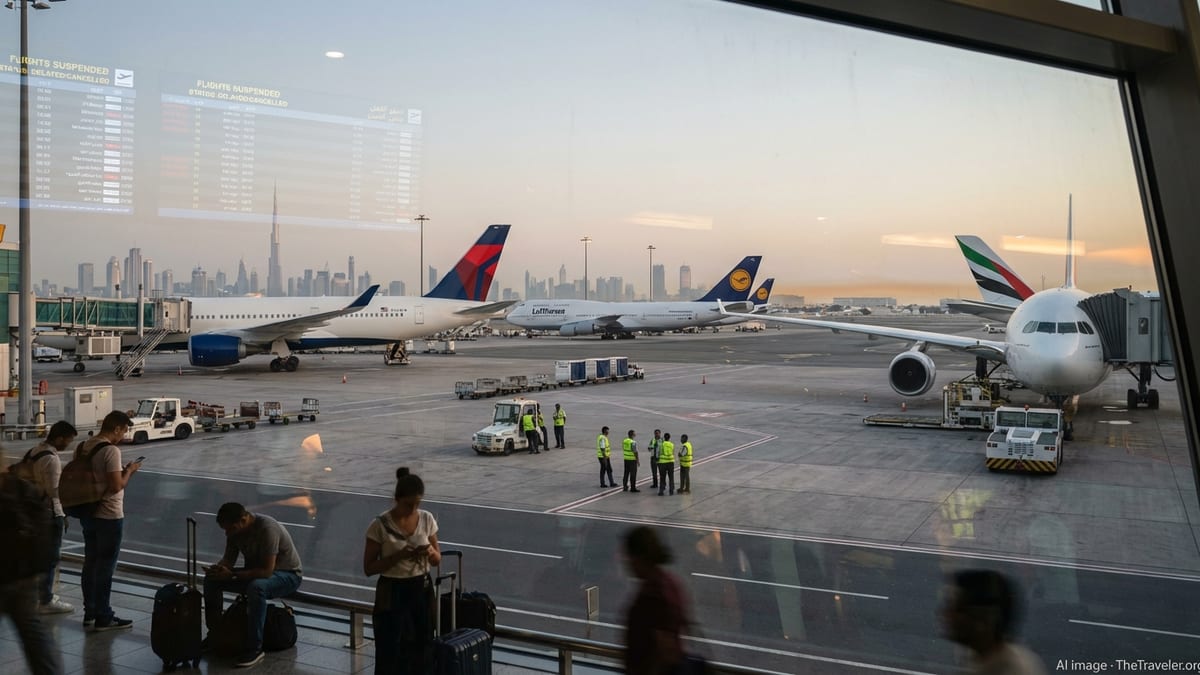
Fuel Shock From Gulf Conflict Ripples Across European Travel
The ongoing conflict involving the United States, Israel and Iran, and the resulting disruptions around the Strait of Hormuz, have triggered one of the most severe energy supply shocks in recent years, with global oil markets under sustained strain. Benchmark prices leapt in early March following missile strikes and shipping attacks in the Gulf, and analysts describe the current supply disruption as among the largest in modern energy trade. Elevated crude prices are now feeding directly into airlines’ fuel bills and the wider travel economy.
European carriers that rely heavily on jet fuel refined from Middle Eastern crude are particularly exposed. Industry data and financial commentary point to a sharp increase in operating costs since late February, when shipping through Hormuz slowed dramatically and insurers raised war-risk premiums on tankers serving the region. Market assessments suggest that even tentative ceasefire moves have not yet restored normal traffic flows, leading airlines to budget for persistently higher fuel outlays through the peak summer season.
Tourism analysts warn that these costs are likely to filter through to passengers in the form of higher fares, fuel surcharges and reduced capacity on marginal routes. Several research notes highlight that airlines have already trimmed frequencies on services that depend on Middle East hubs for onward connections, while long-haul leisure routes with thin profit margins are at heightened risk of seasonal cuts. Travel companies in Europe report a noticeable shift in booking patterns toward shorter, closer-to-home trips as households react to broader living-cost pressures.
UK Joins Europe’s Summer of Strain
The United Kingdom, which sits outside the European Union but remains one of Europe’s biggest outbound markets, is increasingly caught up in the broader regional turbulence. Published coverage shows that British consumers are confronting a mix of higher ticket prices, congested airports and fresh uncertainty around cross-Channel procedures just as school holiday bookings ramp up. Airlines serving London and regional UK hubs have flagged fuel and insurance costs as key headwinds for 2026, and several have updated profit guidance to account for a weaker operating environment.
Capacity adjustments on routes linking the UK to the Middle East and beyond are compounding pressure on popular European corridors. Data from aviation monitors indicate that traffic between Europe and the Middle East has fallen sharply since the start of hostilities, forcing carriers to reassign aircraft to intra-European networks. While this has preserved connectivity on major city pairs, it has also increased crowding at already busy hubs such as London Heathrow, Amsterdam and Frankfurt, with knock-on effects for UK travelers connecting onward to Mediterranean destinations.
At the same time, economic uncertainty and high energy bills at home are weighing on British holiday spending. Surveys by European economic institutes report that travel firms in major markets, including the UK and Germany, expect further price rises for package holidays in the coming months, citing fuel costs and insurance as key drivers. Some UK-based online travel brands have reportedly delayed financial market plans, underscoring how war-related volatility and travel disruption are feeding into corporate decision-making as well as consumer confidence.
Border Technology Rollout Adds New Delays
Alongside the fuel crisis, Europe’s push to tighten and digitize external borders is creating additional friction for tourists. The European Union’s new Entry/Exit System, a large-scale biometric border database for non-EU nationals, entered full operation across most Schengen states in April 2026 after years of delays. Early implementation has been marked by long queues, with reports from France, Italy, Spain and Germany describing waits of two to four hours at peak times as travelers undergo fingerprint and facial image collection.
Airports and airline groups have publicized cases of missed flights and congested arrival halls, arguing that the simultaneous rollout across nearly 30 countries left limited room to smooth out technical glitches. Travel industry briefings describe bottlenecks at automated kiosks, patchy staff training and systems that struggle to cope when several large aircraft arrive within a short window. As a result, even routine short-haul trips into the Schengen area can be subject to unpredictable processing times, particularly for travelers visiting Europe for the first time under the new rules.
The UK has been both shielded and exposed by this transition. Due to technical issues on the French side, biometric checks at juxtaposed border points in Dover, the Channel Tunnel terminal at Folkestone and London St Pancras have been postponed, meaning most cross-Channel passengers are not yet submitting biometrics before entering the EU. However, those flying from British airports directly into Schengen states such as Spain, Greece, Italy, France or Germany are encountering the full system upon arrival, adding another potential pinch point at the start of their holidays.
Mediterranean Hotspots Feel the Pinch
Greece, Spain, France, Germany and Italy, which together form the backbone of Europe’s tourism economy, are contending with overlapping challenges as the main summer season approaches. These countries not only attract tens of millions of visitors from the UK each year, but also depend on wider long-haul markets that are being reshaped by the Middle East conflict and higher transport costs. Tourism ministries and national statistics offices across the region have reported strong interest in bookings, yet industry bodies caution that conversion and final demand could be more volatile than headline search data suggests.
Analyses from economic institutes and aviation agencies highlight that routes connecting Europe with Gulf hubs have been among the hardest hit, with traffic volumes down significantly on 2025 levels. This matters for Mediterranean destinations that have increasingly relied on connections via Doha, Dubai and Abu Dhabi to bring in travelers from Asia, Australasia and parts of Africa. Reduced frequencies, longer flight times caused by airspace closures, and higher ticket prices are all weighing on these feeder markets, even as intra-European leisure demand remains comparatively resilient.
Inside the Schengen area, new border procedures and staffing strains are creating additional uncertainty. Local media in Spain and Italy have carried reports of airport queues stretching through terminal buildings on busy days, while Greek island airports, already stretched by seasonal peaks, are adapting to updated checks at the same time as they juggle charter arrivals. Hoteliers and tour operators warn that operational hiccups at points of entry can quickly translate into reputational damage if visitors face repeated delays at the start and end of their trips.
Tourism Sector Braces for a Volatile Peak Season
Across Europe, publicly available data points to a tourism industry that is still recovering from the pandemic while now absorbing a fresh geopolitical shock. Industry surveys compiled in March and April show a rising share of travel agencies and tour operators expecting further increases in selling prices over the coming months, driven primarily by fuel and logistics costs. At the same time, concerns about staffing, air traffic control capacity and the reliability of supply chains have re-emerged as key operational risks.
Aviation performance reports from Eurocontrol indicate that overall flight volumes in early April were broadly in line with, or slightly above, the previous year, but with marked weakness on routes touching the Middle East and pockets of delay linked to strikes at major carriers. The combination of higher operating costs, labor tensions and new border checks has raised the prospect of another difficult summer for airlines and airports, even if outright cancellations and headline-grabbing meltdowns can be avoided.
For travelers, the practical implications are already visible: higher fares on many long-haul routes, tighter schedules, and advice from carriers and airports to arrive earlier than in previous years for international departures. Consumer groups are urging passengers to build in longer connection times, pay close attention to airlines’ rebooking and compensation policies and maintain flexible plans where possible. With the fuel crisis showing few signs of rapid resolution and border systems still bedding in, Europe’s tourism sector is preparing for a season defined as much by resilience and contingency planning as by demand.