


More news on this day
Viral social media posts about Jamaicans being “locked out” of their own beaches have pushed a long-simmering coastal access debate into the global spotlight, exposing deep confusion over what the law provides, how tourism is reshaping shorelines, and who really gets to enjoy the island’s celebrated sands.
Get the latest news straight to your inbox!
Colonial-Era Laws Meet Twenty-First Century Outrage
At the heart of the current controversy is Jamaica’s Beach Control Act, a law dating back to 1956 that vests the foreshore and seabed in the state and gives regulators broad powers over how beaches are used. Legal analyses note that the Act recognizes both public interests and private rights, allowing exclusive licences and leases for specific stretches of coast while leaving the waters and seabed under state control.
This framework means that in theory the public has rights in the sea and along the wet foreshore, yet access to those areas can be mediated by private landholders who control the roads, gates, and pathways that lead to the sand. Policy documents and legal commentary describe a system in which hotels and other coastal developments have obtained permissions over time, often without parallel guarantees of public right of way.
The result is a legal landscape that differs sharply from viral claims that “all Jamaican beaches are private,” but also from the perception that the coastline is freely open. The law separates ownership of the seabed from control of adjacent land, a nuance that has been repeatedly lost in the recent wave of online commentary.
Comparisons with other Caribbean territories, where beach access is explicitly enshrined as a public right, have intensified criticism of Jamaica’s older model. Commentators argue that a law written for a very different era of coastal use is struggling to keep pace with modern tourism and real estate pressures.
Tourism Boom and the Geography of “Locked-Out” Communities
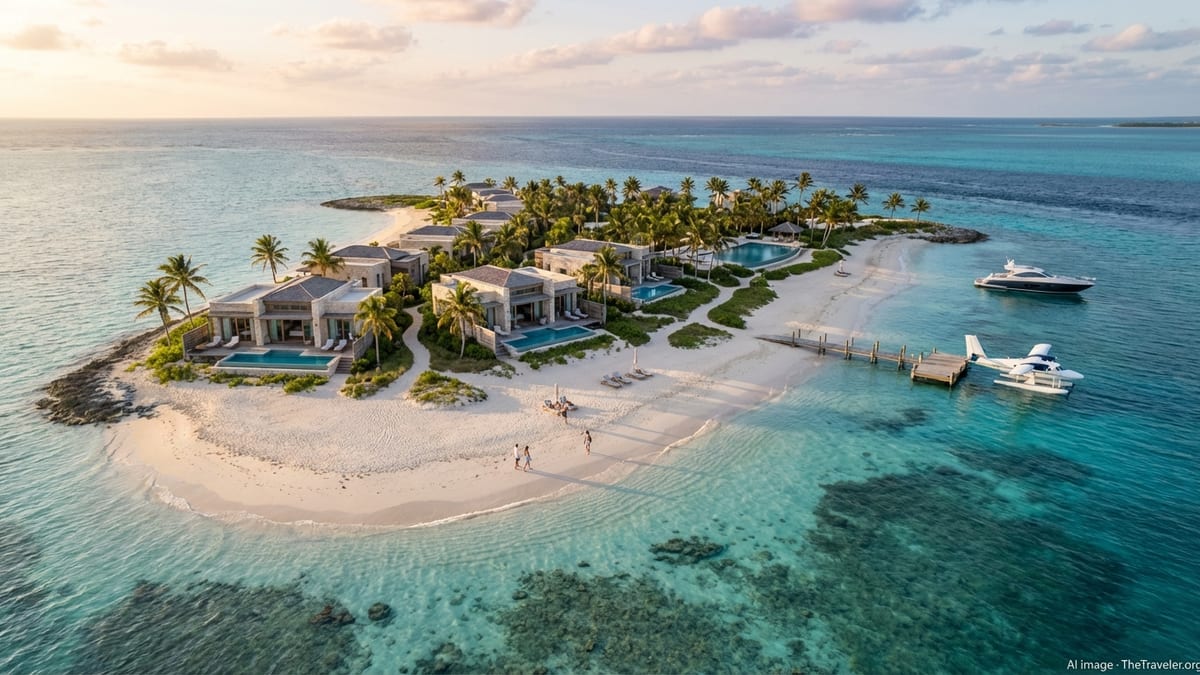
Published coverage on Jamaica’s tourism sector shows that coastal development has concentrated hotels and resorts on some of the island’s most prized beaches, from Montego Bay and Negril to stretches of the north coast. Analysts describe a “real estate paradox” in which the beaches themselves remain under state control, but the most convenient access points are embedded inside private or heavily managed properties.
Reports highlight that only a small fraction of Jamaica’s more than 1,000-kilometre coastline is freely accessible to the public without fees, security checks, or restrictions. Advocacy groups estimate that fully open access exists along less than 1 percent of the shore, especially once mangroves and rocky coastlines are excluded from the tally. For inland and working-class communities that historically used nearby beaches for fishing and recreation, the spread of gated developments has translated into longer journeys, entry fees, or the loss of familiar seaside spaces.
Case studies cited in regional and international outlets, including Mammee Bay, Providence Beach and Bob Marley Beach on the north coast, describe communities watching long-used tracks to the sea being fenced, rerouted through controlled gates, or replaced by car parks and ticket booths. Residents in some areas report that where they once walked freely to the water, they now must pass security posts, pay for parking, or accept time limits that cater primarily to resort guests.
Urban waterfront projects in Montego Bay and Ocho Rios show a more mixed picture. New or upgraded public parks have improved facilities and safety in some locations, offering free or low-cost access to the coastline. However, researchers and local advocates point out that many of the island’s most famous sandy bays remain effectively curated for paying visitors rather than surrounding communities.
From Negril’s Fence to Global Feeds: How a Local Dispute Went Viral
The most recent spike in attention followed a widely shared video from Negril’s Seven Mile Beach, where a Jamaican hotel operator filming an early morning run encountered a barbed-wire fence across the sand. The clip, published in late April, was quickly picked up by regional news outlets and social media accounts that framed the barrier as proof of creeping privatization of the shoreline.
Subsequent reporting indicates that the fence had been installed without proper authorization and was later removed by state development authorities. Nonetheless, the imagery of wire stretched across one of the Caribbean’s best-known beaches resonated strongly online, where users outside Jamaica interpreted the incident as a typical example of how locals are blocked from their own coast.
On platforms such as TikTok and Reddit, short videos and commentary have boiled a complex legal and historical debate into simple claims that “Jamaicans cannot use their own beaches.” Counterposts from Jamaicans, lawyers and environmental advocates argue that this narrative ignores public beaches, the existence of mixed-use coastal parks, and the fact that many residents continue to visit the sea regularly.
The speed of viral amplification has created a feedback loop in which partial or outdated information outpaces nuanced explanations of the law. While some online content draws on serious investigative reporting and academic research, other posts rely on anecdote or confusion between Jamaica and neighboring territories with different coastal regulations.
Legal Nuance, High-Water Marks and Misunderstood Rights
Amid the social media storm, legal experts and policy documents emphasize a key point that often gets lost: in Jamaica, rights to the beach are not the same as guaranteed rights of access. The state retains control of the foreshore and seabed, but entry routes to those areas frequently cross private property, where landowners can limit passage or impose conditions such as opening hours or fees.
Publicly available guidance from Jamaican agencies explains that hotel or villa owners can hold licences over adjoining beach sections for specific uses, such as tourism operations, while still being subject to environmental and planning regulations. In practice, however, security posts, signage and gate controls can give the impression that entire stretches of coastline are off-limits, even where the underlying law is more nuanced.
These subtleties contribute to persistent myths. One widely shared claim asserts that the public is legally entitled to walk a fixed distance inland from the waterline along any beach. Specialists point out that Jamaica’s legislative framework does not mirror the high-water-mark rules found in some other jurisdictions, and that local shoreline geomorphology adds further complexity.
Official policy papers also stress that a significant share of Jamaica’s coastline consists of mangroves, cliffs, or industrial waterfronts rather than postcard-style bathing beaches. Critics argue that focusing exclusively on raw kilometres of shoreline can therefore distract from the more practical question of whether each parish has sufficient, safe, and affordable places for residents to reach the sea.
Grassroots Campaigns, Government Responses and the Search for Balance
The renewed attention has energized local advocacy groups such as the Jamaica Beach Birthright Environmental Movement, which campaigns for stronger public access guarantees, transparent licensing, and better environmental stewardship of the coast. The group and allied organizations track disputed sites, organize educational campaigns, and call for updated policies that would more clearly define and protect community rights.
Recent years have also seen state-backed projects intended to provide high-quality public waterfront spaces, including upgraded coastal parks with lifeguards, sanitation, and security. Supporters describe these sites as models for balancing tourism with local recreation, while critics counter that they cannot fully replace the loss of informal, neighborhood-level access points shut off by private development.
Policy discussions now orbit around how to reconcile Jamaica’s dependence on tourism, a key foreign-exchange earner, with domestic expectations that the sea remains part of everyday life. Proposals in public debate include mapping and securing minimum access points in each parish, updating the Beach Control Act and related regulations, and linking new hotel approvals to concrete community benefits such as free access days or shared-use facilities.
For now, the viral discourse has turned Jamaica’s shoreline into a global case study in how law, perception, and economic strategy intersect on the edge of the sea. As new hotels and infrastructure continue to rise along the coast, the question of who gets to cross the sand to reach the water remains both legally intricate and politically charged.