

More news on this day
Major European airlines are rolling out new and restored direct routes to African and Asian hub cities, reshaping long-haul travel patterns as they compete for global passengers, tourism spending and cargo flows.
Get the latest news straight to your inbox!
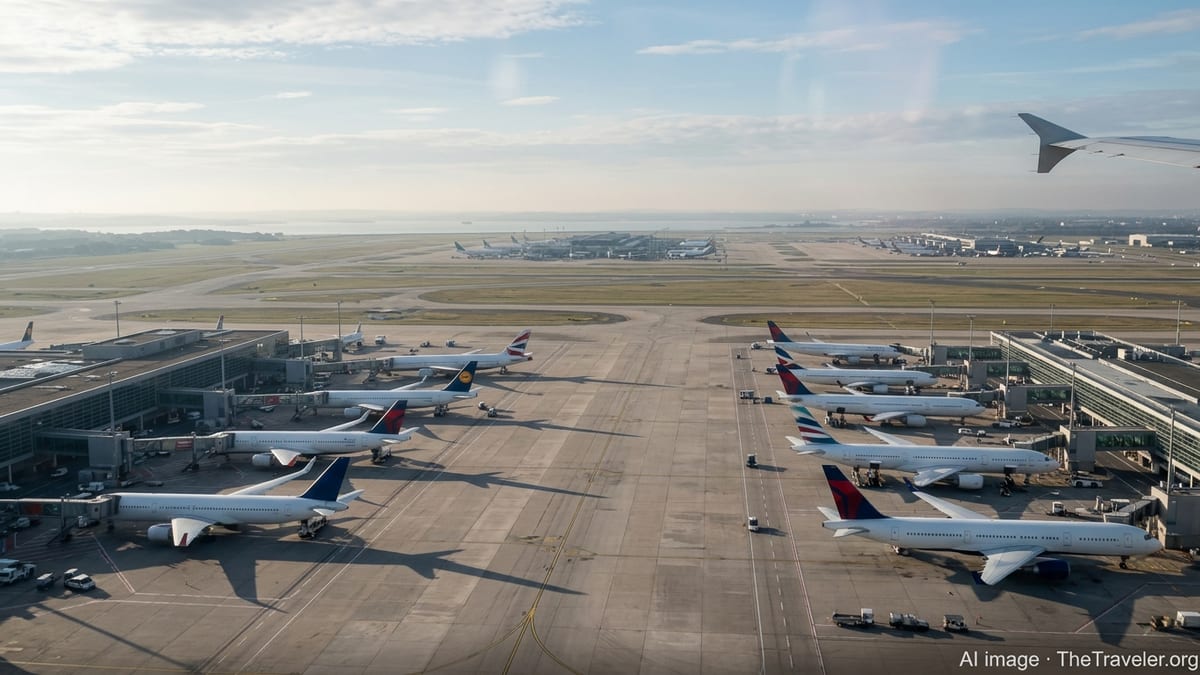
Stronger Nonstop Links Between Europe and African Hubs
Across the continent, European carriers are quietly stitching a denser web of nonstop links to Africa’s leading gateway airports. Industry trackers highlight stepped-up capacity on routes connecting European hubs such as London Heathrow, Paris Charles de Gaulle, Amsterdam Schiphol, Frankfurt and Zurich with Johannesburg, Cape Town, Nairobi and Addis Ababa, among others. These developments build on earlier post-pandemic resumptions to key markets and reflect airlines’ efforts to align with recovering tourism, business and visiting‑friends‑and‑relatives demand.
Reports from specialist aviation outlets show Lufthansa’s resumed Munich to Johannesburg route, launched in September 2024, giving southern Germany a direct link to South Africa’s largest city and financial powerhouse. At the same time, British Airways is increasing widebody frequencies between London and Johannesburg, providing more nonstop options for both leisure travelers and corporate customers heading to southern Africa. Similar patterns are emerging on Europe’s links to Namibia and Tanzania, where leisure‑focused carriers such as Discover Airlines and Edelweiss are using direct seasonal services to connect safari and beach destinations with German and Swiss hubs.
Tourism analysts note that these nonstop routes are particularly attractive for high‑value travelers seeking to minimize connections and reduce total journey time to Africa’s top wildlife, wine and coastal regions. Direct links also underpin trade corridors, with bellyhold cargo capacity on long‑haul passenger flights supporting exports from African agricultural and manufacturing sectors into European markets.
North Africa and the Mediterranean as Fast-Growing Connectors
While sub‑Saharan hubs capture much of the attention, new and expanded routes between Europe and North Africa are emerging as important pieces of the connectivity puzzle. Data compiled by African and European aviation associations highlights fresh links between southern European cities and coastal gateways such as Essaouira and Marrakech in Morocco, as well as planned growth from Luanda in Angola to additional European points. In several cases, routes are being launched or upgauged by European low‑cost and leisure carriers targeting city‑break travelers and winter‑sun demand.
Spanish low‑cost carrier Vueling’s announcement of nonstop Seville to Essaouira services, scheduled from October 2025, is one example of a European airline using relatively small but culturally distinctive North African cities to diversify its network. Similarly, reports on route developments in Portugal, Italy and France indicate that Mediterranean airports are being positioned as secondary gateways into Africa, offering short‑haul legs that connect into broader intra‑African networks operated by regional airlines.
For travelers, these changes mean new options that bypass traditional northern European hubs in favor of more direct or geographically logical routings, especially from southern Europe. For African destinations, the new links support tourism diversification by spreading arrivals beyond the most established cities and into emerging coastal and heritage locations.
Asian Gateways Tighten Their Grip on Europe–Africa Flows
At the same time as European carriers deepen their presence in Africa, Asian and Gulf hubs are intensifying their role as bridges between Europe, Africa and wider Asia. Publicly available schedules show that airlines such as Turkish Airlines and major Gulf carriers are adding capacity or frequencies across African networks while marketing one‑stop itineraries that connect European cities to Asian destinations via Istanbul, Doha, Abu Dhabi or Dubai. For European travelers, this often means a choice between flying nonstop on a European airline to an African hub or routing through an Asian or Gulf hub that offers onward connections to Southeast Asia, India or Australasia.
Recent years have also seen Asian long‑haul low‑cost and hybrid carriers experiment with direct services into Africa. AirAsia X briefly operated flights from Kuala Lumpur to Nairobi, opening a rare eastbound Asian low‑cost link into East Africa, before discontinuing the route in 2025 as demand patterns shifted. Industry observers note that although such ventures can be volatile, they underscore a growing recognition of Africa’s potential as both a source and destination market for Asian travelers.
These developments place additional competitive pressure on European network airlines. To retain their role in long multi‑segment journeys that might span Europe, Africa and Asia, carriers are increasingly relying on joint ventures, code‑shares and synchronized schedules with African and Asian partners, reinforcing hub‑to‑hub traffic flows and offering through‑ticketing to secondary cities.
Joint Ventures and Megahubs Redraw the Route Map
The expansion of direct links is closely tied to the rise of powerful megahubs and cross‑border alliances. According to published coverage on hub development, European brands such as British Airways, KLM, Air France, Turkish Airlines, Lufthansa, Iberia, ITA Airways, Vueling and Aegean are using their main bases to concentrate long‑haul traffic and then disperse passengers across dense short‑haul networks. Similar strategies are visible at African hubs including Addis Ababa, Nairobi and Johannesburg, where local carriers aggregate regional traffic to feed intercontinental services.
One of the most closely watched shifts is the deepening cooperation between Gulf and African airlines, which is indirectly reshaping options for European travelers. A high‑profile example is the partnership between Etihad Airways and Ethiopian Airlines, which links Abu Dhabi and Addis Ababa and opens extensive one‑stop access between Europe, Africa and Asia via their combined networks. Reports indicate that the two carriers are aligning schedules and connectivity to allow passengers from Europe to connect seamlessly through Abu Dhabi or Addis Ababa to secondary African and Asian destinations, often with reduced total travel time compared with older two‑stop itineraries.
Meanwhile, infrastructure investments such as Ethiopia’s planned Bishoftu International Airport underline how African hubs are preparing to handle significantly higher passenger volumes in the coming decade. With a projected multi‑runway layout and large terminal capacity, the facility is being promoted as a future mega‑hub capable of handling traffic flows between Africa, Europe, Asia and the Middle East. For European airlines, this type of development creates both an opportunity to tap new transfer traffic and a competitive challenge from African carriers aiming to capture more of the value chain.
Implications for Travelers and Tourism Economies
For travelers based in Europe, the growing number of direct routes to African and Asian hubs translates into shorter journeys, fewer connections and greater choice on timings and price points. Aviation analysts point out that additional competition on trunk routes often leads to more attractive fares, especially when legacy network airlines, low‑cost carriers and Gulf or Asian competitors all serve similar city pairs or overlapping flows.
Destination marketers and tourism boards across Africa and Asia are responding by tailoring campaigns to specific European source markets that now enjoy nonstop or one‑stop access. In South Africa and Namibia, for example, safari lodges and tour operators are highlighting itinerary combinations that link European cities with multiple wildlife regions using a single long‑haul flight and short regional connection. In North and East Africa, cities such as Marrakech, Essaouira, Zanzibar and Kilimanjaro are being promoted as weekend or week‑long escapes that can be reached without complex routings.
Longer term, the expansion of direct links is expected to support broader economic integration between Europe, Africa and Asia. Additional passenger and cargo capacity facilitates trade in everything from perishables and pharmaceuticals to high‑value manufactured goods. Policy specialists add that as air connectivity deepens, it can underpin investment flows, conference and events business, and educational exchanges, positioning hub cities on all three continents as crucial nodes in the evolving global travel network.