

More news on this day
Hundreds of air travelers have been left sleeping in terminals and scrambling for scarce hotel rooms as a new wave of flight disruptions ripples across Europe in April 2026, compounding weeks of mounting pressure on the region’s aviation network.
Get the latest news straight to your inbox!
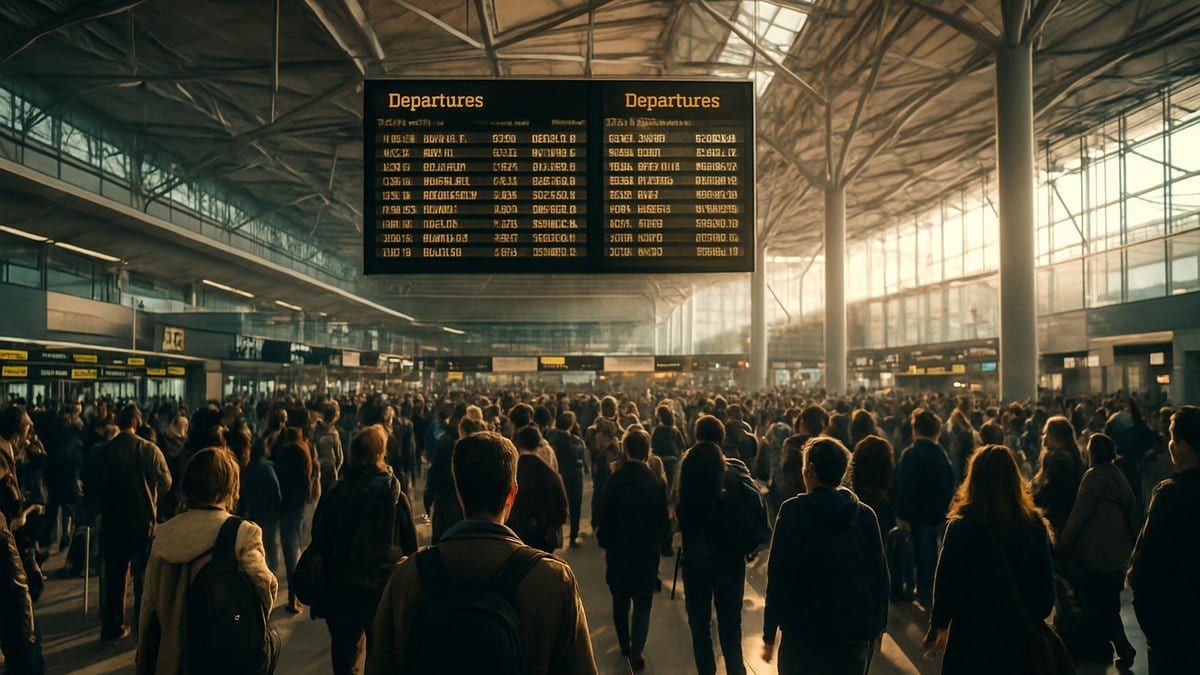
Early April Turbulence Hits Major European Hubs
Across the first days of April 2026, airports from London and Paris to Frankfurt and Amsterdam have reported elevated levels of cancellations and lengthy delays, with publicly available flight-tracking data showing hundreds of services disrupted in a single day. A combination of severe spring storms, lingering airspace constraints and stretched airline operations has pushed already fragile schedules beyond their limits.
Coverage from travel and aviation outlets indicates that the disruption accelerated around the start of the month, when a mix of industrial action and poor weather produced more than 1,700 delays and several dozen cancellations at major gateways including Paris Charles de Gaulle, Milan Malpensa, Madrid Barajas, Frankfurt and London Gatwick. In many cases, arrivals were landing more than an hour behind schedule, triggering missed onward connections across the continent.
By April 7, reports from data-driven travel services and specialist publications pointed to at least 150 cancellations and more than 1,600 delays in a single day across Europe, with knock-on effects rippling into April 8 and 9. The interconnected nature of hub operations meant that a crew or aircraft held up in one country quickly knocked out rotations in several others, deepening the disruption for passengers far from the original problem airport.
According to a recent analysis from a passenger rights firm, more than 1,000 flights across Europe have been delayed or canceled in the space of just a few days in early April, underscoring how quickly localized issues can scale into a regionwide breakdown in punctuality.
Storm Systems and Airspace Limits Drive Delays
Weather has been a central driver of the latest disruption. The 2025 to 2026 European windstorm season has already brought a series of named storms across the continent, and early April has seen fresh low pressure systems sweep into northwestern and western Europe. One of these, identified in meteorological reporting as Storm Dave, has been linked to widespread delays and diversions as it moved across the United Kingdom, Ireland and surrounding airspace.
In parallel, the same jet stream pattern that deepened Atlantic storms has funneled turbulent conditions over major flight corridors, forcing air traffic controllers to increase spacing between aircraft. Industry analysis published in late 2025 showed that air traffic control delays in Europe have more than doubled over the past decade, and recent events suggest that structural constraint is now colliding with particularly unsettled weather to produce cascading hold-ups.
Airspace restrictions linked to ongoing geopolitical tensions have further narrowed routing options for some long haul services into and out of Europe. Flight data and media coverage indicate that carriers have been diverting traffic onto more southerly tracks to avoid conflict zones, lengthening flight times and tightening the margin for on time arrivals. When combined with localized thunderstorms or high winds at hub airports, these re-routes have added yet another variable to an already complex operating environment.
Operational strain on airports themselves has also surfaced. Staffing constraints among ground handlers and security staff, reported in several countries at the start of the summer travel build up, have slowed turnaround times on the apron and pushed departure queues longer, even when weather is not the primary factor.
Passengers Face Overnight Stays and Scramble for Rooms
For travelers on the ground, the statistics translate into long queues at rebooking desks, crowded departure halls and, for some, improvised nights on terminal floors. Reporting by consumer focused travel sites and regional media describes scenes of passengers clustered around charging points in airports such as Heathrow, Charles de Gaulle, Frankfurt and Amsterdam Schiphol as they wait for news of replacement flights.
Because many of the cancellations and diversions have occurred late in the day, same day alternatives have often been unavailable, particularly on busy intra European routes where aircraft and crews were already in short supply following earlier disruptions in March. As a result, hundreds of travelers have found themselves suddenly in need of last minute accommodation near airports stretched close to capacity.
Travel industry coverage indicates that hotels adjoining major hubs in London, Paris and Frankfurt filled quickly on some of the worst affected nights, forcing passengers to look farther afield for available rooms or to remain in the terminal until morning departures. Families connecting from long haul flights into European short haul networks have been among the most affected, with missed evening connections pushing onward travel back by 24 hours or more.
Social media posts and first hand accounts collected by travel news outlets also describe confusion at some airports where information screens and airline apps have struggled to keep pace with schedule changes. In several cases, passengers reported discovering cancellations only after clearing security, adding to the sense of dislocation.
Rights Under EU261 and What Travelers Can Expect
With disruption now stretching across multiple days, passenger rights under European Union rules have again become a focus. Under Regulation EU261, travelers departing from EU and European Economic Area airports, or flying into the region with an EU based carrier, may be entitled to care, assistance, re routing or refunds in the event of long delays, cancellations or denied boarding.
Specialist legal and advocacy sites note that when delays are caused mainly by severe weather or certain kinds of air traffic control restrictions, cash compensation payments are often classified as not owed, because the events are considered extraordinary circumstances outside the airline’s control. However, carriers are generally still required to offer meals and refreshments after a defined waiting period, and hotel accommodation and transport to and from that hotel if an overnight stay becomes necessary.
In the recent April disruptions, publicly available guidance from airlines indicates that many carriers have encouraged customers to use digital tools for rebooking onto later flights, sometimes waiving change fees where significant schedule changes have occurred. Some have also issued travel waivers for the most affected dates and airports, allowing passengers to move trips by several days at no additional cost.
Consumer advocates continue to advise travelers to keep detailed records of boarding passes, notifications and receipts related to meals, transport and accommodation obtained during disruptions, in case of later claims through airline customer service channels or third party claim handlers. Given the complexity of causes behind the current wave of delays, outcomes on compensation may vary significantly from case to case.
Outlook for the Remainder of April Travel
Looking ahead, aviation data providers and weather services suggest that conditions could remain unsettled through at least mid April, with the potential for further low pressure systems to pass over the British Isles and western mainland Europe. Any renewed spells of high winds or thunderstorms near major hubs would risk compounding existing backlogs and stretching resources during one of the year’s key shoulder travel periods.
At the same time, airlines are working to reposition aircraft and crews, gradually absorbing earlier disruptions and restoring more regular rotations. Industry commentary points out that the resilience of the network will be tested in the coming weeks as carriers ramp up capacity for late spring and early summer while continuing to navigate constrained airspace and patchy staffing levels at some airports.
For now, travel experts recommend that passengers booked to travel in Europe in April build extra time into their itineraries, particularly when planning tight connections between separate tickets or between air and rail. Monitoring flights via airline apps, confirming the operating carrier for codeshare services and remaining flexible about routing options can help mitigate some of the impact if schedules shift at short notice.
With hundreds already stranded and thousands more affected by delays, the early April disruptions are emerging as a fresh reminder of the vulnerability of Europe’s aviation system to overlapping shocks from weather, geopolitics and capacity constraints just as the peak travel season approaches.