


More news on this day
An extreme early-summer heatwave is gripping western Europe, with red alerts for dangerous temperatures now in force across Spain, France, Italy, Germany and Portugal, disrupting travel networks and straining tourism hotspots just as the peak holiday season begins.
Get the latest news straight to your inbox!
Record Temperatures Trigger Red Alerts Across Western Europe
Meteorological agencies across Europe report that a persistent heat dome over the continent is driving temperatures well above 40 degrees Celsius in many areas, with forecasts indicating that some inland regions of Spain and southern France could climb higher in the coming days. National weather services in France, Spain, Italy, Germany and Portugal have issued their top-tier heat alerts, warning of exceptional and prolonged conditions for late June 2026.
In France, publicly available information shows that a majority of departments have been placed under red heat alerts, an expansion on warnings first issued over the weekend as temperatures surged past 38 to 40 degrees in the southwest, the Paris region and parts of central France. Maps from Meteo-France highlight swaths of the country shaded in deep red and purple as the national thermal indicator nears or exceeds previous June records.
Spain’s state meteorological agency has classified much of the country under orange or red alerts, with the Basque region and interior valleys among the hardest hit. Reports indicate that temperatures above 40 degrees have already been recorded in cities such as Seville and Cordoba, continuing a pattern of increasingly frequent and intense heat episodes on the Iberian Peninsula.
Italy and Portugal have followed with their own top-level warnings, focusing on major urban centers and inland districts where humidity and stagnant air are amplifying the perceived heat. In Germany, regional forecasters highlight a combination of high temperatures and “tropical nights,” when readings remain above 20 degrees after dark, raising particular concern for vulnerable people and for visitors staying in poorly ventilated accommodation.
Flights Delayed as Airports Adjust to Heat-Stressed Operations
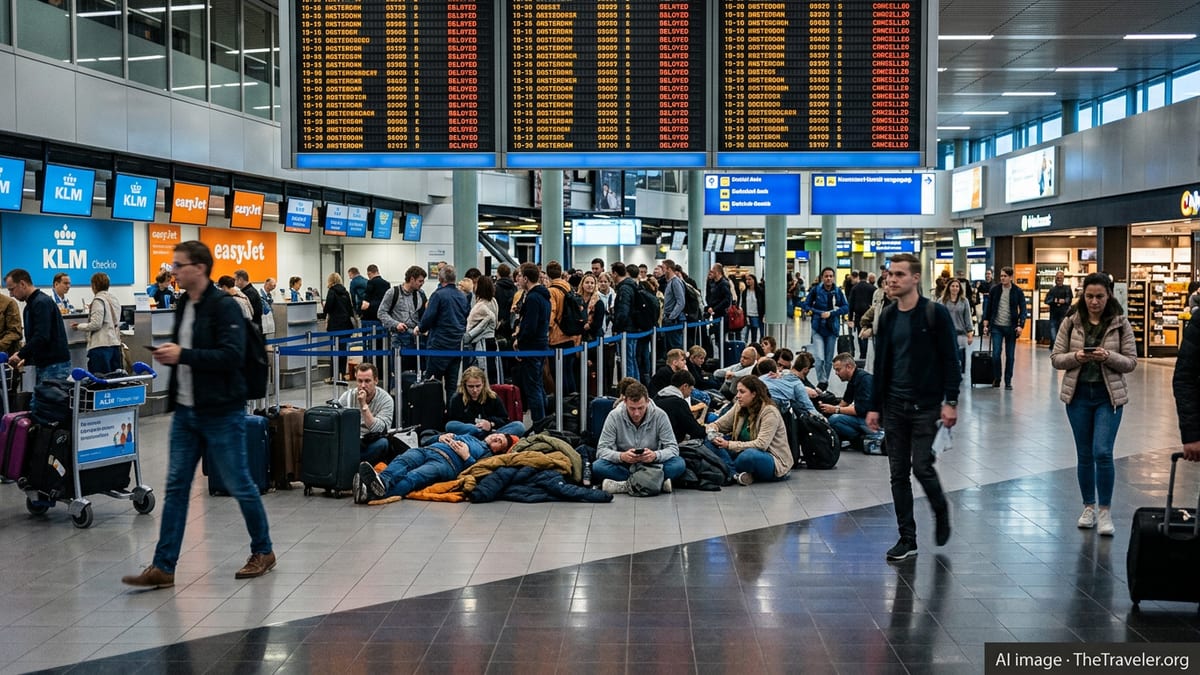
The heatwave is increasingly affecting air travel, with airlines and airport operators across western Europe adjusting schedules and ground procedures. According to published coverage from European aviation and travel outlets, transport hubs in Spain, France and Italy have reported clusters of delays as carriers slow boarding and turnaround processes to protect ground staff working on exposed aprons during peak afternoon heat.
At several major airports, including Madrid, Barcelona, Rome and Milan, passengers are being advised to arrive early and prepare for potential disruption as aircraft are held on stand or departure slots are shifted to cooler parts of the day. Some low-cost carriers serving tourist routes between northern Europe and Mediterranean destinations have consolidated or retimed flights, citing operational constraints and heat-related limitations for certain aircraft types on shorter runways.
Airports in Portugal and southern France have also introduced temporary measures such as reduced baggage handling windows and increased use of remote stands to manage congestion, while terminal cooling systems run at maximum capacity. Travel industry reporting notes that the combination of intense heat, strong sun and crowded terminals is adding pressure for families with children and older travelers transiting through busy hubs.
Longer-haul connections have generally continued to operate, but travel analysts warn that a further escalation in temperatures or the onset of related hazards such as wildfires or localized power cuts could prompt more extensive schedule changes. Tourists are being urged to monitor airline apps and airport information screens closely rather than relying on original booking confirmations.
Rail Networks Slow Down as Tracks and Power Systems Overheat
Rail operators in several countries have implemented heat-related restrictions as the hot spell intensifies. Publicly available service updates from France, Spain, Germany and Portugal indicate speed reductions on some intercity and regional lines, as track infrastructure and overhead power systems are inspected more frequently for signs of warping, buckling or overheating.
In France, reports indicate that parts of the national network are operating under precautionary speed limits, particularly on older lines and in areas where prolonged sun exposure has raised rail-surface temperatures well above the air temperature. Similar measures are being applied in Spain, where sections of high-speed and conventional routes have had timetables adjusted, leading to delays and occasional cancellations on busy holiday corridors to coastal resorts.
Germany’s rail system is contending with both high heat and strong localized storms that have developed along the edge of the hot air mass, causing temporary line closures and rerouting. According to European media coverage, some regional authorities have advised residents and visitors to avoid nonessential daytime rail travel on the hottest days, especially on routes with older rolling stock or limited air conditioning.
In Portugal and northern Italy, suburban and regional services have also been modified, with operators prioritizing early morning and late evening frequencies when demand remains high but temperatures are slightly less extreme. Passengers across the region are being encouraged to carry water, anticipate longer journey times and check real-time information before setting out.
Tourist Hotspots Face Mounting Health Pressures
The timing of the heatwave, arriving just as schools break for summer and tourism peaks, is creating a growing health challenge in popular destinations. Public health advisories compiled by European news organizations emphasize the heightened risk of dehydration, heat exhaustion and heatstroke, particularly for older travelers, young children and those with pre-existing conditions.
In France, local authorities in major cities such as Paris, Lyon and Marseille have opened additional cooling centers and expanded access to shaded public spaces and water fountains, steps that also benefit international visitors unfamiliar with local heat protocols. Reports from Spain describe municipal misting stations and extended opening hours at public swimming pools in cities including Madrid, Valencia and Seville, as well as shaded queuing areas at some major attractions.
Italy’s health ministry has issued red heat alerts for numerous cities, including Rome, Milan and Florence, together with recommendations that residents and tourists avoid outdoor activities during midday hours. Media coverage from Germany and Portugal highlights similar messaging, with particular concern for visitors engaging in strenuous sightseeing, hiking or beach activities without adequate hydration or rest breaks.
Hospitals and emergency services across the affected countries are reporting increased demand linked to heat stress, though capacities vary between regions. Travel health experts interviewed by European outlets are urging visitors to pay close attention to local advisories, prioritize light clothing and sun protection, and reconsider itineraries that rely on long queues, unshaded walking tours or extended travel during the hottest hours of the day.
Travel Industry and Destinations Adapt to a New Climate Reality
The 2026 heatwave is reinforcing concerns within the travel industry about climate-related volatility during peak season in Europe. Tourism research and policy papers published in recent years have already documented how successive heatwaves, droughts and wildfires are reshaping seasonal patterns, with some travelers shifting plans toward cooler coastal or northern destinations and others favoring shoulder seasons over mid-summer.
Current conditions are prompting hotels, resorts and tour operators in Spain, France, Italy, Germany and Portugal to adjust daily routines. Many properties are moving activities to early morning or late evening, reinforcing shaded outdoor spaces and promoting flexible check-in and check-out times to help guests avoid carrying luggage during the hottest periods. Travel agencies are issuing updated advisories and encouraging clients to buy comprehensive insurance that accounts for weather-related transport disruption.
Destination marketers are also revisiting how they communicate with international audiences. Promotional campaigns now increasingly include explicit information about heat protocols, shaded routes, indoor cultural options and emergency contact points, aiming to support both visitor safety and local businesses. Several city tourism boards are promoting night-time cultural events, museum late openings and riverfront promenades as alternatives to midday sightseeing.
Climate scientists continue to warn that extreme heat events of the kind hitting Europe in June 2026 are becoming more frequent and more intense as the planet warms. For travelers and tourism providers alike, the latest heatwave serves as another test of how quickly Europe’s most-visited destinations can adapt infrastructure, public space and travel habits to a hotter future.