


More news on this day
Eurostar has cancelled a series of London–Amsterdam trains after a cable duct fire near Rotterdam cut power to key rail lines, severely disrupting cross-border services at the height of early summer travel.
Get the latest news straight to your inbox!
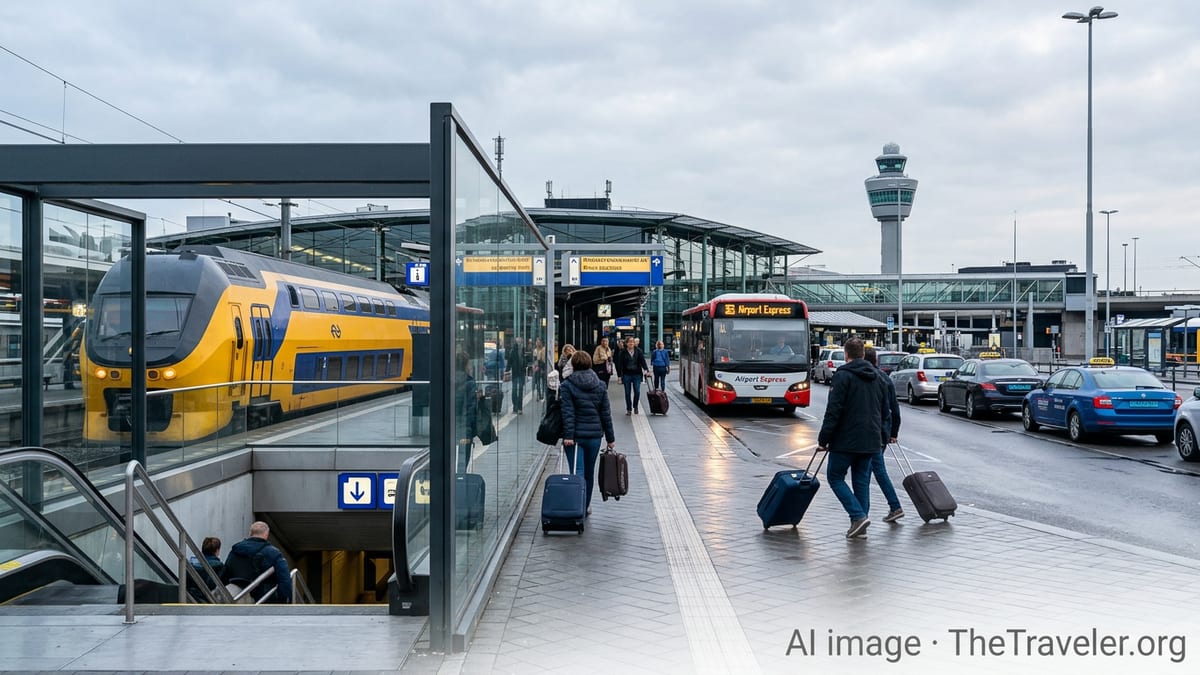
Fire near Rotterdam triggers widespread rail disruption
According to reports from Dutch media and rail industry outlets, a fire in a cable duct near Rotterdam Stadion over the weekend caused a major power outage on lines south of the city. The incident left signalling and overhead electrical systems out of service across part of the Dutch network, forcing infrastructure managers to halt or sharply restrict traffic through one of the country’s busiest rail corridors.
Publicly available information from ProRail, the Dutch rail infrastructure company, indicates that engineers have been working to repair and replace damaged cabling, with power not expected to be fully restored until at least later in the week. Until those works are completed and tested, services operating through the affected sector remain heavily curtailed.
The Rotterdam bottleneck has had a knock-on impact far beyond the immediate region. Long-distance and international operators that rely on the same high-voltage infrastructure, including Eurostar and domestic Intercity services, have had to reroute, shorten or cancel trains. Passenger flows between the Randstad conurbation and Belgium have been particularly affected, with fewer paths available for high-speed cross-border traffic.
Rail commentators in the Netherlands note that the incident comes during one of the first peak travel periods of the European summer. The combination of leisure trips, business travel and events across the region means that disrupted services are quickly translating into crowded stations, booked-out alternatives and higher prices on remaining routes.
London–Amsterdam services cut back, with limited alternatives
In response to the infrastructure failure, Eurostar has cancelled multiple services on its London–Rotterdam–Amsterdam route, especially trains starting or terminating in the Dutch capital. Travel platforms tracking real-time schedules show that several departures which normally operate through to Amsterdam Centraal have been withdrawn for at least the first half of the week, while others are scheduled only as far as Brussels or Rotterdam.
Notices on Eurostar’s customer information channels state that rail traffic in the Netherlands is “severely disrupted and extremely limited,” citing the fire near Rotterdam as the cause. The operator acknowledges that this has led to “significant delays and cancellations” and says that for some departures it is unable to provide alternative rail options within the Dutch network.
Some passengers report being rebooked on itineraries that require separate domestic trains between Amsterdam and Brussels, connecting there with Eurostar services to or from London. In other cases, the high-speed portion of the journey remains intact, but travellers must arrange their own local transport to and from unaffected stations, adding cost and complexity to what is usually a seamless direct route.
Industry observers point out that unlike disruptions in the Channel Tunnel itself, this incident is concentrated on infrastructure managed by Dutch authorities, which limits Eurostar’s ability to reroute around the damaged section. With paths through the area constrained, the operator has focused on maintaining a skeleton cross-border service while trimming Amsterdam stops that require extra capacity on the Dutch side.
Travellers face cancellations, refunds and complex rebookings
Posts on travel forums and social media from Monday and Tuesday describe a mix of short-notice cancellations and schedule changes for journeys between London and the Netherlands. Several travellers say they received notifications the night before departure that their Amsterdam services would no longer run, with options to rebook on alternative dates or request a refund through the Eurostar app.
Others report being advised to travel via Brussels, purchasing additional domestic tickets within the Netherlands when direct legs from Amsterdam or Rotterdam were cancelled. Some passengers attempting to change to earlier or later trains found that departures still appeared bookable on sales channels, even while rebooking tools flagged them as unavailable, adding to confusion at a time when seats were in high demand.
Consumer advocates note that, under European rail passenger regulations, travellers whose trains are cancelled are typically entitled to a choice between a refund of the unused portion of their ticket or rerouting to their final destination at the earliest opportunity, subject to capacity. Compensation for delays may also be available, depending on journey length and the extent of the disruption, although operators can contest payouts when incidents stem from external causes such as major infrastructure failures.
Reports from previous disruption episodes involving cross-border high-speed services suggest that processing times for refunds and any approved compensation can stretch over several days, particularly when a large number of passengers is affected at once. Travellers are being advised by rail information services to retain receipts for hotels, replacement tickets and other additional expenses in case claims are later accepted.
Recent history of Amsterdam–London interruptions
The current wave of cancellations adds to a stop-start period for the London–Amsterdam corridor. Direct Eurostar services between the Netherlands and the United Kingdom were temporarily suspended from mid‑2024 into early 2025 because of major renovation works at Amsterdam Centraal station, with passengers required to change in Brussels during that phase. The through trains were gradually restored as station works and border-control facilities were upgraded.
Since their resumption, the cross-channel services have seen strong demand as travellers opt for rail over short-haul flights, helped by competitive journey times and growing environmental awareness. However, a series of infrastructure incidents in both France and the Netherlands, along with occasional power supply problems in the Channel Tunnel, have kept the route vulnerable to episodic disruption.
Publicly available data for Eurostar’s wider network performance indicates that punctuality and reliability targets remain relatively high compared with some domestic rail services, yet the impact of rare high-profile breakdowns or outages is magnified by the limited capacity of the Channel Tunnel and key junctions such as Rotterdam. When a single corridor is blocked, there are few realistic detours for high-speed international trains.
Analysts following the European high-speed sector note that competing operators are planning to enter the London–mainland market later in the decade, potentially increasing resilience and providing more options for passengers. For now, however, Eurostar remains the sole provider of non-flight connections between London and Amsterdam, meaning that any major disruption on its route can rapidly affect thousands of customers.
What passengers booked on upcoming trains should know
As of early July 2026, journey planners still show disrupted patterns for services linking London with Amsterdam, with more frequent departures to and from Brussels than to the Dutch capital itself. Rail information platforms indicate that some trains that usually serve Amsterdam are cancelled or truncated on certain days, and timetables may change at short notice as repair works progress around Rotterdam.
Travel experts recommend that passengers holding tickets for the route this week check their booking status repeatedly in the days and hours leading up to departure, using both official operator channels and independent rail timetables where available. Because trains can be withdrawn or retimed overnight, relying solely on an older confirmation email may leave travellers unaware of changes until they arrive at the station.
For those whose trains are cancelled, public guidance suggests first exploring rebooking through digital tools, which in many cases allow changes without additional fees when disruption is officially acknowledged. Where suitable alternatives are not offered on the same day, passengers may need to weigh the cost and convenience of rerouting via Brussels or switching to air and ferry options, while documenting any extra spending that may later be claimed.
With engineers working to restore full power and signalling capacity on the affected Dutch lines, reports from rail authorities suggest that services could gradually normalise in the days ahead. Until the damaged infrastructure near Rotterdam is fully repaired and tested, however, travellers on the London–Amsterdam corridor face the prospect of a less predictable schedule and the possibility of further cancellations at short notice.