


More news on this day
Residents in Bucyrus, a small city in northern Ohio, are returning home after an evacuation order was lifted Monday morning following a freight train derailment that raised concerns about a possible hydrochloric acid leak near a busy rail crossing on the city’s south side.
Get the latest news straight to your inbox!
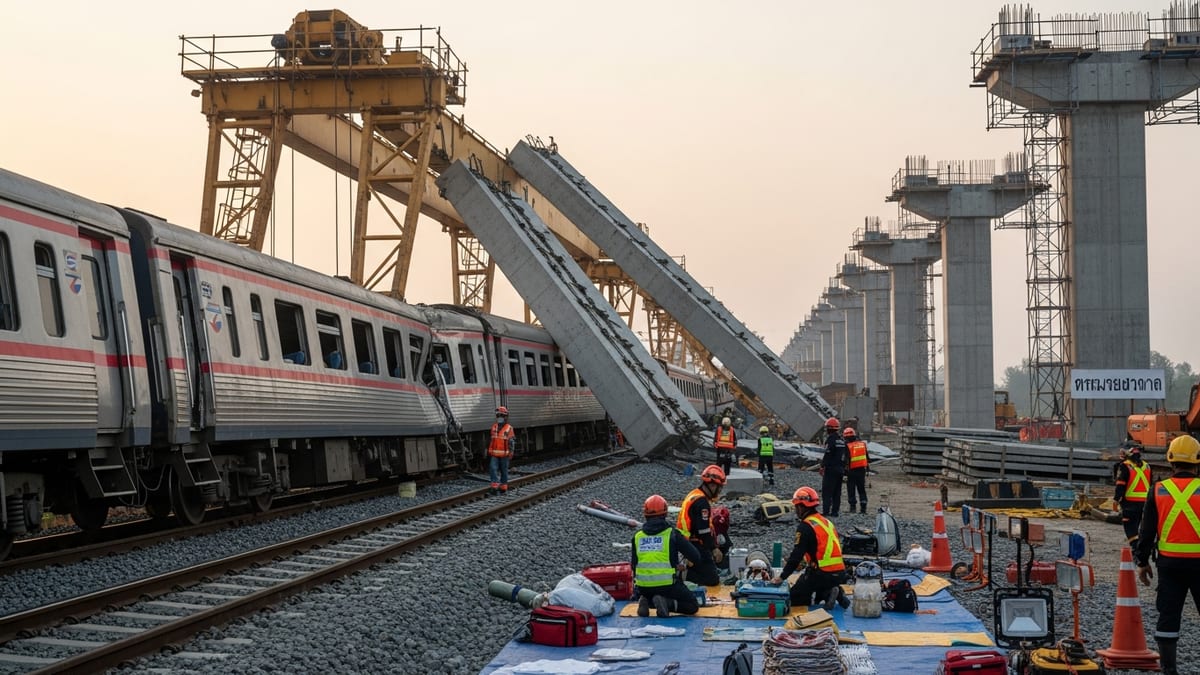
Evacuation Order Lifted After Overnight Disruption
Publicly available information indicates the derailment occurred on Sunday evening, July 5, when several cars of a Norfolk Southern freight train left the tracks near Whetstone Street in Bucyrus. Initial reports pointed to a tanker carrying hydrochloric acid among the derailed cars, prompting concerns about air quality and the risk of an explosion.
Out of caution, residents within a defined radius of the crash site were asked to leave their homes overnight, and a local high school was opened as a temporary shelter. Regional news coverage notes that the evacuation zone initially extended to roughly a quarter-mile around the site before being refined as responders assessed conditions.
By late Monday morning, July 6, local emergency management agencies reported that monitoring around the scene had not detected levels of hazardous vapors that would require residents to remain out of the area. The evacuation order was lifted, although road closures and visible cleanup activity are expected to continue for some time.
As of early Tuesday, there were no reports in public coverage of fatalities or serious injuries linked to the derailment, and officials have not publicly announced any confirmed release of large quantities of hydrochloric acid from the affected tanker.
What Happened on the Tracks in Bucyrus
According to multiple regional outlets, the derailment occurred shortly before 9 p.m. on a stretch of track shared by Norfolk Southern and the Ashland Railway, near a highway-rail crossing on Bucyrus’s south side. Images distributed by local media show several freight cars off the rails, including at least one tank car and multiple boxcars.
Initial descriptions suggest that the train was heading through Bucyrus as part of a regular freight movement across northern Ohio, a corridor that sees frequent rail traffic connecting industrial centers and distribution hubs. The cause of the derailment has not yet been detailed in published reports, and a formal investigation into track conditions, train speed, and equipment performance is expected to follow.
Railroad personnel and specialized contractors were on scene Monday, working with heavy equipment to separate and remove damaged cars. Cleanup crews are also addressing torn-up track and ballast, while environmental teams monitor soil and air conditions around the derailment site.
Local news images show railcars being lifted and repositioned as crews clear debris from the right-of-way. Once the site is stabilized and inspections are complete, track repairs will be required before normal rail service can resume through this portion of Bucyrus.
Hydrochloric Acid Concerns and Safety Precautions
Hydrochloric acid is widely used in industrial processes and is transported by rail across the United States. In concentrated form, it can cause respiratory distress and skin and eye irritation. Because of these risks, even the possibility of a leak often leads to strict safety perimeters and short-term evacuations around derailment sites.
In Bucyrus, reports indicate that the presence of a tanker containing hydrochloric acid prompted the initial evacuation and road closures. Emergency management agencies implemented a buffer around the site while air quality monitoring and visual inspections were carried out. The decisive factor in lifting the evacuation appeared to be testing that did not show hazardous concentrations in nearby neighborhoods.
Publicly available information notes that responders established detours and restricted access close to the tracks while the tanker was evaluated. Similar rail incidents elsewhere have shown that even without a major rupture, responders typically maintain cautious standoff distances until they are confident that tank integrity is not compromised.
Environmental assessments in Bucyrus are expected to continue during the cleanup phase. Any detectable contamination of soil or stormwater would likely prompt targeted remediation, but as of the latest published updates, no widespread environmental impacts have been described in local coverage.
Impact on Residents, Travel, and Local Infrastructure
For residents, the most immediate effects of the derailment were the nighttime evacuation, sheltering at a nearby high school, and temporary uncertainty about when it would be safe to return. Media coverage suggests that many people were able to go back to their homes by late Monday morning once the all-clear was announced.
Travelers through Bucyrus are still facing disruption. Reports indicate that certain streets near the derailment, including approaches to the affected crossing, remain closed as crews and equipment occupy the area. Drivers are being directed to alternate routes around the south side of the city until the railcars are fully removed and track repairs are completed.
The derailment also temporarily interrupted freight movements along a rail line that serves as a regional link across northern Ohio. While passenger services are not a primary feature of this corridor, freight delays can ripple through supply chains, affecting industries that depend on timely rail deliveries.
Local businesses near the site may experience reduced customer access or short-term closures depending on how close they are to the remaining roadblocks. As cleanup advances and roads reopen, the immediate economic effects are expected to diminish, though larger questions about rail traffic and safety through Bucyrus are likely to persist.
Rail Safety Questions in a High-Profile Era for Derailments
The Bucyrus incident comes at a time when freight rail safety is drawing heightened attention across the United States, particularly in Ohio, where other derailments involving hazardous materials have raised public concern in recent years. Advocates and residents following these events often focus on tank car standards, track maintenance, train length, and emergency planning.
While published reports on the Bucyrus derailment emphasize that the evacuation has ended and that no major injuries have been reported, the involvement of a hazardous chemical tanker underscores ongoing debates about how railroads route, inspect, and operate trains carrying dangerous cargo through populated areas.
Publicly available information suggests that a full assessment of the Bucyrus derailment, including its cause and any regulatory implications, will take time. Investigators typically review data recorders, track conditions, train handling, and mechanical factors before drawing conclusions or recommending changes.
For travelers and residents across the region, the Bucyrus incident is another reminder that many small and mid-sized communities sit alongside busy freight corridors. As cleanup crews continue work near Whetstone Street and rail service remains limited, attention is likely to remain fixed on the balance between the economic value of rail transport and the safety expectations of the communities through which these trains pass.