


More news on this day
Evacuation orders in Bucyrus, Ohio, were reduced on Sunday as emergency crews continued working at the scene of a Norfolk Southern freight train derailment that raised concerns over a potential hydrochloric acid leak from a tanker car.
Get the latest news straight to your inbox!
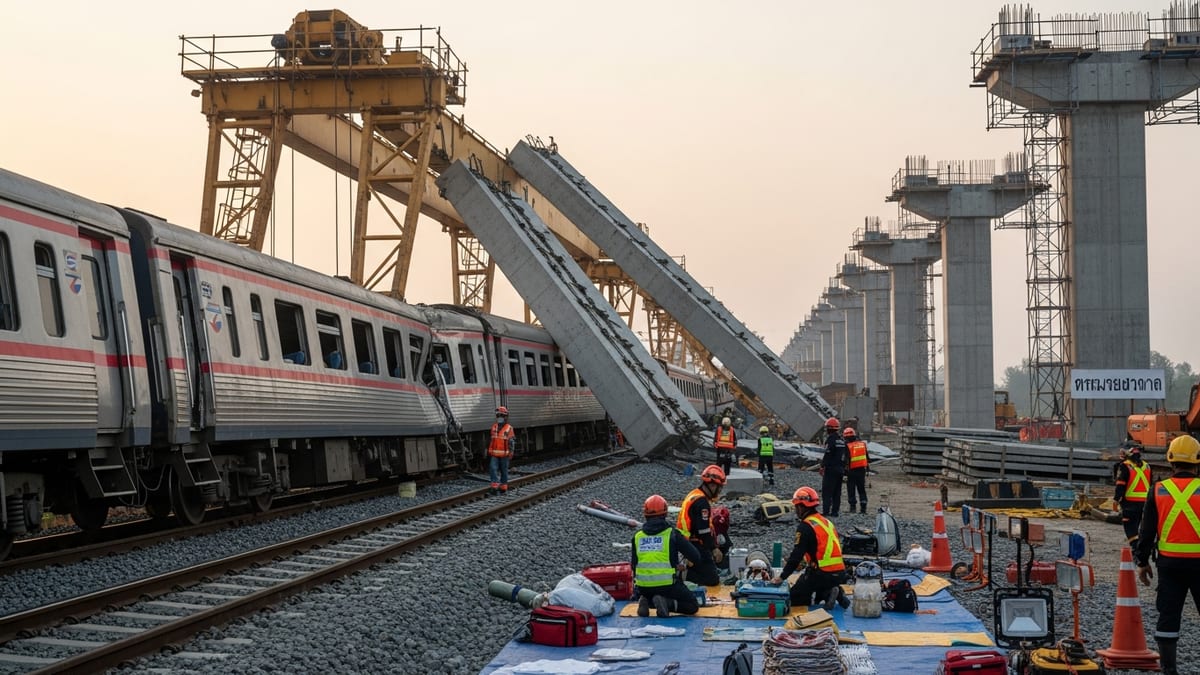
What Happened Near Downtown Bucyrus
According to local and regional news coverage, the derailment occurred on the evening of July 5 near Whetstone Street and Auto Avenue, close to residential neighborhoods and commercial properties. Multiple freight cars left the tracks, including at least one tanker believed to be carrying hydrochloric acid, prompting an immediate emergency response.
Reports indicate that an initial evacuation zone of roughly one mile was established around the site as a precaution while hazmat teams evaluated the condition of the derailed tank cars. Residents described a heavy emergency presence through the night as rail and response crews worked to secure the area and assess potential chemical releases.
By early July 6, publicly available updates from local media described a more precise assessment of the situation, with attention focused on a single tanker suspected of leaking. Visual inspections and monitoring equipment were used to determine whether the car was actively releasing product and to measure any impact on surrounding air quality.
Rail traffic through the corridor was temporarily halted following the incident, with Norfolk Southern crews working alongside contractors to clear debris and restore the line. Nearby roadways were partially closed, affecting late-night and early-morning travel through this part of Bucyrus.
Evacuation Zone Shrinks as Monitoring Continues
As more information became available, the evacuation zone was scaled back significantly. Local broadcast reports on July 6 indicated that guidance shifted from a one-mile radius to an area roughly a quarter to one-third of a mile around the derailment site. Residents outside the revised zone were allowed to remain in their homes while being advised to stay alert to official updates.
Public statements summarized in media reports emphasized that the change in evacuation guidance followed air and site monitoring that showed no immediate, widespread threat to neighborhoods beyond the reduced perimeter. Crews continued to monitor the air near the derailed cars and in adjacent streets to verify that any vapors remained localized and at safe levels for returning residents.
For households still within the restricted zone, temporary shelter arrangements were made available through local resources, with officials encouraging residents to comply with evacuation recommendations until the site was fully stabilized. Some residents reported brief returns home to collect pets, medications, and essential belongings before leaving the area again.
By Sunday morning, traffic restrictions remained in place around Whetstone Street and Auto Avenue, and the public was urged through news reports to avoid the immediate vicinity to allow rail and hazmat teams room to work.
Chemical Concerns and Environmental Safeguards
Hydrochloric acid, the substance believed to be involved in the Bucyrus derailment, is commonly transported by rail for industrial uses. Public information from health and environmental agencies notes that, in concentrated form, it can cause respiratory irritation, burning of the eyes and skin, and environmental damage if released in sufficient quantity.
In Bucyrus, response teams focused on preventing any substantial release from the derailed tanker and on verifying that surrounding soil, surface water, and air remained within safe parameters. Early media coverage indicated that there were no widespread reports of injuries linked to chemical exposure, although people closest to the scene were urged to seek medical attention if they experienced breathing difficulties, eye irritation, or other symptoms.
Environmental specialists typically use portable sensors to check for acidic vapors, as well as sampling of soil and nearby drainage systems to detect contamination. Reports from the scene suggested that such monitoring was underway throughout the weekend, with additional testing expected as cleanup moved from emergency response to recovery and remediation.
Local officials also signaled, through published statements and briefings reported by regional outlets, that more detailed environmental assessments would be made public as data are reviewed in the days ahead. Those results are likely to guide any longer-term cleanup work or health advisories in affected neighborhoods.
Norfolk Southern Under Renewed Scrutiny
The Bucyrus derailment comes at a time of heightened national attention on Norfolk Southern’s safety record following the 2023 hazardous materials derailment in East Palestine, Ohio. In that earlier incident, federal investigations and civil settlements focused on environmental damage, health impacts, and the rail carrier’s decision-making during the emergency response.
Since then, publicly available documents from federal agencies and the company itself show that Norfolk Southern has faced substantial financial penalties and settlement costs, as well as new regulatory scrutiny. The railroad has announced support for national safety policy recommendations and has promoted investments in improved trackside defect detection, emergency response information systems, and training facilities for first responders.
Despite those efforts, each new derailment involving the company attracts close examination from residents, environmental advocates, and rail safety analysts. Coverage of the Bucyrus incident has already placed it within a broader conversation about freight rail maintenance, staffing levels, inspection practices, and the transport of hazardous materials through populated communities.
Observers note that the incident will likely be evaluated in light of these ongoing debates, including how quickly train consist information is shared with emergency responders, the performance of any trackside sensors, and whether evolving safety commitments are being fully implemented on the ground.
What Comes Next for Bucyrus Residents and Travelers
In the near term, Bucyrus residents can expect continuing rail activity at the site as derailed cars are re-railed or removed and damaged track is repaired. Local reports suggest that cleanup operations may take several days, with intermittent noise, lighting, and vehicle traffic in the affected corridor.
Travelers passing through north central Ohio by road should anticipate the possibility of detours or slower traffic near the derailment zone, particularly along streets that intersect the main rail line. Rail passengers using regional services may also experience schedule adjustments while freight traffic is rerouted or temporarily reduced during repairs.
For the community, attention will turn from the immediate emergency toward longer-term questions about environmental testing results, property values, and the transparency of communications with residents. Publicly available information from past derailments indicates that such issues can shape local sentiment long after tracks are repaired and trains resume normal operations.
As additional findings emerge from local, state, and federal reviews, Bucyrus is likely to feature prominently in ongoing national discussions about how railroads manage risk when transporting hazardous materials through small cities and towns across the United States.