


Fes has moved from well kept secret to trending destination, highlighted in recent Priceline trend reports as travelers look beyond Marrakech to more historic and atmospheric cities. At the heart of Fes is its vast medieval medina, Fes el Bali, a UNESCO World Heritage site where donkeys still haul goods through alleys barely wide enough for two people. This guide focuses on the realities behind the romance: what the medina is really like, how to choose and price a riad, what to know about local guides, common scams to avoid, and how much money you should reasonably expect to spend per day in 2026.
Get the latest updates straight to your inbox!
Understanding Fes and Its Maze Like Medina
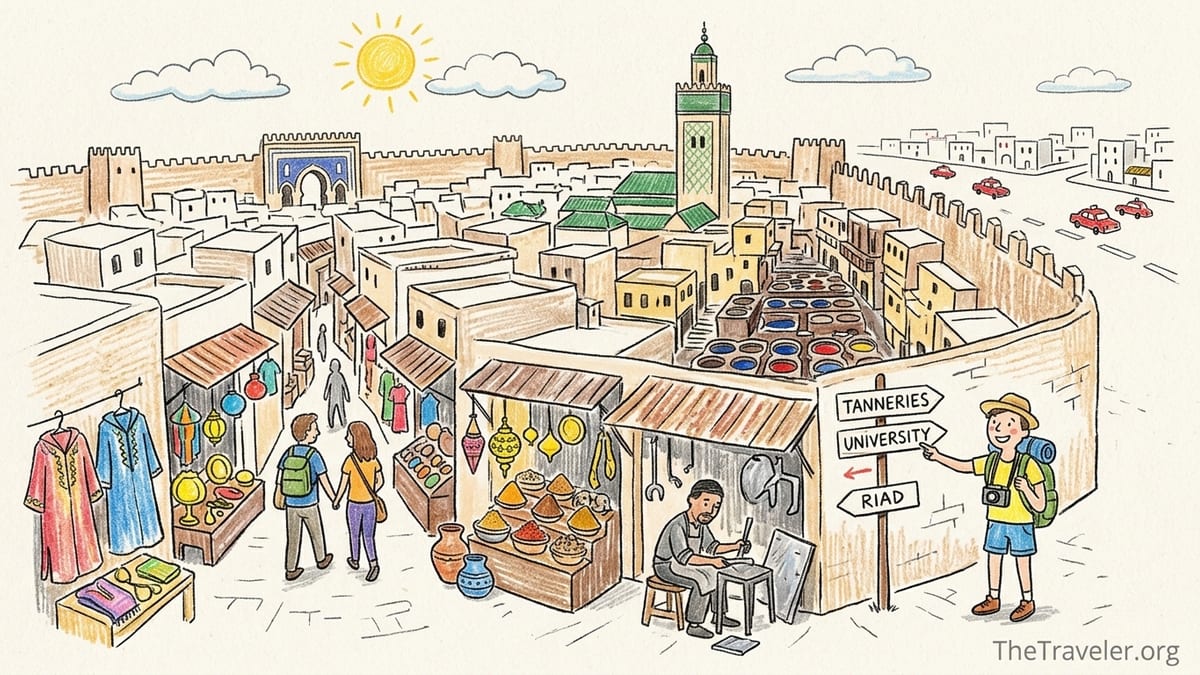
Fes is often described as Morocco’s cultural and spiritual capital, and its reputation rests largely on Fes el Bali, the walled old city. The medina is one of the largest car free urban areas in the world, with thousands of narrow lanes, dead ends, and covered passages. Many first time visitors underestimate just how disorienting it can be. Even with offline maps, GPS often loses accuracy in the covered alleys and tall buildings, so it is common to turn a corner and find yourself somewhere completely different from where you intended.
The density is part of the appeal. Within a few hundred meters you can pass the 9th century University of al Qarawiyyin, the intricate Bou Inania and Al Attarine madrasas, and the famous Chaouwara tanneries with their stone dyeing pits. These are working spaces, not staged exhibits for tourists, and that is what makes Fes feel more lived in than many other historic quarters in North Africa. Shops sell everything from cheap plastic buckets for local households to hand embroidered djellabas and brass lamps for visitors.
Navigating the medina requires a shift in expectations. Streets rarely run straight, signage is inconsistent, and some routes that look direct actually climb and descend steeply on uneven steps. It is entirely normal, even for experienced travelers, to spend the first day or two feeling lost. Many visitors describe Fes as the most intense of Morocco’s cities for this reason. Going in with that understanding, and structuring your days around a few clear targets rather than a long checklist, can transform the experience from stressful to absorbing.
Outside the walls, the newer districts of Fes el Jedid and the Ville Nouvelle feel more familiar, with wide boulevards, conventional hotels, and easier taxi access. Many travelers now split their stay, spending nights in a riad inside the medina to experience the atmosphere, then scheduling more practical errands, such as bank visits or supermarket stops, in the newer parts of town where navigation is straightforward.
Choosing a Riad in Fes: Prices, Locations and What to Expect
Riads are traditional Moroccan townhouses built around an internal courtyard, often with a small fountain or citrus trees. In Fes, many of these historic properties have been restored and converted into guesthouses, ranging from simple family run places to high end luxury stays. In 2026, midrange riads inside the medina commonly charge in the region of 500 to 900 Moroccan dirhams per night for a double room including breakfast, based on current listings and booking platforms. High end designer riads with plunge pools, rooftop terraces and in house hammams can run from roughly 1,200 to 2,500 dirhams per night for a standard room, sometimes more for suites.
Location inside the medina matters more than many new visitors realize. Riads close to Bab Boujloud, the Blue Gate, or along the main spine streets such as Talaa Kebira and Talaa Seghira are easier to find and better lit at night. They also make it simpler to meet official guides or find taxis at the edge of the medina. Properties deeper in the lanes can feel wonderfully secluded, but you may need a porter for luggage and should expect a longer walk through dim alleys after dark. When comparing options, look at how far the riad is from a main gate, not just its star rating or interior photos.
A common pattern in Fes is for riads to arrange everything from airport transfers to medina tours. That can be convenient, but it is worth asking for prices in advance. For example, many riads can book a private, licensed medina guide for a half day at roughly 300 to 600 dirhams per group, depending on language and experience. They may also arrange airport transfers from Fes Sais Airport to the medina gates at a pre agreed rate instead of leaving you to negotiate on arrival. Request these figures by email or messaging before you confirm, so that you can factor them into your total cost and compare with other providers.
Facilities vary widely. Even budget riads usually include breakfast, often a spread of flatbreads, olives, cheese, jam and mint tea, but heating and air conditioning may not be consistent in older buildings. In winter, nights in Fes can be surprisingly cold, and some cheaper riads rely on portable heaters rather than central systems. In summer, good air conditioning and a fan can significantly affect your comfort level. When reading recent reviews, pay attention to comments about room temperature, street noise, and Wi Fi coverage as much as to decoration and hospitality.
Local Guides in the Medina: When to Hire and What It Should Cost
Fes has a long established system of licensed local guides, and using one can make a significant difference to your first day in the medina. Official guides are accredited by the Ministry of Tourism and carry a visible metal badge. According to recent price tracking focused on 2026, a private, licensed guide for a half day walking tour in the medina typically costs between 300 and 600 dirhams per group, while a full day ranges from about 700 to 1,200 dirhams, depending on language, the complexity of the itinerary, and whether hotel pickup is included.
The best way to book a guide is through your riad or a reputable agency rather than accepting offers from people who approach you on the street. You can request a themed tour, such as a focus on traditional crafts in the tanneries and metalworking quarters, or a photography oriented walk that times visits to monuments around the best light. Some visitors arrange an early morning tour, starting around 9 am, to see markets and bakeries before they become too crowded, then spend the afternoon exploring independently now that they have a mental map.
Be clear at the outset about what you want to see and what you wish to avoid. Many guides earn commissions from taking guests to particular carpet shops, leather cooperatives or herbal pharmacies. This is a long standing part of the local economy rather than a hidden scam, but it can lead to time spent in showrooms you are not interested in. If you prefer a non shopping tour, say so directly at the beginning. A simple statement such as “We are happy to tip you well, but we do not want any shop visits” can set expectations. If you do enjoy browsing, you can still use the guide’s local knowledge to compare quality and ask what a fair price might be before you start bargaining.
Tipping is customary but not compulsory. For a half day private tour in the 400 to 500 dirham range, a tip of 50 to 100 dirhams is reasonable if you feel that the guide added insight and helped you navigate comfortably. If a guide pressures you into shopping stops or extends the tour without being upfront about additional fees, it is acceptable to withhold a tip and, if booked through a riad, to give that feedback to the manager.
Scams and Hustles in Fes: What to Watch For and How to Respond
Visitors to Fes often report that the city has more persistent hustling than elsewhere in Morocco, especially around the main gates of the medina. The most common issue is the unofficial or fake guide who offers help with directions, claims that a particular street is closed, or insists that an attraction such as the tanneries can only be reached with their assistance. These individuals may initially say their help is free, then demand payment once you have followed them for a while. Others lead travelers to specific shops where they receive a commission on any purchases.
There are also more subtle versions. Around Bab Boujloud and the main medina arteries, some young men will walk beside you, pointing out landmarks and insisting they are “just practicing English.” After a short time they may become insistent about being paid as a guide. The safest response is to say a firm but polite “no thank you,” avoid extended conversation, and keep walking. If someone becomes aggressive or blocks your path, stepping toward a busy café, shop doorway, or group of people often de escalates the situation because there are more witnesses.
Taxi related problems are another recurring theme. Within Fes, you will mostly use red petit taxis, which by law should use a meter for journeys inside the city. It is common for drivers waiting near tourist hotspots or the train station to refuse to turn on the meter and instead quote a flat fare to the medina or other destinations that may be two or three times higher than the metered cost. Before you get into a taxi, ask “compteur, s’il vous plaît” and check that the meter is running once the journey starts. If the driver insists on a fixed price, you can either negotiate to a level you are comfortable with or simply wave the taxi on and wait for another.
At the tanneries, a classic pattern is for someone to hand you a bunch of mint, say they are “just helping,” then guide you to a family shop or viewing terrace, where you are shown the dyeing pits and later pressured to buy expensive leather goods. Seeing the tanneries usually involves some kind of terrace access, which is often through a shop, but you can reduce pressure by asking your riad to recommend a specific cooperative and confirming in advance if there is an entrance fee. When entering any shop or workshop in Fes, assume that it is a sales environment. If you genuinely do not want to buy, it is better to leave sooner rather than later instead of accepting tea, a lengthy demonstration and then trying to decline purchases at the end.
Living Like a Local: Food, Everyday Costs and Simple Experiences
One of the best ways to get comfortable in Fes is to adopt a few local routines. Eating at neighborhood cafés and small restaurants just outside the main tourist flows can be both more relaxed and better value. In 2026, a simple sit down meal of tagine or grilled brochettes with bread and a soft drink in a local place often costs in the region of 50 to 90 dirhams per person. In more atmospheric, tourist oriented medina restaurants with elaborate interiors and live music, main dishes commonly run from about 90 to 150 dirhams, and a three course set menu might be priced around 180 to 250 dirhams.
Street food is widely available. Freshly squeezed orange juice at a stall may cost roughly 10 to 15 dirhams, while a filled Moroccan flatbread, such as msemen with egg and cheese, can be found for 10 to 20 dirhams depending on location. Ordering where you see local workers rather than only visitors is a reliable way to avoid inflated prices. Before you sit down, glance at the menu and check that prices are printed. Some complaints from travelers relate to cafés that do not display prices then produce unexpectedly high bills at the end of the meal.
Everyday costs such as bottled water and public transport are relatively low. A 1.5 liter bottle of water in a corner shop usually costs only a few dirhams, and using petit taxis with the meter for short hops between the Ville Nouvelle and medina gates can be as little as 10 to 25 dirhams depending on distance and time of day. Shared grand taxis for intercity journeys to Meknes or nearby towns remain one of the cheapest ways to cover longer distances, though comfort levels are basic and seats can be cramped.
For low cost local experiences, look for simple activities that Moroccans themselves enjoy in their free time. Sitting on a medina rooftop terrace at sunset with mint tea, visiting a neighborhood hammam with guidance from your riad on etiquette, or attending an evening of Sufi inspired music in one of the traditional houses all offer immersion without high entry fees. Some medina riads organize cooking classes where you shop together in the produce markets and then prepare dishes in the communal kitchen. These classes usually cost noticeably less in Fes than in Marrakech, and participants often comment that the instruction feels more family based than corporate.
Realistic Daily Budgets for Different Travel Styles
Setting a realistic budget for Fes starts with accommodation. For a budget traveler staying in a hostel or very simple guesthouse on the edge of the medina, it is currently feasible to find dorm beds and basic private rooms in the region of 150 to 300 dirhams per night. Adding in simple meals at local cafés, a few taxi rides with the meter, and modest entrance fees to madrasas or museums, a bare bones daily budget might fall somewhere around 400 to 600 dirhams per person, not counting intercity transport.
For many visitors, a more comfortable midrange level is a better match for the sensory intensity of Fes. With a midrange riad in the 600 to 900 dirham bracket for a double room including breakfast, lunch at a local spot, dinner at a midrange medina restaurant, coffee breaks, and occasional paid experiences, a realistic daily spend for two people often lands around 1,000 to 1,500 dirhams excluding long distance trains or flights. That would cover, for example, a 700 dirham room, 300 to 400 dirhams on food and drinks over the day, and additional amounts for tips, small purchases and a taxi or two.
At the higher end, couples staying in design focused riads with on site hammams and multi course dinners, booking private full day guiding, and shopping for carpets or leather jackets can easily spend 2,000 to 3,500 dirhams per day or more. Individual big ticket purchases, such as a handwoven rug or elaborately inlaid wooden chest, can each cost as much as several days of ordinary travel expenses. If you think you may be tempted, set an approximate shopping budget in advance so that enthusiasm in a showroom does not derail the rest of your trip.
Regardless of travel style, it is sensible to keep a small daily buffer for unexpected costs. These might include paying a porter with a handcart 20 to 40 dirhams to move luggage through the medina, tipping a helpful café worker who walks you to a hard to find riad, or resolving a minor dispute by calmly handing over a small sum rather than escalating an argument in the street. Having that flexibility built into your numbers makes it easier to stay relaxed when minor issues arise.
Practical Safety Tips and When Fes Is Not for Everyone
Fes is generally considered safe from serious violent crime, but petty problems and the psychological strain of constant approaches can wear some travelers down. Solo visitors, especially women, often report more frequent comments and unsolicited offers of help inside the medina. Many still find the city rewarding, but some leave feeling drained. If you know that crowded, chaotic environments increase your anxiety or you have only a day or two in Morocco, you may prefer to limit your time in Fes and focus more on calmer destinations such as Chefchaouen or coastal towns.
Simple habits significantly reduce hassle. Dressing more conservatively than you might in a European summer resort, keeping valuables out of sight, and avoiding headphones while walking all help you stay aware of your surroundings. Plan medina exploration for daylight hours, ideally finishing major wandering before late evening, and arrange dinners either very close to your riad or in areas where you are comfortable with the walk back. If you feel overwhelmed at any point, stepping into a café for mint tea or returning to your riad for a break can reset the day.
When things do go wrong, such as a taxi driver demanding more than you agreed or a shopkeeper becoming pushy, staying calm and factual works better than raising your voice. Having a screenshot or written note of typical prices, such as an approximate taxi fare between the train station and Bab Boujloud, can help you negotiate from an informed position. In more serious disputes, asking your riad manager to speak with the other party in Arabic or contacting the tourism police, where available, is preferable to arguing on your own in the street.
It is also important to remember that the same city which some visitors experience as hostile is, for many locals and long term residents, simply home. There are plenty of genuinely kind encounters alongside the hustles. Travelers regularly share stories of shopkeepers who intervene when they see someone trying to overcharge a tourist, elderly men who spontaneously give directions without asking for money, and riad staff who walk guests through the medina at night so that they feel safer. Approaching Fes with both alertness and openness gives you the best chance of seeing this more generous side.
Conclusion: Making Fes Work for Your Style of Travel
Fes has earned its place on trend lists for travelers seeking deeper cultural experiences. Its medina still functions as a real city quarter rather than a polished open air museum, riads offer atmospheric stays at prices that remain competitive by global standards, and local crafts from zellige tile to hand tooled leather are on display at almost every turn. At the same time, the city demands more resilience than many other destinations, with its complex alleys, persistent unofficial guides and occasional hard sells.
If you arrive informed about guide pricing, aware of the most common scams, and clear about your budget, Fes can be one of the most memorable stops in a Morocco itinerary. Use licensed guides for your first explorations, choose a riad in a location that fits your comfort level, and give yourself time for both intense medina walks and quiet rooftop moments. With those choices in place, you are far more likely to come away from Fes remembering the call to prayer drifting across the rooftops and the play of light on carved plaster, rather than just the hassles outside the gate.