


More news on this day
Amsterdam Schiphol Airport is facing another bout of operational disruption, with publicly available data showing 17 flight cancellations and 47 delays affecting services operated by KLM, easyJet, United Airlines, Air France and Norse Atlantic, and disrupting connections across Europe, North America and the Middle East.
Get the latest news straight to your inbox!
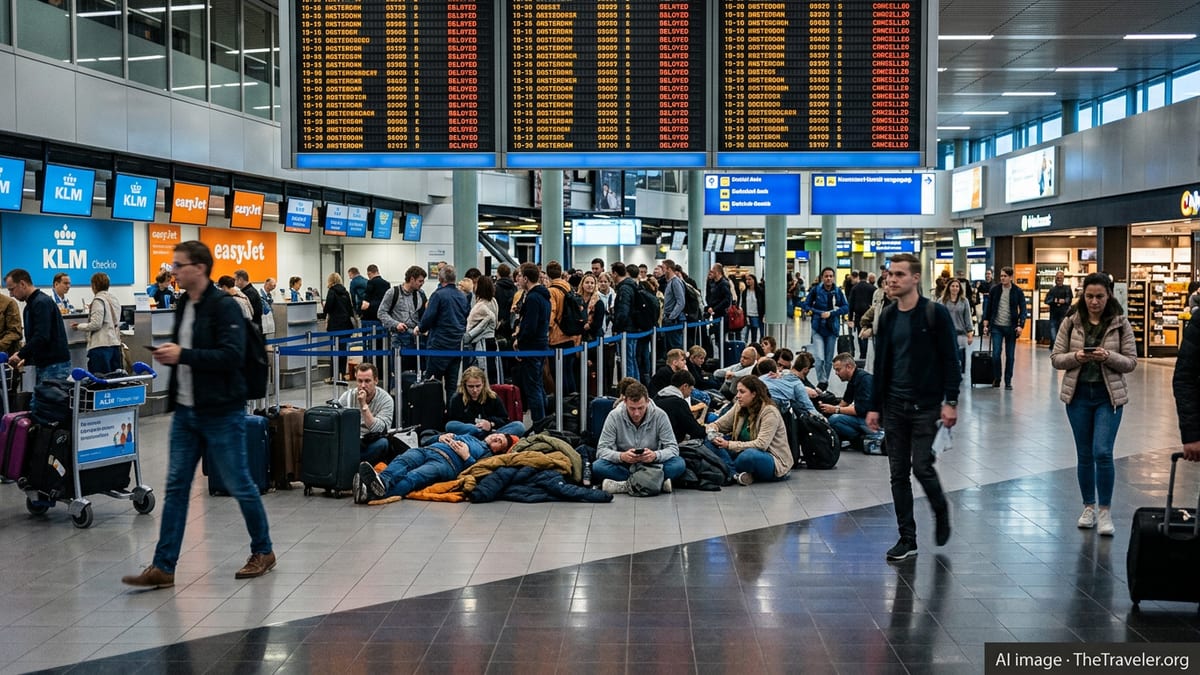
Fresh Disruptions at One of Europe’s Busiest Hubs
The latest disruption at Amsterdam Schiphol comes only days after earlier episodes of widespread irregular operations at the airport, which handles tens of millions of passengers each year and serves as the primary hub for KLM and a major base for several other carriers. Recent reports highlight a pattern of rolling delays and targeted cancellations that have periodically affected both short haul and long haul routes.
Aggregated departure and arrival information indicates that the current wave of issues involves a smaller number of flights than large-scale disruption days seen earlier in the year, but the impact on individual travelers remains significant. Cancellations and multi hour delays on hub to hub routes in particular can cascade across airline networks, affecting travelers who are not even scheduled to pass through the Netherlands.
Flight tracking data and schedule information show that the affected flights are spread throughout the day rather than concentrated in a single peak period. This pattern suggests operational pressures such as aircraft and crew rotations, air traffic flow measures and knock on effects from earlier disruptions, rather than a single discrete incident confined to one time window.
Schiphol’s role as a key transfer point between continental Europe, the United Kingdom, North America and parts of the Middle East means that even a limited number of cancellations can have an outsized effect. Missed connections and rebookings can quickly ripple outward, as passengers from multiple origin cities converge on the Dutch hub.
Key Airlines and Routes Affected
According to flight status aggregators and published airport data, KLM accounts for a substantial share of the disrupted operations, reflecting its dominant presence at Schiphol. Recent days have already seen examples of KLM operated flights to destinations such as Nantes and Bucharest being marked as cancelled or heavily delayed, illustrating the vulnerability of regional European links when the hub experiences strain.
Low cost carrier easyJet, which operates a range of routes from Amsterdam to the United Kingdom and selected European cities, is also among the airlines affected. Even a relatively small number of delayed departures can have knock on effects for its tightly scheduled aircraft rotations, leading to further timing changes later in the day on services into and out of British and European airports.
Transatlantic operations are not immune. United Airlines, which connects Schiphol with major hubs in the United States, has flights flagged with extended delays, complicating itineraries for travelers heading onward to destinations across North America. Publicly available data for recent days show that even when some long haul services eventually depart, extended ground holds can cause passengers to miss onward connections in the United States.
Air France, working in close coordination with KLM through their joint network, is also navigating schedule pressures, particularly on services linking Amsterdam and Paris Charles de Gaulle. Norse Atlantic, which focuses on long haul leisure oriented transatlantic routes, appears in recent operational summaries with individual cancellations and delays, underscoring that smaller long haul operators are equally exposed when hub operations falter.
Wide Geographic Impact From Europe to North America and the Middle East
The current set of 17 cancellations and 47 delays at Schiphol reaches far beyond the Netherlands. Routes connecting Amsterdam with destinations in the United Kingdom are among those facing schedule changes, affecting both leisure travelers and business passengers moving between major cities such as London and Manchester and the Dutch capital.
Connections with France are also exposed. Disruptions on KLM and Air France services between Amsterdam and Paris can create challenges for travelers connecting onto broader networks serving southern Europe, Africa and parts of the Middle East. With many itineraries constructed around tight transfer windows, even a delay of under an hour can have consequences if inbound flights arrive outside of minimum connection times.
Links with the United States are particularly sensitive. Amsterdam functions as a key European gateway for long haul services operated by KLM, Delta and United, among others. Disruptions at the Dutch hub can therefore affect itineraries involving major U.S. cities such as New York, San Francisco and Los Angeles, with some passengers forced to overnight or reroute through alternate hubs when missed connections cannot be recovered the same day.
The disruption also touches services involving Israel and Romania, where Amsterdam acts as a connecting point between regional flights and long haul services. When flights between Schiphol and cities such as Tel Aviv or Bucharest are delayed or cancelled, passengers may face limited same day alternatives, particularly during off peak periods or on routes with only one or two daily frequencies.
Contributing Factors and Ongoing Operational Strain
While there is no single publicly confirmed cause for the current tally of cancellations and delays, recent coverage of operations at Amsterdam Schiphol points to a combination of factors. These include weather variability, ground handling constraints, high summer demand, and industry wide staffing and aircraft availability challenges that continue to affect European aviation.
Earlier in the week, industry focused outlets documented a separate disruption at Schiphol involving more than twenty cancellations and close to fifty delays, largely concentrated among KLM, Delta and other partner airlines. Reports linked those issues to a mix of operational bottlenecks and capacity management decisions, with several flights proactively cancelled in order to stabilize schedules and reduce the risk of rolling delays later in the day.
Flight tracking services show that some airlines have been adjusting departure times, swapping aircraft types or rerouting services in response to changing conditions. These short notice adjustments can reduce the number of outright cancellations, but they also tend to push departure and arrival times outside their initially published windows, generating the kind of delay statistics now visible in today’s data.
Schiphol has previously signaled that peak summer days remain challenging as airlines, ground handlers and air traffic management entities attempt to balance high passenger volumes with resource constraints. The current episode, though smaller in scale than some past disruptions, suggests that margins remain tight and that localized issues can still trigger measurable network wide effects.
What Travelers Can Expect and How to Navigate Disruptions
For travelers scheduled to pass through Amsterdam on affected airlines, the main impact is likely to be extended journey times and a heightened risk of missed connections. Passengers with tight transfer windows, particularly those connecting from short haul European flights onto long haul services to the United States or the Middle East, are among the most exposed to disruption.
Industry guidance generally recommends that travelers monitor their flight status closely on the day of travel, using airline and airport tools that show real time departure and arrival information. Publicly available data for today’s operations at Schiphol demonstrate how rapidly the situation can change, with flights shifting from on time to delayed or from delayed to cancelled as airlines adjust to operational realities.
When flights are cancelled or severely delayed, consumer protection rules in the European Union may entitle passengers to rebooking options, care such as meals and accommodation, and in some cases financial compensation, depending on the cause and length of the disruption. Travelers connecting between the Netherlands, the United Kingdom, France, Israel, Romania and the United States should therefore retain documentation of their itineraries and any additional expenses incurred.
With the aviation industry continuing to operate under pressure during peak travel periods, today’s issues at Amsterdam Schiphol serve as another reminder that even a limited number of cancellations and delays at a major hub can swiftly disrupt travel plans across multiple continents, particularly on complex itineraries spanning Europe, North America and the Middle East.