


More news on this day
UK travellers heading to Italy and other popular European destinations are being warned to brace for severe disruption this summer as the European Union’s new Entry/Exit System beds in, triggering long biometric queues, missed flights and mounting pressure on border infrastructure across the Schengen area.
Get the latest news straight to your inbox!
Italy Becomes Latest Flashpoint In EU Border Turmoil
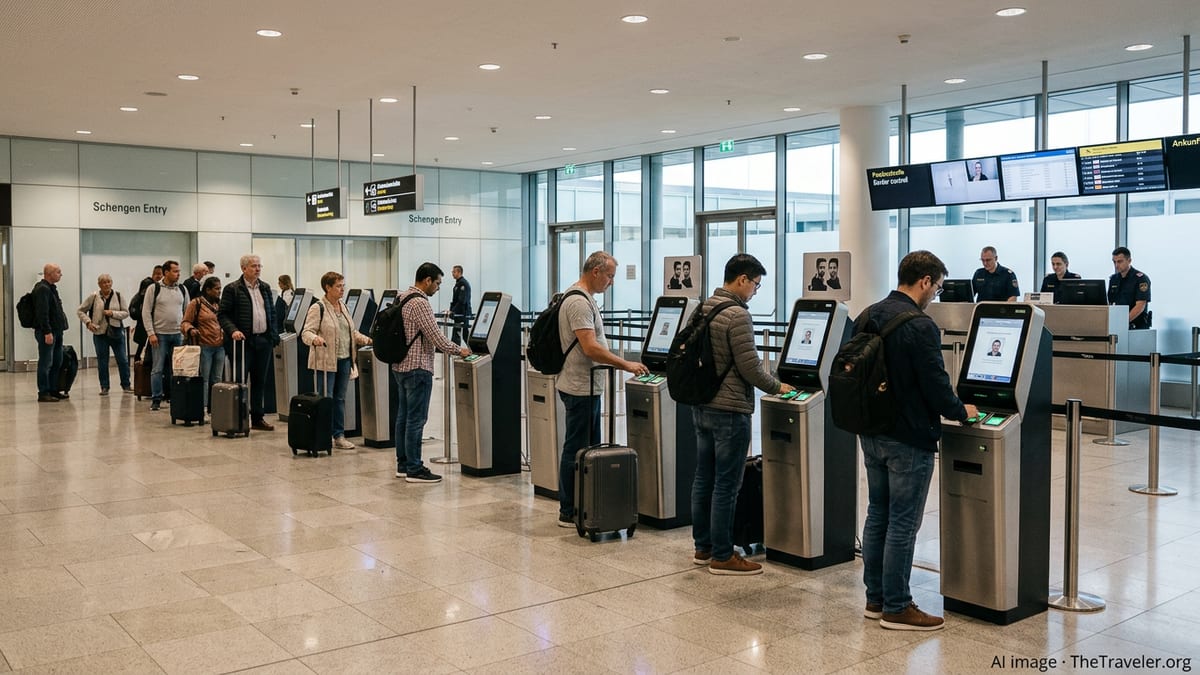
Reports from Italian airports indicate that the country has rapidly become one of the main hotspots for disruption linked to the EU’s Entry/Exit System, with bottlenecks forming as border officers process non EU passengers through the new biometric kiosks. Airports serving major tourist hubs such as Milan, Rome, Venice and Pisa have seen queues stretch for hours at peak times, with UK holidaymakers among those worst affected.
The new system, which began a phased rollout in October 2025 and became fully operational at air borders by April 2026, records the fingerprints and facial image of travellers from non Schengen countries in place of stamping passports. Official material describes the change as a long term investment in security and efficiency, but early operational data and media coverage show a sharp rise in processing times wherever large numbers of leisure travellers arrive together.
Industry analyses and airport performance reports suggest that Italy’s busy point to point network from UK regional airports has made it especially vulnerable. Flights often arrive in waves, overwhelming biometric kiosks that can take several minutes per person for first time registration. Travel coverage from the spring shoulder season already documents cases of UK passengers at Milan and Pisa missing flights or waiting several hours to clear border checks.
Travel planning services and aviation analysts note that, while some Italian airports have adapted faster than others, the pattern mirrors problems seen earlier in France and Spain when they expanded EES processing. The combination of peak holiday traffic and high proportions of non EU visitors appears to be the most challenging scenario for the new border regime.
Systemic Strain Across France, Spain, Greece and Beyond
Italy’s difficulties are unfolding against a wider backdrop of disruption across Europe as the EES moves from pilot phase to full scale operation. Airports in France, Spain, Germany, Austria, Belgium and Greece were among the first to introduce mandatory biometric checks, and travel media tracked extensive queues from the 2025 winter season through to Easter 2026.
Airport trade bodies have warned in public briefings that border processing times at affected terminals have increased by as much as 70 percent during the initial rollout, particularly where infrastructure upgrades lag behind passenger volumes. Accounts from Paris, Barcelona, Athens and Vienna describe gridlocked arrival halls, with all non EU travellers, including British visitors, funneled into a limited number of biometric stations.
Tourism dependent economies on the Mediterranean have been under particular pressure to keep traffic flowing. Greece, which experienced significant hold ups at some island gateways in April, temporarily relaxed biometric requirements for British tourists ahead of the main summer season, according to widely cited national and European press reports. Other states, including Spain and France, have concentrated EES checks at larger hubs while delaying full implementation at smaller regional airports.
Across the Schengen zone, public information from the European Commission confirms that the EES is intended to be operational at all external land, sea and air borders. However, the pace of deployment and the availability of staff and equipment vary by country and by airport, leading to what airlines describe as a patchwork of experiences for passengers on ostensibly similar routes.
UK Travellers Urged To Add Extra Time And Expect Variability
For UK passengers, who are classified as third country nationals after Brexit, the impact of the EES is especially acute. Travel coverage from broadcasters and specialist outlets highlights multiple instances of British holidaymakers missing flights out of popular EU airports after underestimating the time needed to clear outbound passport control.
Several airlines have publicly revised their guidance, advising UK based customers to arrive at least three hours before departure for flights from EU airports where EES infrastructure is in full use. Low cost carriers with dense networks in Spain, Italy and Greece have been particularly vocal, citing anecdotal evidence of customers turning up with the traditional two hour buffer and then being caught in unexpectedly long queues for exit checks.
Commentary from UK travel associations notes that the experience remains highly inconsistent. At some large hubs, investment in additional kiosks and staff has reportedly kept queues within acceptable limits outside peak moments. At others, particularly secondary airports serving coastal resorts and city break destinations, travellers describe sudden surges when several flights depart within a short window, leading to long waits even after check in and security have been completed.
Consumer advocates are urging passengers to factor the new border controls into every leg of their journey, not only the first arrival into the Schengen area. Under the digital regime, biometric verification and entry or exit recording may be required whenever a traveller crosses the Schengen external border, whether by air, sea or land, and this can add significant unpredictability to tight connections.
Airports, Airlines and EU Institutions Scramble For Fixes
As queues grow, Europe’s aviation sector and EU institutions are under pressure to demonstrate that the disruption can be contained. Airlines have raised their concerns in public forums, arguing that long border waits are already feeding through into missed slots, aircraft rotation problems and an increase in customer complaints.
Airports, for their part, are rolling out interim measures such as reconfiguring queuing space, adding temporary staff to guide passengers through kiosks and extending operating hours of passport control where possible. Some have also accelerated procurement of additional biometric machines, although industry analyses suggest that delivery and installation timelines mean many upgrades will arrive only after the 2026 peak season.
European Commission briefings continue to frame the EES as a necessary modernisation that will, once fully embedded, speed up border crossings and strengthen security by automatically detecting overstays. At the same time, official infographics and public information campaigns acknowledge that the progressive start has created periods of intense congestion at certain border points.
Specialist reports indicate that EU level working groups are monitoring real time performance data from airports in Italy, France, Spain, Germany, Austria, Belgium and other member states, looking for ways to streamline procedures without weakening the biometric requirements built into the regulations. Proposals under discussion in the public domain include wider pre registration options and more flexible staffing models at peak times.
Summer 2026 Outlook: Prolonged Growing Pains Likely
Looking ahead to the core summer months of 2026, travel analysts predict that disruption from the EES is unlikely to disappear quickly. Coverage of recent industry conferences suggests that senior figures involved in the rollout expect it could take one to two years for the system to fully stabilise and for all border crossing points to reach an efficient steady state.
Forecasts from air traffic and airport performance bodies point to another record busy season for European leisure travel, with demand from the UK remaining strong despite economic headwinds. This means that the mismatch between passenger volumes and border processing capacity may persist, particularly at popular Mediterranean gateways in Italy, Spain and Greece.
For UK travellers, the key message emerging from publicly available guidance is to build in more time and flexibility. Arriving early for flights, allowing generous buffers for connections involving a Schengen border crossing and staying alert to airport specific advice are all being highlighted as practical ways to reduce the risk of missed departures.
With the EES now embedded across much of continental Europe and further digital changes, such as the planned ETIAS travel authorisation, still to come, observers say that this summer’s experience will be an important test of whether the continent’s new border architecture can deliver the promised balance between security, efficiency and a smooth journey for millions of British visitors.