

More news on this day
Passengers flying through Singapore faced last-minute chaos today after three key regional services operated by Thai Airways and Tigerair were cancelled, disrupting busy links to Jakarta and Bangkok and leaving scores of travellers scrambling for alternative options.
Key Regional Links Abruptly Cut
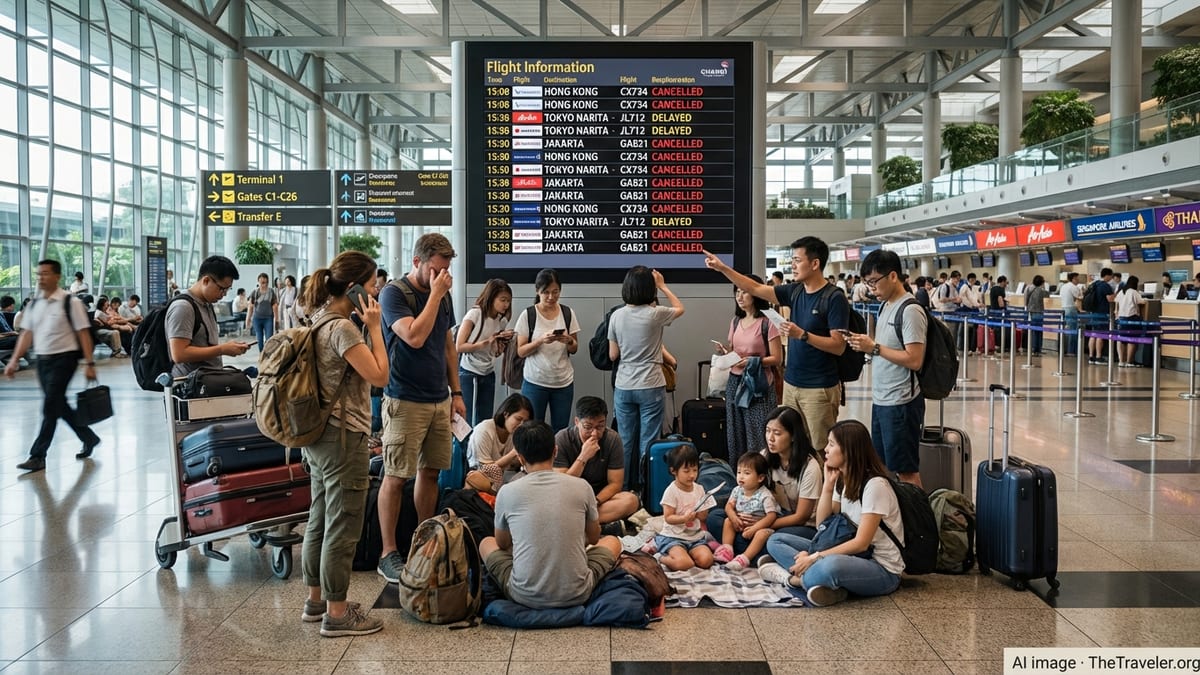
The cancellations affected one Thai Airways service and two Tigerair flights scheduled to depart Singapore Changi Airport for Jakarta and Bangkok, according to schedules and passenger accounts reviewed by TheTraveler.org. The aircraft were withdrawn from service shortly before boarding, triggering queues at airline counters and long waits at customer service desks across the terminal.
Operational issues were cited as the primary reason for the disruption, with one aircraft reportedly taken out of rotation for unscheduled maintenance checks. While safety experts say such decisions are made out of an abundance of caution, the timing of the cancellations on heavily trafficked business and leisure routes amplified the impact on travellers at the start of a busy travel period.
The affected flights form part of a dense shuttle network linking Singapore to both the Indonesian and Thai capitals, routes that see strong demand from corporate travellers, connecting long haul passengers and short break holidaymakers. Even a small reduction in frequency can create bottlenecks on days when load factors are already high.
Stranded Passengers Face Long Queues and Uncertain Timelines
Inside Changi’s departure halls, stranded passengers reported waiting in lines stretching across sections of the check in zone as they sought rebooking options, meal vouchers and hotel accommodation. With only a handful of later flights showing spare seats, many travellers were told they would not depart until at least the following day and, in some cases, were offered rerouting via secondary hubs in the region.
Families heading to Jakarta described hurriedly rearranging airport transfers and hotel reservations, while business travellers bound for Bangkok weighed whether to cancel meetings or attempt to join video calls from airport lounges and nearby hotels. Travellers with non flexible tickets faced additional uncertainty as they tried to clarify refund rights and change fees at airline counters.
Airlines typically prioritise rebooking for passengers with onward long haul connections, but on short regional sectors like Singapore Jakarta and Singapore Bangkok, many travellers end up competing for the same limited pool of replacement seats. This dynamic left some passengers contemplating last minute alternatives on competing carriers, often at significantly higher walk up fares.
Knock on Effects Across Southeast Asian Routes
The loss of three departures may seem modest in numerical terms, but on high density corridors such as Singapore to Jakarta and Bangkok, the ripple effects can extend well beyond the initial cancellations. Seat shortages on later departures quickly translated into longer standby lists, while load factors on competitor airlines rose as travellers shifted bookings in search of faster options.
Travel agents in Singapore and Jakarta reported a sharp uptick in urgent reissue requests as corporate travel managers tried to keep employees on schedule. Some companies opted to reroute staff through Kuala Lumpur or via other Indonesian cities, accepting longer journey times in exchange for greater certainty of arrival.
In Bangkok, hotel concierges and ground transport providers fielded calls from guests warning of delayed arrival times and missed first night reservations. Onward domestic flights within Thailand and Indonesia were also affected, as travellers who had planned tight regional connections were forced to push back their itineraries or absorb the cost of no show fees.
Airlines Emphasise Safety as Operational Pressures Mount
While both Thai Airways and Tigerair moved to rebook customers and issue travel waivers, aviation analysts note that the episode highlights the operational fragility facing many regional carriers as they juggle high demand with tight fleet availability. Unplanned maintenance on a single aircraft can cascade rapidly into network wide disruption if there is limited spare capacity available to step in.
Industry observers say airlines are under pressure to rebuild schedules and capture resurgent demand on lucrative Southeast Asian routes, even as they contend with ongoing staffing constraints and supply chain delays affecting parts and heavy maintenance slots. In this environment, any technical concern that prompts a precautionary stand down of an aircraft can have an outsized effect on day to day operations.
Both carriers stressed that safety remains non negotiable when deciding whether to dispatch an aircraft, a message broadly welcomed by aviation experts. However, the balance between rigorous safety protocols and the need for resilient, passenger friendly schedules is likely to remain a point of scrutiny as the region’s air traffic continues to grow.
Advice for Affected and Future Travellers
Travel specialists advise passengers flying on busy regional routes to Jakarta and Bangkok to build in additional buffer time wherever possible, particularly when connecting to long haul flights or time sensitive events. Checking flight status frequently in the 24 hours before departure and downloading airline apps for real time notifications can provide earlier warning of potential disruptions.
For those already affected by cancellations, keeping documentation of all out of pocket expenses, from extra hotel nights to airport transfers, will be important when seeking reimbursement or insurance claims. Many travel insurance policies now include specific cover for missed connections and significant delays, but often require detailed proof of disruption.
As airlines across Asia continue to fine tune schedules and restore capacity, travellers on regional sectors from Singapore are being reminded that even short hops can be vulnerable to sudden operational shocks. For the passengers left stranded by today’s cancellations, the experience served as a stark illustration of how quickly routine journeys between Singapore, Jakarta and Bangkok can unravel when just a few key flights are taken off the board.