


More news on this day
Midwest travelers are encountering mounting disruption at Omaha’s Eppley Airfield as spring and early summer storms ripple through the national network, triggering flight cancellations, diversions and tight connections just as peak travel season builds.
Get the latest news straight to your inbox!
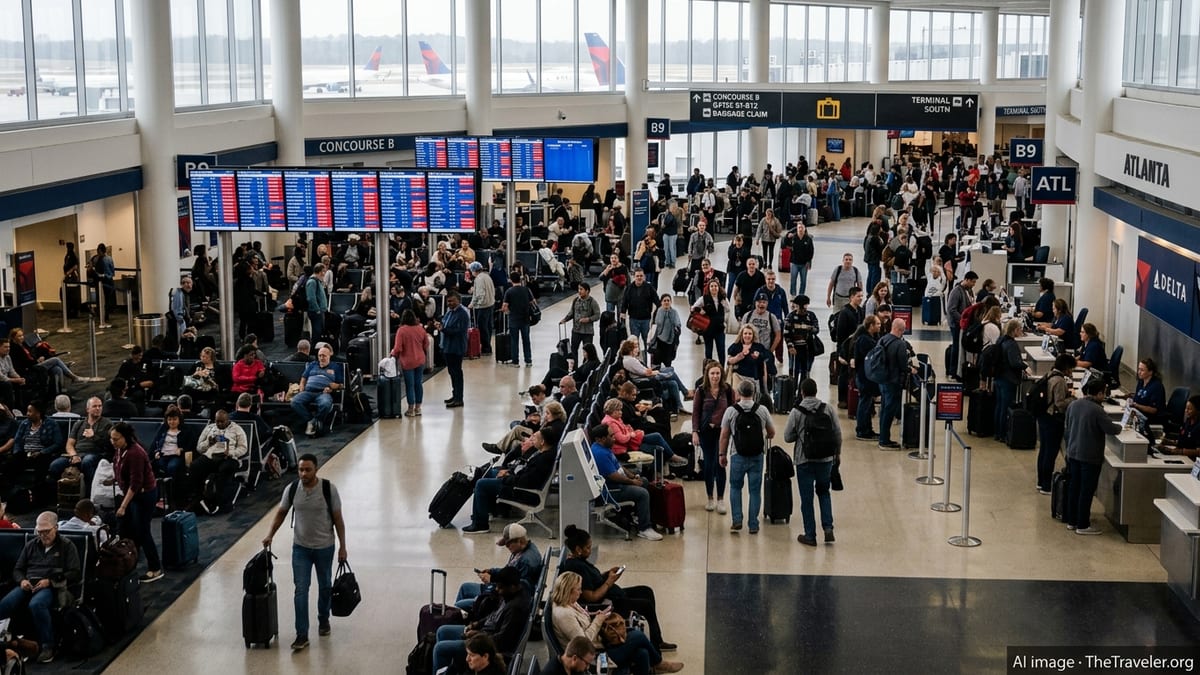
Stormy Spring Sets the Stage for Disruptions
Severe weather across the central United States in April 2026 has intensified pressure on airline operations that serve Omaha Eppley, with regional thunderstorm clusters and tornado outbreaks prompting reroutes and periodic cancellations across the Midwest. Published climatology assessments highlight that Eppley’s position along active storm tracks regularly exposes it to convective weather, low ceilings and gusty crosswinds during the warm season, conditions that can quickly throttle runway capacity.
Recent nationwide disruption days, when hundreds of flights were canceled and thousands delayed, demonstrate how fragile the system has become during volatile weather patterns. While the heaviest cancellations concentrated at large hubs, the ripple effects have reached secondary airports like Omaha as aircraft and crews are repositioned, diverted or left out of place for subsequent departures.
Because many Omaha flights operate as spokes into major connecting hubs, even localized storms in distant cities can translate into cancellations or extended delays for Eppley departures and arrivals. Airlines have increasingly leaned on lengthy ground holds and rolling delays in an attempt to preserve future connections, but those tactics can tip into late-evening cancellations that strand travelers, particularly during busy weekend periods.
Omaha’s Geography and Capacity Constraints
Eppley Airfield is classified as a medium-sized, multi-use airport with a traffic mix that includes commercial carriers, cargo, corporate and general aviation. Surrounded on multiple sides by the Missouri River and adjacent bodies of water, the airfield’s location and runway configuration can make it especially sensitive to shifts in wind direction, visibility and low-level turbulence that often accompany strong frontal systems.
Operational data published for Eppley shows that, in normal conditions, the airport functions without significant chronic delays. Federal aviation summaries list the facility as on time during fair-weather stretches, affirming that congestion alone is not the primary driver of cancellations. Instead, the combination of weather-sensitive approaches, runway maintenance cycles and the tight scheduling typical of today’s airline networks leaves little buffer when storms move through the region.
When severe weather erupts along key corridors between Omaha and major hubs such as Denver, Chicago or Dallas, ground-delay programs at those larger airports can cascade back to Eppley. Aircraft may be held at the gate awaiting departure slots, diverted en route or rerouted around storm cells, adding flight time and consuming crew duty hours that are already stretched during the high-demand months.
Peak Season Adds Pressure for Midwest Travelers
Airport guidance for Eppley emphasizes that peak travel periods now occur daily, with pronounced surges in the early morning and late afternoon. As airlines concentrate departures in these windows to maximize connections and aircraft utilization, any weather-related slowdown can quickly create bottlenecks at security, gates and taxiways, increasing the likelihood of missed connections and schedule reshuffling.
At the same time, carriers are operating some of the fullest schedules since before the pandemic era, according to industry reports, leaving limited spare aircraft to substitute when a plane is out of position. Published route data for Omaha indicates a broad network of nonstop services that depend heavily on regional and narrow-body jets, which are particularly vulnerable to high winds, hail and low visibility thresholds that trigger more conservative operating limits.
For travelers across Nebraska, Iowa, Kansas and the Dakotas who rely on Omaha as their primary commercial gateway, these dynamics mean that a thunderstorm outbreak several states away can affect vacation departures, business trips and family travel with little advance warning. Travel waivers issued for hubs in Chicago or the Rocky Mountain region can become crucial tools for Midwest passengers looking to rebook or route around the worst of the disruption.
Changing Requirements and What Passengers Can Control
In addition to weather-driven uncertainty, evolving identification rules and security procedures are reshaping the airport experience at Eppley just as peak-season crowds arrive. Airport travel-tip pages point to new federal ID requirements taking effect in 2025 and additional fees for passengers who arrive without acceptable identification from early 2026, factors that could add further friction if travelers are unprepared at check-in.
Local guidance stresses the importance of arriving well ahead of departure, particularly during the busiest hours between 5 a.m. and 7 a.m. and 4 p.m. and 6 p.m. Reports from recent travel periods describe extended security lines at Eppley when multiple banked departures coincide, amplifying stress for passengers whose flights are already operating tight turnaround times because of upstream weather delays.
While travelers cannot influence convective weather over the Plains or staffing levels in distant control towers, they can mitigate risk by monitoring airline apps for rolling schedule changes, tracking conditions at both origin and connecting hubs, and considering earlier departures on days when severe weather is forecast. Publicly available aviation dashboards show that, even on highly disrupted days nationwide, certain flights at Eppley maintain strong on-time performance, underscoring the value of route and time-of-day choices.
Summer Outlook: More Volatility, Not Less
Forecast discussions from meteorologists and severe-weather observers point to an active pattern across the central United States heading into the heart of summer, with repeated thunderstorm complexes and the potential for additional tornado outbreaks. Combined with infrastructure work at some hubs and tight staffing in parts of the air-traffic system, analysts expect punctuality to remain fragile for connecting traffic that touches the Midwest.
Transportation planning documents for the Omaha region show continued investment in airfield lighting and infrastructure projects over the next several years, steps that may bolster resilience over the longer term. In the near term, however, travelers using Omaha Eppley are likely to contend with periodic cancellation waves whenever strong systems sweep the Plains or bottlenecks emerge at key hub airports.
For Midwest travelers mapping out summer holidays, family reunions or study-abroad departures, the current pattern suggests building more flexibility into itineraries and treating Omaha’s schedules as part of a wider, weather-sensitive network. As storms continue to test the limits of U.S. aviation capacity, Eppley’s role as a regional gateway places its passengers on the front line of disruption, particularly during the crowded peak-season months ahead.