


More news on this day
Qatar’s fragile return to regular air travel has been shaken again, as new Qatar Airways cancellations on high-demand routes linking Doha with Dubai, Mumbai, Bali, and Colombo fuel renewed disruption for passengers already navigating weeks of uncertainty.
Get the latest news straight to your inbox!
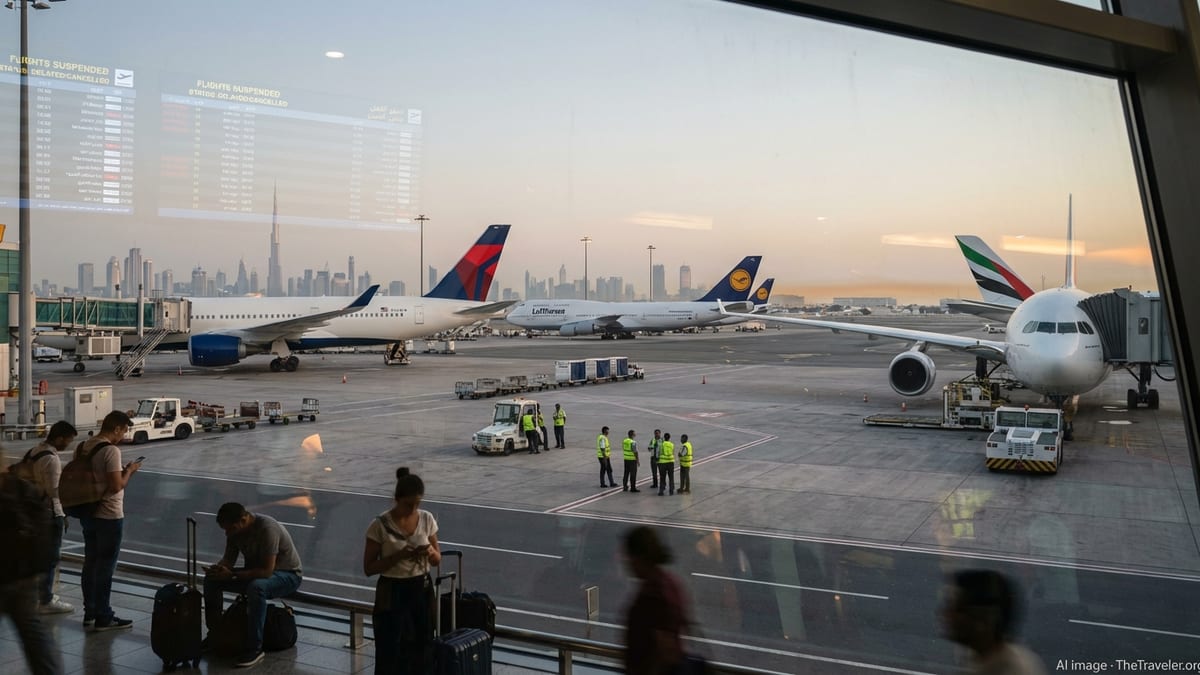
Fresh Wave Of Cancellations Hits Flagship Regional Links
Publicly available flight-tracking data and schedule notices show that Qatar Airways is continuing to operate on a reduced and frequently adjusted timetable in early May, with several rotations between Doha and major regional hubs subject to last-minute cancellation or consolidation. Services touching Dubai, Mumbai, Bali, and Colombo have been among those most affected, further complicating travel plans for passengers who rely on Doha as a key connection point.
These four routes are critical to the airline’s short and long haul network, feeding traffic between Europe, Asia, and Australia. Any disruption on them quickly ripples across connecting services, leaving travelers with missed onward flights, extended layovers in Doha, or the need to be rebooked via secondary hubs. Reports from recent days describe entire itineraries being canceled and reissued multiple times, with some customers only learning of changes hours before departure.
The latest cancellations come on top of an interim schedule that industry analysts describe as significantly leaner than Qatar Airways’ pre-crisis operation. While departures from Doha have gradually increased since March, the carrier’s network remains in a rebuilding phase, and seat availability is still constrained on certain days and destinations.
Lingering Impact Of Regional Airspace Turbulence
The renewed disruption cannot be separated from the wider regional crisis that began in late February, when Qatari airspace was temporarily closed and routine commercial operations at Doha’s Hamad International Airport were largely halted. According to open-source aviation and news reports, the national carrier canceled hundreds of flights in the weeks that followed, stranding thousands of passengers across the Gulf and beyond.
Although a limited network resumed in March under special operating corridors, the airline has been navigating complex airspace restrictions and evolving security considerations for months. Even as more destinations are reintroduced and frequencies lifted, flight timings and routings remain vulnerable to further operational adjustments. The result is an environment in which schedules published weeks in advance can still change at short notice.
Industry scheduling data indicates that Qatar Airways has extended an interim timetable into mid-June, signaling that management does not yet see conditions for a full return to its previous long-haul connectivity. For passengers, that means planning around a network that is both thinner and more fragile, particularly on high-traffic routes where aircraft and crew rotations leave little margin when disruption occurs.
Passengers Report Being Stranded Or Re-Routed At Short Notice
Travelers posting on public forums and social media over the past several weeks describe a pattern of repeated cancellations, disappearing bookings, and sudden rebookings through alternative cities when Doha connections fall apart. Some passengers attempting to travel between Doha and Dubai say their flights were canceled multiple times, forcing them to accept later departures or circuitous routings via other Gulf airports.
Others who planned to reach South Asia and Southeast Asia via Qatar’s hub, including those headed to Mumbai, Colombo, and Bali, report itinerary changes just days before departure. In several cases, travelers say they were moved onto different dates or flight numbers, or advised to consider rerouting through alternative hubs when seats on Qatar Airways’ revised schedules were no longer available.
Accounts from March and April also highlight the experience of passengers stranded in Doha following abrupt cancellations, with some accommodated in hotels while waiting for scarce onward seats. While such reports suggest that the number of stranded travelers has declined as more flights resume, they underline how quickly disruption on just a handful of routes can reverberate through one of the world’s most connection-heavy networks.
What The Latest Schedule Changes Mean For Dubai, Mumbai, Bali, And Colombo
For Dubai, frequent shuttle flights historically allowed same-day adjustments for most travelers. Under the current constrained schedule, however, any cancellation on the Doha–Dubai corridor removes a key pressure valve. When a rotation is pulled from the timetable, there may be fewer immediate alternatives, especially at peak times, and passengers with onward long-haul connections can face extended delays or missed journeys.
On the Doha–Mumbai route, recent cancellations and time changes have had an outsized impact on students, business travelers, and those connecting to domestic Indian networks. A reduced number of daily services means that when even one flight is removed or retimed, the knock-on effect can stretch across multiple days of inventory, limiting options for quick rebooking.
Bali and Colombo, both heavily leisure-driven markets with strong demand from Europe and the Middle East, are particularly sensitive to schedule turbulence. Reports of Bali-bound itineraries disappearing from apps and Colombo flights being re-routed or omitted from limited-service lists have raised concerns among travelers planning holidays and family visits. When these long-haul links are cut or consolidated, many affected passengers have to weigh whether to rebook via entirely different hubs or postpone travel altogether.
Taken together, the pattern on these four routes illustrates how Qatar Airways’ ongoing network recalibration is playing out in real time. Even as more destinations return to the map, the rebuilding effort remains uneven from city to city, and travelers on certain corridors are feeling the instability more acutely than others.
Guidance For Travelers Navigating The Next Phase Of Disruption
Publicly available advisories from Qatar Airways emphasize that passengers should check their bookings frequently and ensure contact details are up to date, as flight statuses can shift in the final days before travel. The airline has generally offered rebooking on the next available service or refunds for canceled flights, although availability on popular routes may be limited when entire rotations are removed.
Independent travel experts currently recommend treating any itinerary through Doha as subject to change, particularly if it involves tight connections or travel to and from sensitive regional hubs. Longer connection windows, flexible tickets, and travel insurance that covers schedule disruption are being highlighted as practical steps for those who must travel in the coming weeks.
For those already stranded or facing repeated cancellations on Doha–Dubai, Doha–Mumbai, Doha–Bali, or Doha–Colombo sectors, publicly shared experiences suggest that persistence and flexibility are key. Passengers who monitor schedule updates closely, consider alternative routings, and remain open to different travel dates or nearby airports appear to have had more success securing onward journeys in a challenging and fast-changing environment.