

More news on this day
Thousands of air travelers across the United States faced severe disruption this week as a surge in flight cancellations and delays at Dallas Love Field, St. Louis Lambert International Airport and Cincinnati/Northern Kentucky International Airport triggered long lines, missed connections and crowded terminals during one of the busiest spring travel periods.
Get the latest news straight to your inbox!
Weather Systems Collide With Peak Spring Travel
The disruption comes as powerful late-winter systems sweep across large portions of the country, colliding with already packed spring break schedules. Recent storm activity across the Midwest and Plains has prompted airlines to trim schedules, impose ground stops and reroute aircraft, creating ripple effects far beyond directly affected regions.
In North Texas, Dallas Love Field has been coping with repeated bouts of severe weather over recent weeks, including winter storms and high winds that have periodically reduced runway capacity and slowed arrivals and departures. With carriers operating near full load factors for spring break, even relatively short ground holds have translated into cascading delays and cancellations that are now being felt by thousands of passengers.
Similar dynamics are playing out in the central United States. St. Louis Lambert and Cincinnati/Northern Kentucky sit at key crossroads in the national air network, handling a mix of point-to-point traffic and connections. When storms and low ceilings move through the Midwest, these airports are particularly vulnerable to schedule compression, as airlines bunch flights into narrow windows of favorable conditions, leaving little margin for recovery when new weather cells develop.
Publicly available flight-tracking data in recent days has shown elevated levels of cancellations and delays across multiple carriers at all three airports, with some passengers facing multi-hour waits for rebooking and limited same-day options to reach their destinations.
Dallas Love Field: Bottlenecks at a Growing Urban Airport
Dallas Love Field has seen steady passenger growth in recent years, supported largely by an aggressive schedule from low-cost carriers and continued demand for short- and medium-haul routes. City planning documents and airport analyses project enplanements approaching record levels by 2026, underscoring how tight the operation has become during peak periods.
Against that backdrop, the latest wave of cancellations has quickly overwhelmed available capacity. Travelers arriving at Love Field have reported heavily crowded gate areas, long lines at customer service desks and stretched seating in concourses as aircraft and crews fall out of position. With Love Field operating under strict gate constraints and slot limits, airlines have limited flexibility to add extra sections or late-night recovery flights.
Compounding the issue, disruptions at Dallas often feed directly into problems elsewhere. When flights are canceled or significantly delayed out of Love Field, aircraft and crews that were scheduled to continue onward to cities such as St. Louis and Cincinnati may never arrive, creating fresh cancellations hundreds of miles away. The resulting knock-on effects can linger for days, particularly when storms strike in rapid succession.
Ground access has also become a pressure point. Road work near the airport and heavy local traffic during peak departure banks have slowed passenger drop-offs and rideshare arrivals, forcing some travelers to choose between risking missed flights and arriving hours earlier than usual to navigate congestion and security screening.
St. Louis Lambert and Cincinnati Grapple With Cascading Cancellations
In St. Louis, Lambert International has been navigating both operational constraints and evolving airline strategies. Recent schedule adjustments by major carriers have concentrated more traffic into fewer daily banks, increasing the stakes when a weather event or air traffic control slowdown strikes during a key departure wave.
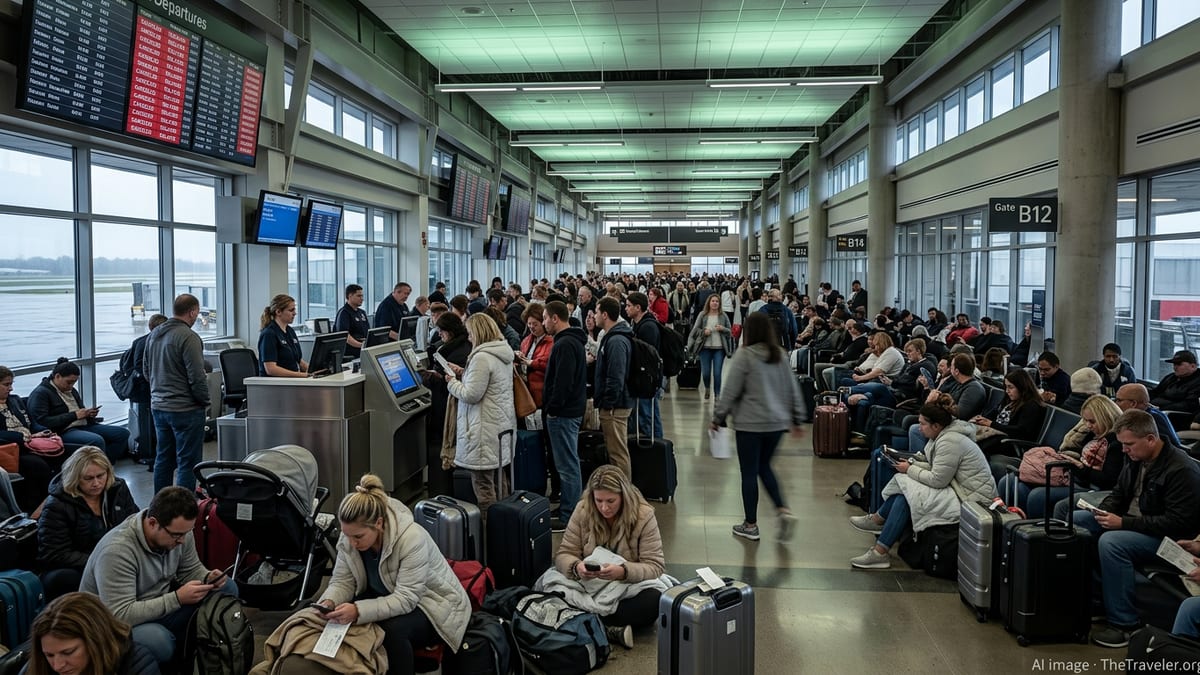
When storms and low visibility moved across the central United States in recent days, Lambert saw heightened cancellations and rolling delays. Passengers described crowded concourses, packed food courts and lengthy queues at rebooking counters as flights to and from Dallas and other hubs were abruptly dropped from departure boards or pushed back multiple times.
Cincinnati/Northern Kentucky International Airport, a critical link for several national and regional carriers, has experienced its own version of the same pattern. As storms and high winds forced schedule reductions at major hubs, Cincinnati departures and arrivals have been trimmed or retimed, leaving aircraft out of sequence and shortening turnaround times. Travelers connecting through Cincinnati have been particularly vulnerable, with missed onward flights and overnight stays becoming more common as the system strains.
Across both airports, publicly available information from flight-status platforms indicates that cancellations are not confined to a single airline. Instead, multiple carriers are implementing rolling schedule changes to cope with shifting weather forecasts, capacity limits at hubs and crew duty-time restrictions that tighten as the day wears on.
Passengers Face Long Lines, Limited Options and Rising Frustration
The operational turmoil has translated into familiar scenes for travelers: snaking customer-service lines, full standby lists and departure screens filled with red cancellation and delay notices. With spring break demand pushing load factors near capacity on many routes, rebooking stranded passengers has become increasingly difficult, especially for those hoping to travel on the same day or even the following morning.
Families traveling with children, international passengers with tight connections and travelers heading to special events have been particularly hard hit. Many are being offered itineraries that involve multiple connections, overnight layovers or departures from alternative airports several hours away. Hotel availability near affected airports has tightened during peak disruption periods, adding an additional layer of stress and expense.
Reports from consumer forums and social platforms show a growing number of passengers sleeping in terminals or on cots in temporary rest areas while they wait for available seats. Others are turning to rental cars, intercity buses or long-distance drives to salvage trips, especially on shorter routes between major metropolitan areas within driving distance of Dallas, St. Louis and Cincinnati.
As frustrations mount, airline frontline staff at gates, check-in counters and call centers are bearing the brunt of customer anger. Travel observers note that while many passengers understand that weather plays a central role in the current wave of cancellations, confusion over refund policies, travel credits and rebooking rules continues to fuel tense exchanges and crowded service queues.
Strains Expose Broader Fragility in the US Air Travel System
The latest bout of disruptions is sharpening focus on the broader fragility of the US air travel system when confronted with back-to-back weather events during peak demand periods. Industry analyses in recent years have highlighted how tightly scheduled operations, high aircraft utilization and lean staffing models can leave airlines and airports little room to maneuver when storms, air traffic control restrictions or infrastructure issues arise.
In the wake of past large-scale meltdowns, carriers have invested in new technology, schedule buffering and recovery tools. Yet publicly available performance data suggests that severe weather still regularly triggers widespread knock-on effects, particularly at midsize hubs and secondary airports that depend heavily on traffic from a limited number of large domestic carriers.
Travel analysts point out that the current situation at Dallas Love Field, St. Louis Lambert and Cincinnati/Northern Kentucky fits a familiar pattern: a combination of volatile late-winter weather, tight gate and runway capacity, and aircraft and crew rotations that span multiple regions. When any one piece falters, entire networks can seize up, stranding passengers far from the original source of the disruption.
With the spring break period continuing and additional storms possible, passengers are being urged by consumer advocates and travel experts in public commentaries to build more flexibility into their plans. That includes monitoring forecasts and flight status closely, allowing extra time at the airport, considering earlier departures when possible and preparing for the possibility of overnight delays as the system works through another cycle of travel chaos.