


More news on this day
Mass cancellations and long delays continue to frustrate air travelers, and the rules on refunds and compensation still vary sharply between the United States, Europe and the United Kingdom.
Get the latest news straight to your inbox!
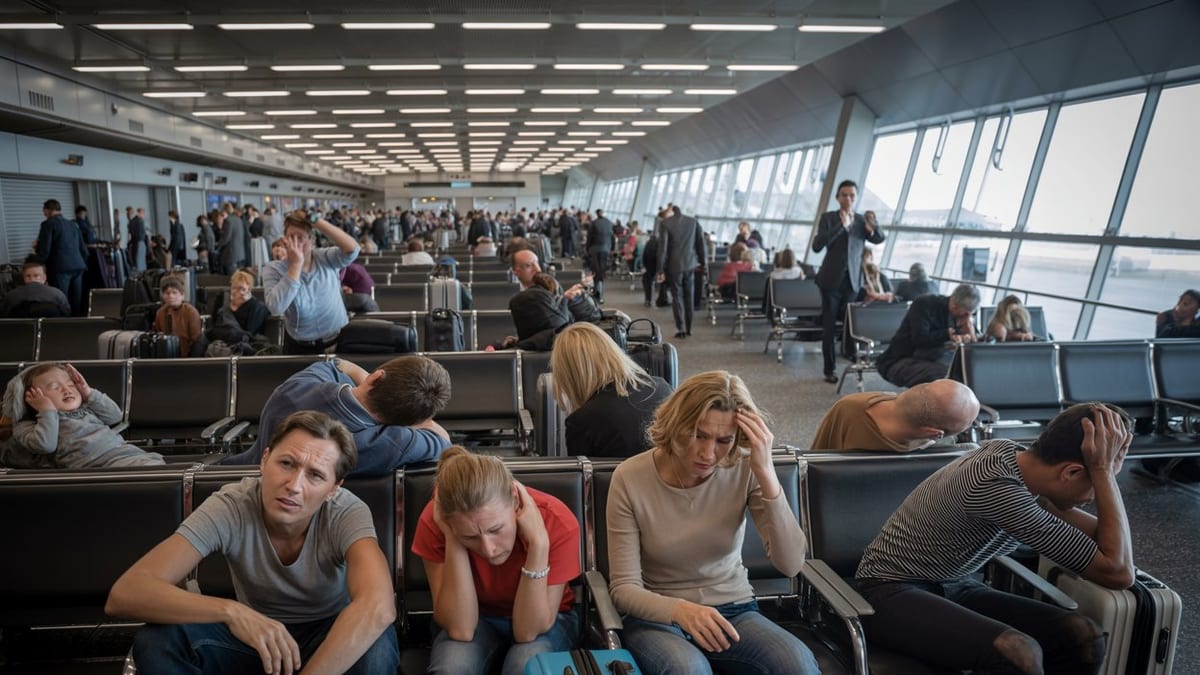
Refund rights after a cancellation in the United States
In the United States, the core protection for passengers when an airline cancels a flight is the right to a prompt cash refund if the traveler chooses not to take an alternative flight. Federal rules treat a cancellation or a significant schedule change as a service not provided, which means the carrier must return the fare instead of limiting customers to travel credits or vouchers if they decline rebooking.
Updated guidance from the U.S. Department of Transportation (DOT) notes that airlines must automatically issue refunds when a flight to, from or within the United States is cancelled or significantly changed and the passenger does not accept new travel, a credit or other alternative. This applies to nonrefundable tickets as well as refundable ones. Passengers are not required to accept vouchers with expiration dates or restricted terms if they prefer cash back.
New refund rules tied to the FAA Reauthorization Act of 2024 have started to tighten enforcement, including clearer definitions of a significant delay for domestic and international flights and requirements for airlines to notify passengers of their rights. DOT materials specify time thresholds for delays that trigger refund rights and emphasize that passengers do not have to respond to an airline’s offer of alternative travel in order to remain eligible for money back, as long as they do not take the changed or replacement flight.
Separate from legal entitlements, many U.S. airlines have publicly posted customer service commitments on the DOT’s Airline Customer Service Dashboard. These voluntary pledges can include meal vouchers, hotel rooms and ground transportation when delays or cancellations are considered within the airline’s control, such as maintenance or crew staffing problems. However, these benefits depend on the individual carrier’s policy and are distinct from the baseline legal right to a refund when the trip no longer works for the traveler.
When U.S. rules do and do not guarantee extra compensation
Unlike in Europe, current U.S. federal law does not typically require airlines to pay additional cash compensation purely for the inconvenience of a cancellation. Required remedies focus on returning the ticket cost or rebooking the traveler at no extra charge. Proposals discussed in recent years to mandate broader cash compensation for airline-caused disruptions have not yet been translated into comprehensive, across the board payments comparable to European standards.
Most extra help in the United States, such as meal vouchers or hotel nights when a traveler is stranded overnight, stems from airline policy rather than law. The DOT dashboard highlights which airlines commit to providing food, overnight accommodation and rebooking on another carrier during controllable disruptions, making it easier for travelers to see which companies offer the most generous remedies beyond refunds.
There are also situations where U.S. carriers are not required to cover secondary costs, such as prepaid hotels, tours or missed cruise departures. Public guidance from government and consumer organizations stresses that travel insurance, particularly policies that include trip interruption coverage, may be necessary to protect against those knock on expenses. Passengers are encouraged to keep receipts if they hope to seek goodwill reimbursement from an airline, but such requests are generally discretionary.
For now, passengers on domestic and transborder flights that touch the United States can usually rely on a refund or free rebooking as the minimum legal backstop, but they should not assume automatic cash compensation for time lost unless the carrier has made a specific customer service commitment that goes beyond federal requirements.
Stronger cancellation compensation rights in the European Union
In the European Union, air passenger rights are significantly more developed when it comes to compensation for cancellations. Regulation (EC) No 261/2004 sets common rules that apply to flights departing any EU airport, and to flights arriving in the EU when operated by an EU carrier. These rules cover denied boarding, lengthy delays and cancellations, and have been supplemented over time by European Court of Justice rulings and European Commission guidance.
Under EU 261, passengers whose flights are cancelled at short notice can be entitled both to a refund or rerouting and to fixed sum cash compensation, unless the airline can prove that extraordinary circumstances caused the disruption. The standard compensation amounts typically range from 250 to 600 euros per person, depending on flight distance and the delay at arrival on any replacement routing. The rules are designed to compensate for inconvenience and lost time, independent of the ticket price originally paid.
The timing of the airline’s notice is crucial. If travelers are informed of a cancellation at least 14 days before departure, cash compensation is normally not owed, although a refund or rerouting must still be offered. For cancellations notified less than two weeks before departure, the level of compensation depends on how much later the passenger arrives at the final destination compared with the original schedule. Recent Commission guidance and legislative updates aim to clarify how to calculate arrival delays and how to treat missed connections for compensation purposes.
EU law also requires airlines to provide care and assistance when passengers are stuck after a cancellation, including meals, refreshments, hotel accommodation where necessary and transport between the airport and lodging. These obligations apply even when the airline is not responsible for the underlying cause of the disruption, such as air traffic control restrictions or severe weather. Carriers can be exempt from cash compensation in such extraordinary circumstances, but they must still look after stranded travelers.
How UK rules mirror and diverge from EU protections
Following the United Kingdom’s departure from the EU, the government retained and adapted Regulation 261/2004 in domestic law, often referred to as UK 261. The basic framework remains similar: passengers on flights departing from UK airports, and on certain flights arriving in the UK operated by UK or EU carriers, can claim fixed sum compensation when cancellations or long delays are not caused by extraordinary circumstances.
Guidance from the UK Civil Aviation Authority explains that airlines are not required to pay compensation when cancellations result from events outside their control, such as extreme weather or air traffic control strikes. However, where the problem is within the airline’s control, set compensation levels based on flight distance apply, aimed at recognizing the inconvenience caused regardless of the fare paid. These amounts are broadly aligned with the original EU scale, though denominated in pounds rather than euros.
The UK regime also maintains strong rights to care and assistance. Airlines must provide food, drink, means of communication, and overnight accommodation where necessary while travelers wait for a new flight after a cancellation. The duty of care applies even when no compensation is due because the event is categorized as extraordinary, setting a floor of basic support for passengers temporarily stranded at airports.
UK authorities encourage passengers to first pursue claims directly with airlines and then escalate unresolved disputes to approved alternative dispute resolution schemes or the CAA itself. Consumers have reported differences in how carriers interpret extraordinary circumstances, and rights groups recommend documenting the cause of disruption and keeping all receipts to support any request for reimbursement of out of pocket expenses.
Key questions to ask when your flight is cancelled
Across all three regions, the practical starting point for any traveler facing a cancellation is to clarify whether they want a refund or rerouting. In the United States, this choice largely determines whether the airline must return the fare or focus its efforts on finding a replacement flight. In the EU and UK, passengers usually have a similar choice, but that decision also interacts with eligibility for fixed sum compensation based on arrival times on any new itinerary.
Another critical question is whether the disruption was within the airline’s control or caused by extraordinary circumstances. Publicly available guidance in Europe and the UK lists examples such as security risks, political instability and severe weather as events that can exempt carriers from paying compensation, while technical problems or crew shortages are more likely to be treated as within their responsibility. In the United States, this distinction mostly affects the level of voluntary support a carrier may offer beyond refunds rather than triggering or removing a legal obligation to pay cash for inconvenience.
Passengers should also check whether their journey falls under multiple regimes. A traveler flying from New York to Paris on a European carrier, for example, may benefit both from U.S. refund rules if the outbound leg is cancelled and from EU 261 compensation rights because the flight departs an EU airport on the return segment. Complex itineraries with connections in different jurisdictions can require a closer look at where the disruption occurred and which carrier operated the affected leg.
Consumer advocates consistently recommend that passengers keep written records of cancellation notices, screenshots from airline apps, boarding passes and receipts for any extra costs. These materials can be useful when seeking refunds, invoking customer service commitments, escalating complaints to regulators or, in Europe and the UK, pursuing formal compensation claims under the statutory schemes that govern air passenger rights.
U.S. DOT: Refunds for Airline Passengers
U.S. DOT: Airline Customer Service Dashboard