


More news on this day
Air travel across Asia is facing renewed disruption this week, as a mix of volcanic ash in Indonesia, regional tensions and peak-season congestion triggers fresh delays and cancellations at major hubs including Tokyo and Dubai.
Get the latest news straight to your inbox!
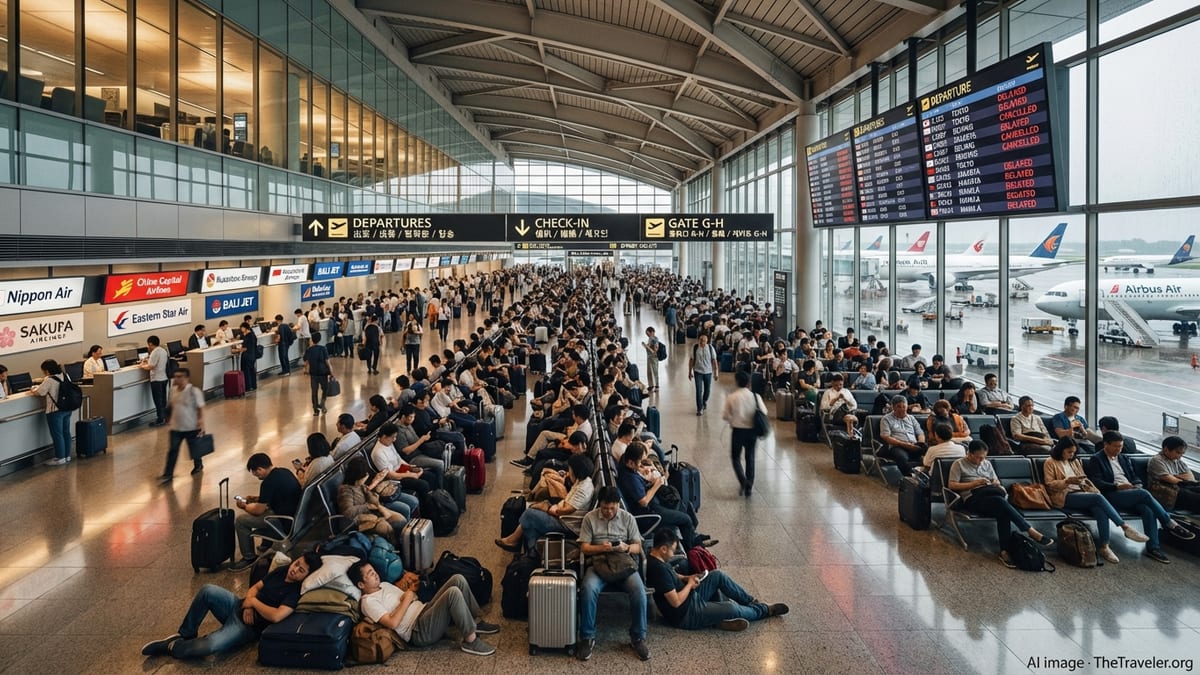
Volcanic Ash in Indonesia Ripples Through Asian Networks
Flight disruption intensified in Southeast Asia after volcanic ash forced the temporary closure of Jakarta’s Soekarno–Hatta International Airport, a key gateway for regional and long-haul services. Publicly available airline updates show that Emirates cancelled multiple rotations between Dubai and Jakarta from September 6 to September 8, including flights EK356, EK357, EK358 and EK359, as ash clouds affected operations on the busy corridor between the Gulf and Indonesia.
The closure and subsequent schedule reshuffle reduced available capacity in and out of Jakarta, creating knock-on delays for travelers connecting between Southeast Asia, the Middle East and North Asia. Airlines have advised passengers to monitor flight status pages and email notifications closely, with some services retimed or consolidated at short notice as the airport reopens in phases.
Industry experience suggests that volcanic ash events can produce a prolonged tail of disruption, even after airspace formally reopens. Crews, aircraft and airport slots must be repositioned, and airlines often prioritize stranded passengers and essential freight, which can lead to continued crowding at check-in and transfer points for several days.
Dubai and Abu Dhabi Face Widespread Delays and Cancellations
In the Gulf, disruptions at two of the region’s busiest hubs are compounding the strain on Asia-bound travel. Coverage from UAE-based outlets on September 8 indicates that flights at Dubai International Airport and Abu Dhabi’s Zayed International Airport are facing widespread delays and cancellations, with services to South Asia, Russia and Africa among those affected. Listed delays include SpiceJet flights to Mumbai and New Delhi, a flydubai service to Moscow, an Airblue flight to Multan and a Kenya Airways departure to Nairobi.
Separate reporting in recent days highlights that airlines operating from the United Arab Emirates are also managing schedule changes linked to regional airspace risk and the ongoing volcanic ash situation in Indonesia. Gulf-based carriers have adjusted services on routes touching Jakarta and other Southeast Asian destinations, while some European airlines have temporarily suspended flights to and from Dubai during the current period.
The result for Asia-bound passengers is a more fragile connection environment at one of the world’s largest transit hubs. Even when individual flights depart on time, earlier delays can cause travelers to miss onward links to cities such as Tokyo, Osaka, Bangkok and Manila, forcing rebookings and overnight stays. Travel experts recommend allowing extra connection time in Dubai and Abu Dhabi until operations stabilize.
Tokyo’s Major Airports Stay Mostly On-Time but Feel the Strain
In Japan, the latest operational data indicates that Tokyo’s Haneda and Narita airports are largely maintaining regular schedules, but are feeling secondary effects from disruption elsewhere in the region. Flight tracking services show Emirates flight EK312, a key daily link from Dubai to Tokyo Haneda, operating close to schedule on September 8, with further services filed as scheduled in the coming days. This suggests that Tokyo’s connectivity to the Gulf remains intact, even as upstream hubs encounter irregular operations.
Japanese carriers have also reported overall stability on most international routes from Tokyo, according to recent status pages for All Nippon Airways. However, a series of summer typhoons earlier in 2026, including storms that triggered hundreds of cancellations in June, demonstrated how quickly conditions can change for flights and high-speed rail around the capital. The experience of those events has prompted airlines and airports to refine contingency plans ahead of the late-September typhoon peak.
Travel advisories aimed at visitors to Japan in September emphasize the importance of checking the full door-to-door route when heading to a flight, rather than relying solely on pre-saved itineraries. Disruptions to rail links, such as the Narita Express or other services connecting the airports with central Tokyo, can lengthen journey times even when flights operate as planned.
Knock-on Effects for Regional Carriers and Passengers
The current pattern of disruption underscores how vulnerable Asia’s aviation network is to shocks in a few strategic locations. Jakarta’s closure due to volcanic ash reduced capacity on routes that feed long-haul flights through Dubai and Abu Dhabi, while simultaneous congestion and operational pressures in the Gulf complicated recovery efforts. Passengers traveling between secondary Asian cities and Europe or North America are often the most exposed, as their journeys typically rely on tight transfers at one or two large hubs.
Regional carriers in South and Southeast Asia are also contending with crowded airspace and shifting schedules at partner hubs. Delays to departure slots in Dubai or Abu Dhabi can cascade into late arrivals on return legs to cities such as Mumbai, Karachi or Colombo, which in turn disrupts local morning and evening banks of flights. This can create rolling delays that last beyond the original weather or ash event.
For travelers, the practical impact is longer queues at transfer security, reduced options for same-day rerouting and a greater likelihood of overnight disruption. Some airlines are proactively issuing flexible rebooking policies on affected routes, but eligibility can vary, leaving many passengers dependent on standard fare rules.
What Travelers Should Watch in the Coming Days
Looking ahead, aviation analysts will be watching several variables that could influence how quickly Asia’s flight network recovers. The first is how long ash-related restrictions around Jakarta continue to affect airlines with large Southeast Asian footprints. If airspace conditions allow a rapid return to full schedules, the backlog of stranded passengers may ease within days; if not, rebooking pressure on alternative hubs such as Singapore, Kuala Lumpur and Bangkok is likely to increase.
The second is the pace at which Dubai and Abu Dhabi clear delayed services and restore normal turnaround times. Peak travel demand in early September, combined with any lingering operational constraints, could keep on-time performance under pressure even after formal disruption notices are withdrawn. Flight status pages from major Gulf carriers already highlight a dynamic situation, with advisories urging passengers to arrive early and verify departure times.
Finally, seasonal weather risks in East Asia remain a concern through the end of September, particularly around Japan’s main islands and the South China Sea. While Tokyo’s airports are currently operating near their regular patterns, the broader historical record shows that late-summer storms can cause sudden spikes in cancellations across both air and rail networks. Travelers bound for or transiting through Asia’s key hubs are being encouraged, in public travel guidance, to build extra buffer time into itineraries, monitor airline communications closely and consider travel insurance that covers weather and airspace-related disruption.
UAE travel advisory on Dubai and Abu Dhabi flights