


More news on this day
Persistent flight cancellations, reduced capacity and steep airfares are colliding with war-related safety concerns to create a mounting crisis for Israel-focused heritage travel, disrupting everything from synagogue missions and church pilgrimages to Birthright-style youth programs.
Get the latest news straight to your inbox!
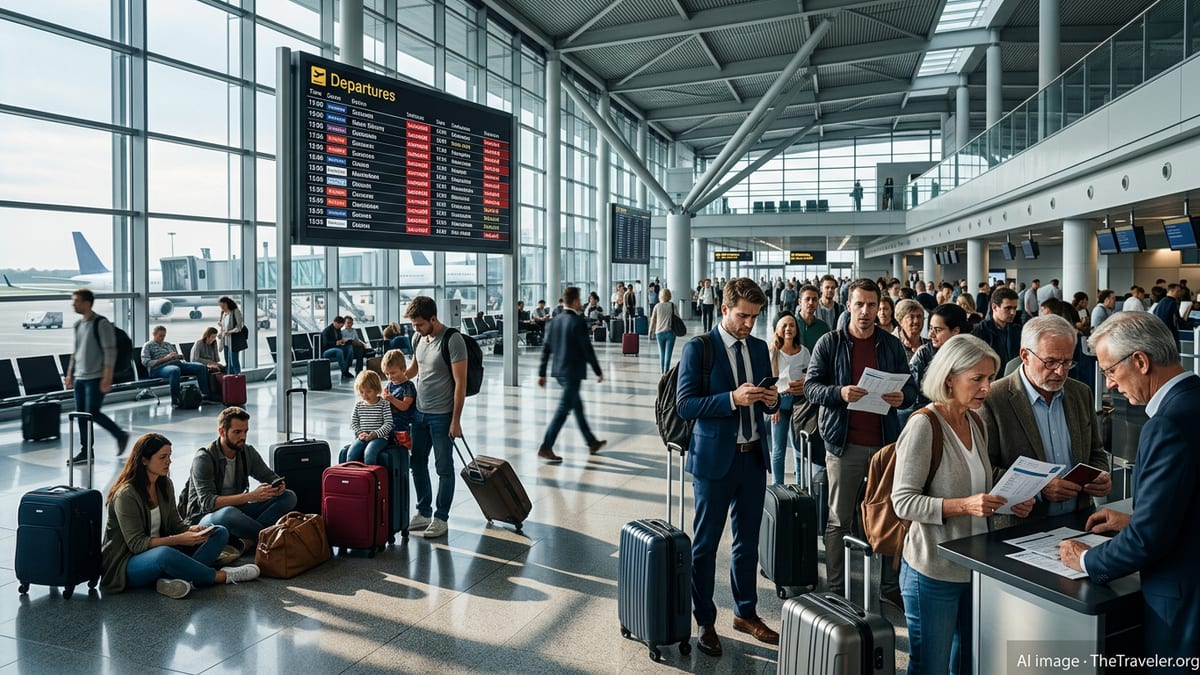
Flight Cuts Leave Heritage Travelers With Fewer Options
Since the outbreak of the Gaza war in October 2023, commercial aviation to Israel has never fully returned to its pre-crisis pattern. Published coverage shows that most major foreign carriers sharply reduced or temporarily halted Tel Aviv service after hostilities began, leaving Israel’s own airlines to shoulder a disproportionate share of traffic on core routes. Industry reports indicate that while some international airlines have gradually restored limited service, schedules remain thinner and more volatile than before the conflict.
This contraction has had an outsized impact on heritage itineraries that rely on predictable group air blocks months in advance. Travel trade reporting describes tour operators shuttling groups through alternative gateways in Jordan, Egypt or Cyprus when nonstop flights into Tel Aviv were pulled at short notice, adding time, cost and complexity to itineraries built around tight spiritual or educational agendas.
Heritage travel providers also face a planning paradox. They must advertise departures one or two years ahead to fill buses and hotel allotments, yet airline timetables into Ben-Gurion Airport can still shift with each spike in regional tension, missile incident or security alert. Program directors for faith-based tours and Jewish community trips are increasingly layering contingency plans and flexible ticketing into their models, but many acknowledge that the risk of last-minute disruption is now structurally higher than before 2023.
Some carriers have publicly telegraphed long delays in resuming regular Israel service, reinforcing that uncertainty. At the same time, Israeli airlines have emphasized their role in maintaining connectivity even during crises, a stance that appeals to heritage travelers seeking reliability but narrows their choice of operators.
Soaring Airfares Squeeze Pilgrimages and Youth Programs
The sharp reduction in competition on key long-haul routes has coincided with a surge in prices, particularly visible on North America to Israel flights. Israeli media and financial reporting on the national flag carrier highlight record profitability during the war period, a trend attributed in part to elevated yields on routes where the airline faced little or no direct competition. Regulators in Israel have examined pricing practices after complaints from consumers and lawmakers about alleged overcharging on essential flights during the conflict.
For heritage travelers, these dynamics translate into sticker shock. Tour brochures for future years now commonly separate land costs from “estimated” airfare, warning that final prices will depend on volatile airline tariffs. Some Christian Holy Land packages list base land prices that appear broadly comparable to prewar levels, but once projected airfares from North America are added, total trip costs climb thousands of dollars higher per person than many congregations budgeted for several years ago.
Youth and student programs, which traditionally negotiate group fares well below published rates, have not been immune. Research on Birthright Israel and similar heritage initiatives shows that organizers have had to juggle complex flight arrangements over the past two seasons, including rerouting groups and tightening eligibility windows to control costs. Even with subsidies, higher airfares can mean fewer seats funded, waitlists that move slowly, and hard choices about which campuses or communities receive priority.
Smaller synagogue and church groups, lacking the volume leverage of major tour wholesalers, are especially vulnerable. Rabbinic delegations, bar and bat mitzvah family missions, and church pilgrimages often depend on working- and middle-class participants who save for years to afford a single journey. Trip organizers report increasing cases where individuals withdraw when final air prices are set, forcing groups to dip into discretionary funds or cancel departures entirely if minimum numbers are not met.
War, Security Alerts and a Fragile Tourism Recovery
The aviation and pricing turmoil is unfolding against a broader backdrop of war-related disruption to Israel’s visitor economy. Tourism statistics published by Israeli authorities and international agencies show that overall arrivals collapsed after October 2023 and remained deeply depressed through 2024, with some estimates citing declines of around 70 to 80 percent compared with prewar baselines.
Reports from religious tourism hubs such as Jerusalem and the Galilee describe shuttered guesthouses, empty souvenir streets and guides scrambling for alternative work as pilgrimage traffic dried up. Catholic and Protestant news outlets, along with local Israeli coverage, have highlighted the severe financial strain on Christian communities whose livelihoods depend heavily on visiting pilgrims.
Official travel advisories have further complicated decision-making for heritage travelers. The United States maintains a high alert level for Israel and the West Bank and a strict warning against travel to Gaza, reflecting ongoing rocket fire, cross-border attacks and sporadic unrest. The introduction of new entry formalities for many foreign nationals, including an electronic travel authorization requirement for short-term visits, has added a layer of bureaucracy that tour organizers must now build into pre-departure briefings and paperwork.
Periodic security incidents near Ben-Gurion Airport and rocket or missile launches targeting central Israel reinforce the perception of fragility. Each episode tends to trigger a fresh wave of cancellations or postponements by risk-averse congregations and families, even when authorities quickly restore operations. Tour leaders say that beyond physical safety, the psychological toll of constant news alerts has made it harder to persuade first-time visitors that travel can still be managed responsibly.
Heritage Operators Pivot, Delay and Diversify
Published statements from large adventure and cultural tour brands show that some companies have suspended all Israel and Palestinian Territories departures for the foreseeable future, diverting clients to neighboring destinations such as Egypt and Jordan. These firms frame the decision as a response to both security conditions and the logistical challenges of maintaining consistent itineraries under shifting flight schedules.
Within the faith-based niche, the response has been more nuanced. Travel trade coverage notes that a limited number of Christian pilgrimage operators resumed carefully controlled tours in 2024 and 2025, often with enhanced security briefings, revised routes that avoid sensitive border areas and flexible refund policies that allow groups to delay if conditions deteriorate. These companies report that participants who do travel often experience unusually uncrowded holy sites, a stark contrast with the throngs typical of prewar years.
Many church networks and Jewish community organizations, however, are taking a long view. Interviews and surveys referenced in recent reporting suggest strong underlying interest in returning to Israel once a durable ceasefire and clearer political horizon emerge. Rather than canceling interest outright, pastors and synagogue leaders are shifting planned departures into late 2025, 2026 or beyond, effectively creating a “reservoir” of pent-up demand that could strain flight capacity further when large-scale travel resumes.
In the meantime, heritage travel firms are diversifying destination portfolios. Some are steering groups toward alternative biblical or Jewish-history sites in Greece, Turkey, Italy or Jordan, while still marketing Israel-based itineraries for a more distant future. Others are investing in virtual tours, online teaching series and hybrid programs that keep communities engaged with Israel’s cultural and religious heritage even when physical access is constrained.
Equity Concerns and the Future of Israel Heritage Travel
The convergence of mass flight cancellations, high fares and security anxieties is sharpening long-standing equity questions around Israel heritage travel. Analysts and community commentators warn that if prices remain elevated while subsidies and congregational budgets are stretched thin, access to formative trips could skew even more strongly toward affluent participants and well-resourced institutions.
For Birthright-style programs, internal research and external commentary point to growing debate about how to allocate limited seats, balance safety with mission goals and adapt educational content to a conflict environment that is still unfolding. Some observers argue that these trips are more important than ever in helping participants grapple firsthand with the complexities on the ground, while others caution that repeated disruptions and emergency rerouting can undermine the contemplative and community-building aspects of the experience.
Local stakeholders in Israel, from hotel owners in Tiberias to guides in Jerusalem’s Old City, have a direct interest in how this debate plays out. Many rely heavily on predictable flows of Christian pilgrims and Jewish heritage visitors whose group stays often span multiple nights and include visits to small businesses, religious institutions and cultural organizations. A prolonged downturn risks hollowing out this ecosystem, making it harder to ramp up quickly when demand eventually returns.
Looking ahead, industry observers expect that any sustained recovery in Israel heritage travel will depend on a combination of factors: a more stable security environment, clearer long-term airline commitments, and pricing that brings group air within reach for congregations, campuses and families. Until those pieces come together, organizers and travelers alike will be navigating a landscape defined by limited seats, volatile schedules and hard trade-offs between aspiration and affordability.