

More news on this day
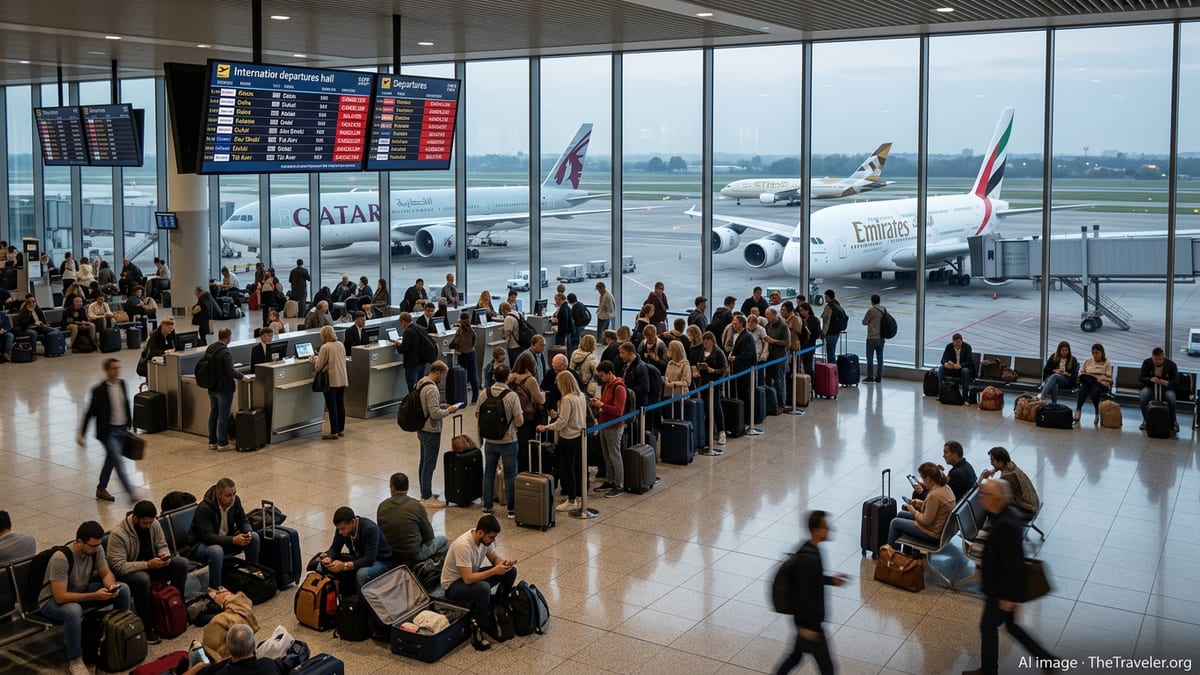
Operations at Milan Malpensa Airport were severely disrupted on Thursday as 19 long haul flights operated by Qatar Airways, Emirates, El Al, Etihad, BeOnd and other international carriers were cancelled, with multiple additional services delayed, stranding hundreds of passengers at one of Italy’s busiest gateways.
Ripple Effects of Wider Airspace Turmoil Hit Milan
The disruption at Malpensa comes amid broader turmoil in international aviation, with carriers across Europe and the Middle East continuing to adjust schedules in response to airspace restrictions and operational constraints. Airlines serving key hubs in the Gulf and eastern Mediterranean have been juggling rerouted aircraft, extended flight times and short-notice cancellations, and those knock-on effects were felt acutely in Milan.
According to airport operations staff, the 19 cancellations at Malpensa were concentrated on long haul departures and arrivals linking northern Italy with Doha, Dubai, Abu Dhabi, Tel Aviv and select Indian Ocean and Indian subcontinent destinations. While domestic and most intra-European flights largely continued to operate, passengers booked on overnight and early morning intercontinental services faced abrupt changes and long queues at transfer and ticketing desks.
Ground handlers reported that several inbound aircraft were held at origin or diverted to alternative European airports to avoid congestion and crew duty time limits. That left gaps in the schedule that could not be filled quickly, despite efforts to swap aircraft and consolidate passenger loads wherever possible.
Airport authorities stressed that safety remained the primary concern for all operators, and that airlines had acted in coordination with air traffic control and civil aviation regulators. However, they acknowledged that the speed and scale of schedule changes left many travelers facing extensive delays and unfamiliar rebooking procedures.
Major Gulf and Israeli Carriers Among the Worst Affected
Among the airlines most visibly affected at Malpensa were the big Gulf carriers. Emirates, Qatar Airways and Etihad all operate key routes connecting Milan with their respective hubs in Dubai, Doha and Abu Dhabi, which in turn provide onward links to Asia, Africa and Australasia. On Thursday, several of those rotations were cancelled outright, while others departed significantly behind schedule.
Passengers booked on Qatar Airways flights in particular reported receiving last minute notifications of cancellations or prolonged delays, reflecting the carrier’s broader network challenges following ongoing airspace restrictions around its home region. For some travelers, that meant missing long planned connections to destinations as far afield as Bangkok, Johannesburg and Sydney, with rebooking windows stretching over several days.
Emirates and Etihad also faced a complex operational puzzle, balancing reduced capacity at their Gulf hubs with high demand from European origin points such as Milan. At Malpensa, that translated into at least a handful of cancelled departures and a series of rolling delays as aircraft arriving late from the Middle East were turned around for onward sectors.
El Al, which links Milan with Tel Aviv, was another high profile name on the cancellation boards. While some services operated with delays, others were removed from the schedule entirely, forcing passengers heading to Israel and beyond to seek alternative routings via European partners or postpone travel.
BeOnd and Niche Long Haul Operators Feel the Strain
Newer and more niche long haul carriers were not spared. BeOnd, the boutique premium airline marketing itself as a luxury carrier to the Maldives and other Indian Ocean destinations, saw its Malpensa operations disrupted as well. With a much smaller fleet than the global majors, the cancellation of even a single rotation represented a significant portion of its daily capacity.
Travel agents in Milan reported that BeOnd customers faced fewer immediate alternatives compared with passengers flying on larger alliance carriers. Limited interline agreements and tight capacity on competing leisure routes made it harder to quickly secure new itineraries, especially for travelers with fixed resort bookings and onward transfers.
Other specialist airlines operating religious, seasonal or diaspora focused services through Malpensa also reported knock on issues linked to aircraft and crew being out of position. While not all of these flights were cancelled, delays of several hours were common, further crowding departure lounges and immigration halls during already busy periods.
The disruption highlighted how vulnerable thinner long haul routes can be when global networks come under stress. With little slack in the system, schedule shocks in distant regions can cascade into cancellations at European gateways where passengers may not immediately connect those problems with events thousands of kilometers away.
Passengers Face Long Queues, Confusion and Limited Guidance
For many travelers on Thursday, the most immediate impact of the Malpensa disruptions was visible in long queues at check in counters, customer service desks and rebooking lines. Announcements over the public address system struggled to keep pace with rapidly changing schedules, and some passengers reported seeing their flights flip from delayed to cancelled within minutes on departure boards.
Families returning from holidays, business travelers on tight schedules and visitors connecting onward to smaller regional airports all found themselves competing for a limited number of alternative seats. With many long haul flights already heavily booked at this time of year, rebooking often meant extended stays in Milan or routing via multiple hubs.
Some airlines did move quickly to provide meal vouchers, hotel accommodation and ground transportation for eligible passengers, in line with European passenger rights rules and their own conditions of carriage. However, others relied more heavily on online self service tools and call centers, leaving less tech savvy or non local passengers feeling stranded in the terminal.
Local tourism operators noted that last minute hotel bookings in the Malpensa and central Milan areas spiked through the afternoon and evening, as stranded travelers sought places to stay. That provided a short term boost in occupancy but also created pricing pressure, particularly around key railway and airport shuttle hubs.
What Travelers Through Milan Should Do Next
For passengers planning to travel through Milan Malpensa in the coming days, airlines and airport officials alike advised keeping a close watch on flight status and remaining flexible where possible. Travelers were urged to check their airline’s app or customer portal repeatedly in the 24 hours before departure, and to avoid heading to the airport until their flight was confirmed as operating.
Industry experts also recommended building additional buffer time into itineraries that involve onward connections, especially those linking Europe with the Middle East, Indian subcontinent, East Africa and Southeast Asia. Where journeys are not essential, some travelers may prefer to bring plans forward or push them back by several days to avoid the peak of disruption.
For those already affected, carefully documenting delays, cancellations and additional expenses such as hotels and meals will be important when seeking refunds or compensation. While eligibility varies by carrier and route, established consumer protections within the European Union and the United Kingdom provide a baseline framework for care and, in some cases, financial redress.
Travel agents and insurance specialists in Italy say that the Malpensa episode underscores the ongoing fragility of global air travel whenever geopolitical tensions or sudden airspace restrictions arise. For now, they expect airlines at Milan’s main international gateway to continue fine tuning schedules in response to developments further east, meaning travelers should stay alert to last minute changes even as operations gradually stabilize.