

More news on this day
Travel plans for hundreds of passengers were upended at Minneapolis–St Paul International Airport today as publicly available flight tracking data showed dozens of delays and several cancellations affecting Endeavor Air, Sun Country Airlines and Delta Air Lines services to major hubs including Chicago, New York and Atlanta.
Get the latest news straight to your inbox!
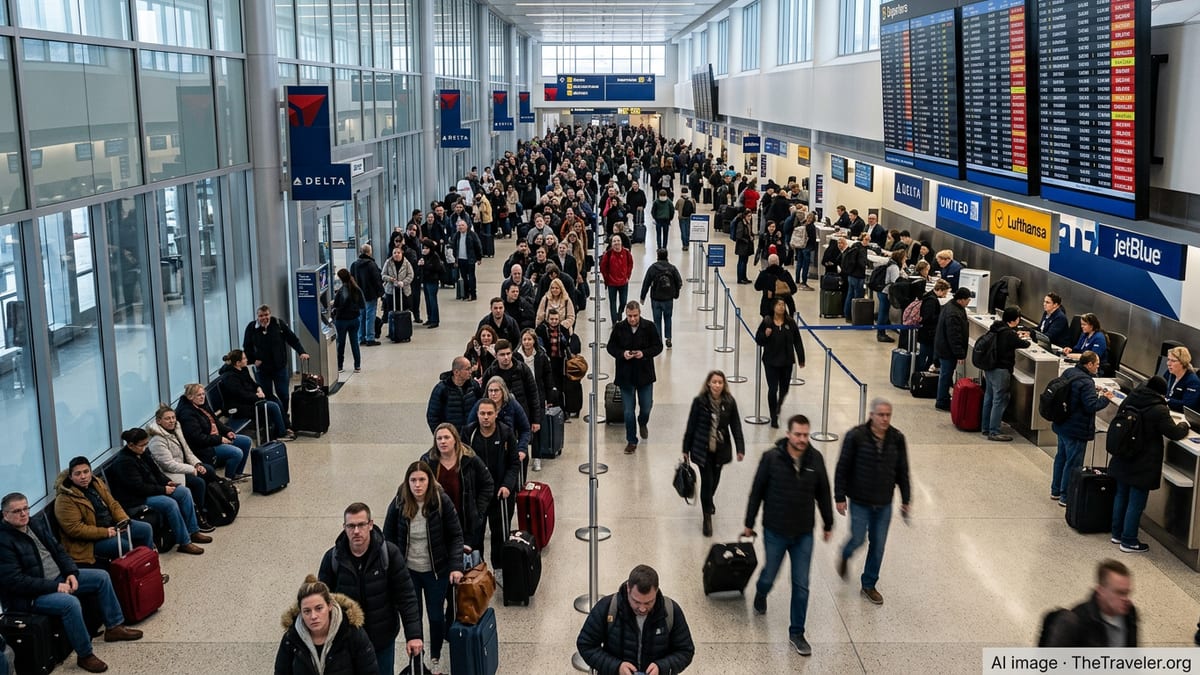
Disruptions Mount at a Key Midwestern Hub
Minneapolis–St Paul International Airport, a major Upper Midwest gateway and a central hub in the Delta Air Lines network, has seen a sharp spike in operational disruptions today. Aggregated reports from aviation tracking platforms and industry coverage indicate that flights operated by Delta, its regional affiliate Endeavor Air, and low cost carrier Sun Country Airlines account for a significant share of delays and cancellations originating from the airport.
While the broader national air network has been coping with widespread schedule pressures in recent days, Minneapolis–St Paul has emerged as one of several focal points. Recent tallies published by travel industry outlets describe elevated levels of disruption across the United States, with airports such as Chicago O’Hare, Hartsfield Jackson Atlanta and New York area terminals regularly featuring among the most impacted hubs. Within this national context, delays at Minneapolis–St Paul are contributing to a ripple effect across multiple domestic routes.
Operational data cited in recent travel trade coverage shows that on busy days Minneapolis–St Paul has recorded dozens of delayed departures and a handful of cancellations, with Endeavor Air and Sun Country among the carriers affected alongside larger mainline operators. Today’s pattern at the airport, involving around 45 delayed flights and three outright cancellations tied to Delta and its partners, fits within this broader wave of schedule volatility.
Minneapolis–St Paul typically ranks as one of the more reliable US airports for on time performance over the course of a year, according to historic punctuality surveys. However, analysts note that even highly rated hubs can experience pronounced disruption when weather, congestion or knock on operational issues converge, and that appears to be the case in the current episode.
Chicago, New York and Atlanta Feel the Ripple Effect
The consequences of delays and cancellations at Minneapolis–St Paul are being felt well beyond Minnesota. Flight tracking summaries and route maps show that some of the most heavily trafficked corridors from the airport connect to Chicago, New York and Atlanta, meaning that schedule problems at the origin can quickly cascade across a wider network of connections.
Chicago, which hosts one of the country’s busiest aviation systems, has already faced high numbers of daily delays in recent national tallies. When aircraft and crews running late out of Minneapolis–St Paul arrive behind schedule in Chicago, this can tighten turnaround times and put additional strain on already congested operations. Similar dynamics apply on services into New York area airports, where limited runway capacity and dense traffic make on time performance particularly sensitive to upstream disruptions.
Atlanta, the largest hub within the Delta system, is also closely tied to Minneapolis–St Paul through a high frequency schedule. Industry reporting in recent days has highlighted Atlanta repeatedly as one of the most affected airports during nationwide disruption events, with hundreds of delays and dozens of cancellations on peak days. When regional and feeder flights from Minneapolis–St Paul are delayed or cancelled, passengers aiming to connect in Atlanta to destinations across the Southeast, the Caribbean and beyond can find themselves stranded or rebooked onto later services.
Because many itineraries through Minneapolis–St Paul involve tight domestic connections, even relatively modest departure delays can cause travelers to misconnect downline. Publicly available route data demonstrates that hubs like Chicago, Atlanta and New York rely heavily on feeder flights from secondary airports, magnifying the impact of schedule problems at any one point in the system.
Endeavor Air, Sun Country and Delta at the Center of Today’s Issues
Endeavor Air, a regional carrier that operates flights under the Delta Connection brand, maintains extensive operations at Minneapolis–St Paul, with additional hubs in Atlanta, Detroit, New York and other cities. Travel news coverage over the past several days has repeatedly mentioned Endeavor among the airlines experiencing elevated delay counts, including dozens of impacted flights on some days as part of wider network challenges.
Sun Country Airlines, which is headquartered in Minnesota and uses Minneapolis–St Paul as its primary base, also features in current disruption reports. The carrier operates a mix of domestic leisure and seasonal routes, many of which link Minneapolis–St Paul with sun and city destinations across the United States. When irregular operations strike its home hub, Sun Country’s point to point travelers often have fewer alternative routing options than those booked on larger network airlines, increasing the likelihood of extended waits at the airport.
Delta Air Lines, the dominant mainline carrier at Minneapolis–St Paul, sits at the center of the present situation as well. Publicly available data on recent nationwide operations shows Delta among the airlines recording substantial numbers of delays and cancellations during periods of severe disruption, though generally performing comparatively better than some peers over longer timeframes. Today’s specific mix of affected flights at Minneapolis–St Paul includes mainline Delta departures alongside services flown by Endeavor and other regional partners.
Across the three airlines, the current tally of roughly 45 delays and three cancellations linked to Minneapolis–St Paul traffic captures only part of the day’s operational picture. Knock on impacts, such as aircraft and crew mispositioning, can continue to generate delays for hours after the initial issues are recorded, as carriers work to restore aircraft to their scheduled rotations.
Weather, Congestion and Systemic Strain Add Up
Aviation analysts frequently point to a combination of weather related constraints, airport congestion and airline scheduling practices to explain spikes in disruption such as those seen today. Recent national coverage of US flight operations has highlighted days with several thousand delays and hundreds of cancellations across the system, often driven by storms or low visibility at one or more key hubs that then cascade through carrier networks.
In the case of Minneapolis–St Paul, the airport’s location in the Upper Midwest makes it particularly vulnerable to snow and ice in winter and to thunderstorms during transitional seasons. Publicly available commentary from aviation observers suggests that deicing bottlenecks, temporary ground stops and air traffic control flow restrictions can all play a role when delays mount rapidly, even at airports with strong baseline punctuality records.
Beyond weather, high levels of demand at major hubs continue to test the resilience of airline and airport operations. National travel reports from recent months describe sustained passenger volumes that are at or above pre pandemic norms on many days. Under such conditions, small disruptions on individual flights can quickly multiply as aircraft encounter tight turn times, limited spare gate capacity and highly utilized staff rosters.
Government data releases on air travel performance, typically published on a lag, have shown that while overall on time performance has improved in some recent quarters compared with the immediate post pandemic period, variance remains high. Airports like Minneapolis–St Paul can move from near normal operations to significant disruption within a short window when multiple risk factors align.
What Today’s Problems Mean for Travelers
For passengers caught up in the current wave of delays and cancellations at Minneapolis–St Paul, the immediate priority is rebooking and managing missed connections. Publicly available guidance from airlines and airports generally advises travelers to monitor their flight status frequently, make use of mobile applications where available, and seek rebooking options as soon as disruptions appear likely rather than waiting until a flight is formally cancelled.
Consumer advocates note that although US regulations around compensation for delays are more limited than in some other regions, travelers still have certain protections when flights are cancelled or when significant schedule changes occur. Airline customer service policies, which are published on carrier websites, often outline entitlements such as meal vouchers or hotel accommodations in specific circumstances, particularly when disruptions are not caused by weather.
Industry observers suggest that today’s events at Minneapolis–St Paul underscore the importance of building additional buffer time into itineraries involving connections through busy hubs. Recent commentary around national disruption patterns has recommended longer layovers on routes that depend heavily on weather sensitive airports or tight aircraft rotations, as a way to reduce the risk of missed onward flights.
For Endeavor Air, Sun Country Airlines and Delta Air Lines, the latest disruption at Minneapolis–St Paul adds to an already challenging operational environment across the United States. As schedules are restored and aircraft return to regular rotations, attention is likely to focus on how quickly carriers can stabilize their operations and what steps they may take to provide more resilience against similar episodes in the weeks ahead.