

More news on this day
Hundreds of passengers were left in limbo across Italy as major disruption at Rome Fiumicino and Milan Malpensa on March 1 led to 54 flight cancellations and 159 delays, snarling operations for carriers including Emirates, Qatar Airways, Wizz Air Malta, Etihad, El Al, easyJet and Gulf Air.
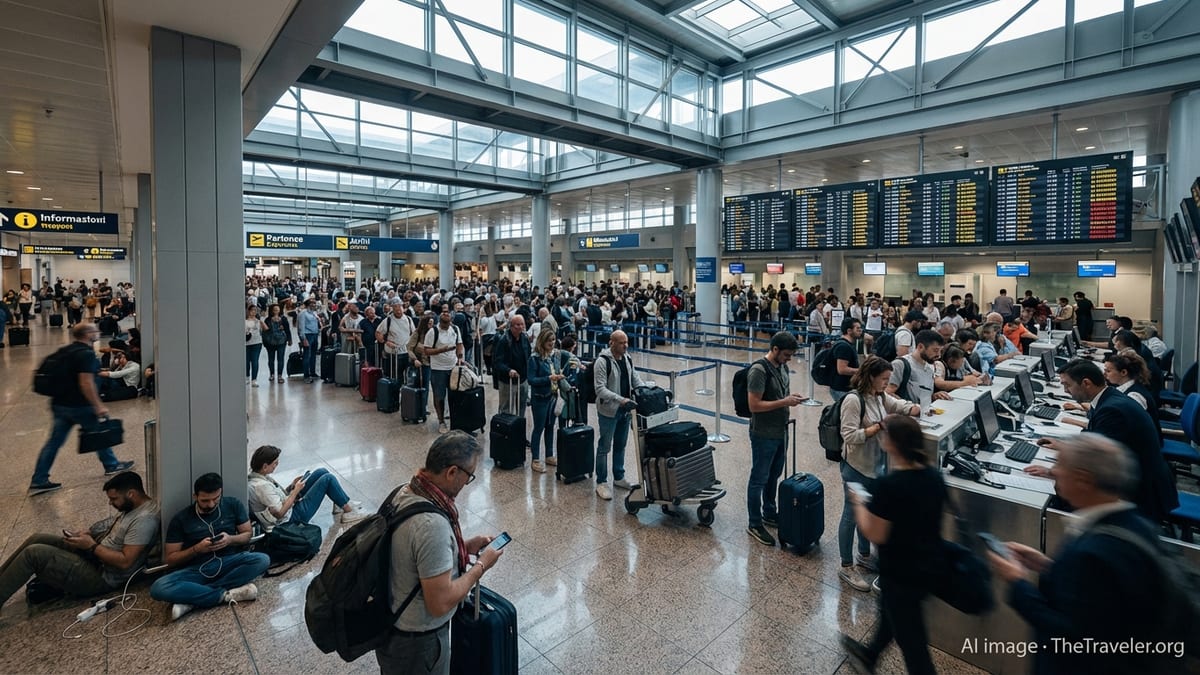
Italy’s Busiest Gateways Grapple With Severe Disruption
Operational data submitted to Italy’s civil aviation authority show Rome’s Leonardo da Vinci–Fiumicino and Milan Malpensa among the hardest hit airports in Europe this weekend, with a combined 213 disrupted flights. Rome Fiumicino reported 21 cancellations and 48 delays, while Malpensa logged 24 cancellations and 54 delays, according to industry figures for March 1. Those totals translate into significant schedule thinning on some of Italy’s most important long haul and European routes.
The problems unfolded across both arrivals and departures, affecting early morning waves and stretching into the evening. Passengers arriving from the Middle East, North America and other European hubs found themselves circling in holding patterns, diverted, or parked at remote stands waiting for gates and crews to become available. Outbound travelers faced rolling departure time changes as airlines struggled to reposition aircraft and staff.
Fiumicino, Italy’s primary intercontinental hub, saw its carefully timed bank structure come under strain, with missed connections particularly acute for long haul passengers heading onward to Latin America, Africa and Asia. At Malpensa, where a dense mix of full service and low cost carriers share infrastructure, terminal congestion and extended turnaround times quickly cascaded into knock on delays across the day’s schedule.
Airport operators stressed that safety and air traffic management constraints remained the overriding priority as they attempted to keep operations running. However, the volume of delayed rotations meant that even flights still marked as “on time” early in the day were vulnerable to disruption as the backlog grew.
Global Carriers Caught in the Ripple Effect
The disruption at Fiumicino and Malpensa quickly fed into wider network challenges for a roster of global airlines. Long haul carriers such as Emirates, Qatar Airways, Etihad and Gulf Air, which link Italy directly with the Gulf and onward connections to Asia and Australasia, were among those recording cancellations and significant delays on Italy routes. El Al, operating key services between Rome and Tel Aviv, also faced operational headwinds, while easyJet and Wizz Air Malta saw their dense European schedules squeezed.
For Gulf and Middle Eastern airlines, the Italian disruption arrived on top of already fragile schedules created by airspace restrictions and ongoing turmoil further east, leaving little slack to absorb additional delays in Europe. Aircraft running late into Rome and Milan risked missing onward departure slots from their home hubs, putting pressure on already stretched fleets and crew rosters.
Short haul European low cost carriers fared little better. easyJet, with a strong presence at both airports, was forced to shuffle aircraft and crews across its Italian bases as turnaround times lengthened. Wizz Air Malta, which has been expanding across the central and eastern Mediterranean, saw rotations compress, with later departures in Italy threatening to spill into curfew hours at noise sensitive airports elsewhere in Europe.
Industry analysts noted that while the number of outright cancellations remained relatively contained compared with some previous large scale air traffic disruptions, the very high volume of delays meant many passengers still arrived hours late or missed connections entirely. In network terms, such rolling delays can prove as damaging as cancellations, particularly for long haul itineraries tied to fixed connection windows.
Scenes of Crowded Halls and Fraying Patience
Inside the terminals, the operational disruption translated into crowded departure halls, long queues at service desks and fraying tempers at boarding gates. Passengers at both Rome Fiumicino and Milan Malpensa reported waits of several hours to rebook itineraries, with airline and ground staff struggling to keep up with a constant flow of queries over cancellations, missed connections and baggage.
Families returning from school holidays, tour groups arriving for Italy city breaks and business travelers attempting to make Monday meetings all found themselves competing for limited rebooking options. With many affected flights operated just once a day, some long haul passengers faced overnight stays or complex rerouting via other European hubs such as Frankfurt, Paris and Zurich.
Hotels near both airports quickly filled as airlines handed out accommodation vouchers and meal coupons to stranded passengers. Others, particularly those on low cost tickets, opted to sleep in terminal seating areas or on the floor near departure gates, unwilling to risk missing early morning rebooked flights. Retail and food outlets did brisk trade as waits stretched into the evening.
Despite visible frustration, many travelers also expressed sympathy for frontline airport and airline staff, who were left to deliver unwelcome news while managing crowds. Staff reported working extended shifts as call centers and airport help desks were overwhelmed by requests for information and refunds.
Knock-On Impact Across Europe’s Air Network
The disruption in Italy did not remain a purely domestic issue. With Rome and Milan acting as important nodes in Europe’s air traffic system, delays and cancellations there quickly created knock on effects across other major airports. Flights departing from cities such as London, Paris, Vienna and Madrid that were scheduled to operate as return legs to Italy faced equipment and crew shortages, leading to secondary delays and, in some cases, further cancellations.
Carriers with tightly sequenced aircraft utilization plans were especially exposed. A delayed widebody rotation from Milan to a Gulf hub, for example, could leave an aircraft arriving several hours late into the Middle East, forcing the airline to adjust onward services to Asia or Africa. Short haul operators flying multiple daily frequencies between Italy and neighboring countries were meanwhile left to decide whether to cancel select rotations or run all flights heavily delayed.
Travel agents and online booking platforms also reported an uptick in last minute itinerary changes as passengers sought to avoid the most disrupted airports. Some rerouted via alternative Italian gateways such as Venice or Bologna, while others opted for rail connections within Italy before resuming air travel from less congested hubs. However, capacity constraints limited the ability of the wider network to fully absorb displaced demand.
Analysts pointed out that the Italian situation unfolded against a backdrop of existing strain on global aviation, including crew shortages, aircraft maintenance backlogs and regional airspace restrictions. In such an environment, even localized operational issues can quickly generate disproportionate disruption across international networks.
What Affected Travelers Can Do Now
Airlines impacted by the cancellations and delays at Fiumicino and Malpensa have activated a patchwork of rebooking and waiver policies. Many full service carriers are offering free date changes or rerouting on the nearest available flights, subject to seat availability, while low cost operators are encouraging passengers to manage changes online to reduce pressure on airport desks. In several cases, carriers are prioritizing travelers with imminent long haul connections or essential travel needs.
Passengers still due to travel through Rome or Milan over the next 24 to 48 hours are being urged to check their flight status repeatedly on the day of departure, as schedules remain fluid and additional knock on delays remain likely. Those with separate tickets on different airlines, particularly where a long haul leg is involved, are being advised to leave extra time between connections or consider consolidating itineraries onto a single carrier where possible.
Consumer advocates in Italy have reminded travelers that, depending on the cause of the disruption and the specific airline operating the flight, passengers on routes to, from or within the European Union may be entitled to assistance and, in some circumstances, compensation under EU air passenger rights rules. However, they caution that claims can take time to process and may be subject to dispute over whether the disruption was within the airline’s control.
For now, the focus at both Malpensa and Fiumicino remains on clearing the backlog of delayed aircraft and stabilizing operations. With Italy entering a busy period for both business and leisure travel, airlines and airport operators will come under pressure to demonstrate that the weekend’s disruption does not become a prolonged feature of the spring travel season.