


More news on this day
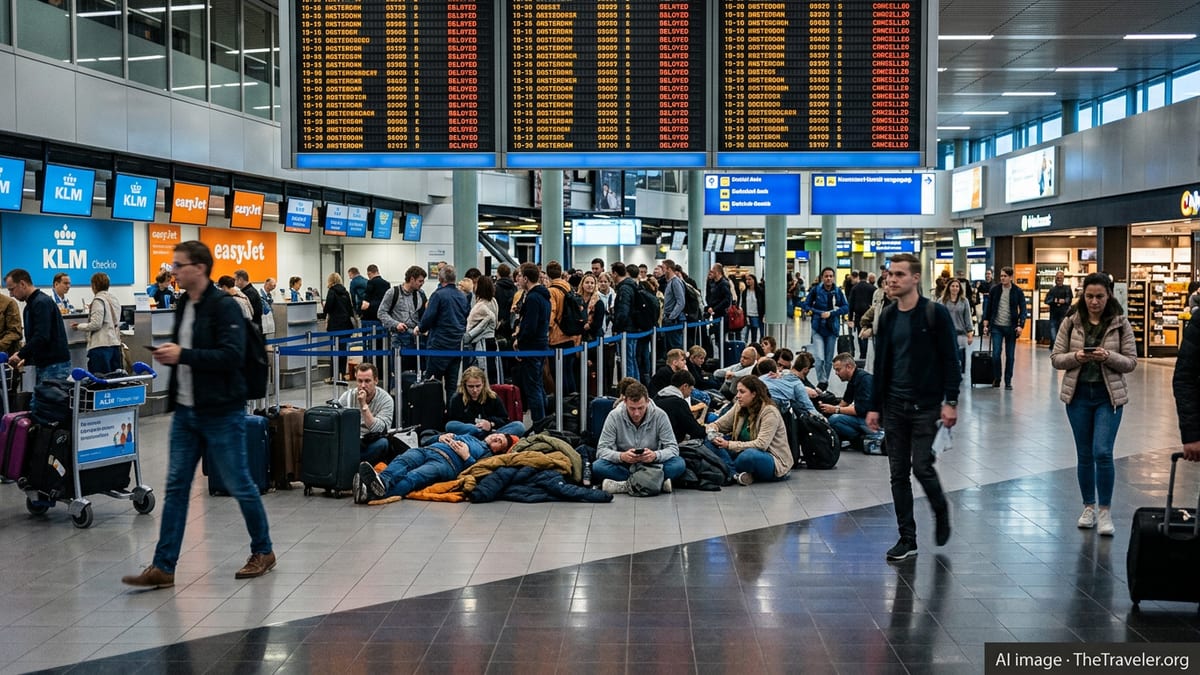
Amsterdam’s Schiphol Airport is experiencing another day of major disruption, with 149 flights delayed and 14 canceled, stranding travelers across a web of domestic and international routes operated by KLM, Delta Air Lines, easyJet, British Airways, and other carriers.
Get the latest news straight to your inbox!
Wave of Delays Hits One of Europe’s Busiest Hubs
Publicly available operational data from airline trackers and airport boards on Tuesday indicate that Schiphol is once again facing a heavy concentration of flight disruptions. The latest figures point to 149 delayed departures and arrivals and at least 14 outright cancellations across the schedule, affecting both short haul and intercontinental services.
The disruptions are rippling across some of Schiphol’s most important routes, including services to London, New York, Paris, Dubai, and Frankfurt. Flights operated by KLM and its SkyTeam partner Delta Air Lines form the backbone of traffic on several of these corridors, while easyJet and British Airways are prominent on key European city pairs such as Amsterdam to London and regional hubs in the United Kingdom and Germany.
While Schiphol has experienced periodic bouts of disruption in recent months due to capacity constraints, severe weather, and broader European air traffic issues, today’s pattern is notable for the breadth of airlines and destinations involved. Delays on a dense hub network can quickly cascade, leading to late-arriving aircraft and crews and compounding the impact for passengers connecting through Amsterdam to long haul services.
Travel data providers show that even relatively short delays on morning departures can translate into missed connections later in the day, particularly for travelers bound for North America or the Middle East. As aircraft and crews fall out of sequence, airlines often face difficult choices between keeping late flights in the rotation or preemptively canceling segments to contain wider knock-on effects.
Key Routes Affected, From London and Paris to New York and Dubai
The disruption at Schiphol is particularly visible on trunk routes linking Amsterdam with nearby hubs such as London and Paris. Services to London’s airports, including Heathrow and City, are a mix of flag carriers and low cost operators, so delays quickly impact both business travelers and leisure passengers. British Airways and easyJet, alongside KLM, have built high frequency schedules on these sectors, meaning that backlogs can grow rapidly when several flights in succession are delayed.
Connections to Paris are also central to the network, as the Amsterdam–Paris corridor supports the joint operations of Air France and KLM. Delays here can interfere not only with point to point travelers but also with those using Paris Charles de Gaulle as an onward hub to Africa, Asia, and the Americas. When itineraries rely on tightly timed transfers between Amsterdam and Paris, even a modest delay can force rebookings and overnight stays.
On the long haul side, routes to New York and Dubai are among the most strategically significant. Flights to New York, often operated by KLM and Delta, typically carry a high proportion of connecting passengers heading to other cities in the United States and Canada. Disruptions at Schiphol can therefore trigger missed onward services across North America, stretching customer service resources on both sides of the Atlantic.
Dubai services, currently under particular scrutiny after a series of regional adjustments and selective suspensions, are also sensitive to delays and cancellations. Passengers on these flights frequently connect onward to Asia and Africa, meaning that irregular operations in Amsterdam can reverberate across multiple continents in a single travel day.
Airlines and Airport Grapple With Capacity and Weather Constraints
Recent months have highlighted how fragile large hub operations can be when multiple stress factors converge. Reports and prior coverage on European air travel show that Schiphol has oscillated between periods of near normal traffic and days marked by staffing shortages, challenging weather, and airspace restrictions over parts of Europe and the Middle East.
Industry analyses note that airlines such as KLM have already trimmed parts of their European network on certain days, including frequencies to major cities, in an effort to stabilize schedules and absorb irregularities. Similar strategies have been deployed by Delta, British Airways, and easyJet at their own hubs, often involving minor reductions in daily flights to create more slack in the system.
At the same time, passenger numbers through Amsterdam have remained robust, keeping pressure on the airport’s ground handling, security screening, and baggage systems. When delays mount, aircraft may wait longer for stands, gates, or ground services, extending turnaround times and feeding back into the departure banks later in the day.
Weather continues to play a recurring role. Low visibility, strong winds, and winter conditions in recent seasons have all led to proactive flight cuts at Schiphol, with airlines arguing that targeted cancellations can be preferable to allowing rolling delays to escalate throughout the day. Travelers passing through the airport today are feeling the latest iteration of this dynamic, as schedules are reshuffled in response to constraints that build hour by hour.
Stranded Passengers Face Missed Connections and Overnight Stays
For passengers on the ground, the immediate effect of 149 delayed flights and 14 cancellations is a familiar mix of missed connections, long queues at transfer desks, and uncertainty around baggage. Travel forums and social media posts from recent disruption days at Schiphol describe travelers waiting several hours in rebooking lines, sometimes being rerouted via other European hubs such as Frankfurt, Paris, or London to reach their final destinations.
Those flying on multi segment itineraries can be among the most exposed. A delay on a short haul feeder service, for instance between a regional European airport and Amsterdam, may cause travelers to miss an onward transatlantic flight. In these situations, airlines typically attempt to move passengers to the next available service, but high load factors can mean limited remaining seats, particularly on peak routes like Amsterdam to New York.
Accommodation and meal vouchers are another point of contention, especially when weather or air traffic control issues are cited as contributing factors. While consumer advocates regularly point travelers to European air passenger regulations, the specific rights to compensation and care depend on factors such as the cause of disruption, flight distance, and whether the journey is within or outside the European Union.
Families and travelers with fixed commitments at their destination can be hit hardest, especially when cancellations push travel into the following day. Some accounts from prior disruption events around Europe describe passengers opting to book new tickets on alternative airlines or even travel by rail between nearby hubs when the rebooking window stretches into multiple days.
What Travelers Can Do if Their Flight Through Amsterdam Is Affected
For those scheduled to fly through Schiphol, publicly available guidance from airlines and passenger rights organizations emphasizes preparation and flexibility. Travelers are encouraged to monitor their booking through airline apps, text alerts, or online departure boards, rather than relying solely on airport screens that can lag behind system updates during intense disruption periods.
Experts generally recommend checking in as early as possible and keeping carry on bags stocked with essentials in case of unexpected overnight stays or lengthy waits. Having digital copies of itineraries, booking references, and receipts can help if travelers later seek reimbursement for meals, hotels, or alternative transport.
Passenger rights resources also stress the importance of understanding the conditions of carriage and relevant regulations before a trip begins. In the European context, long delays and cancellations on eligible flights may entitle travelers to fixed compensation amounts, as well as meals, refreshments, and accommodation, depending on the circumstances. However, airlines may classify certain events as extraordinary, which can limit or remove compensation while still obligating carriers to provide assistance in reaching the final destination.
With Schiphol remaining a critical gateway between Europe, North America, the Middle East, and beyond, today’s wave of delays and cancellations underscores how quickly operations at a major hub can seize up. Travelers planning to pass through Amsterdam in the coming days are likely to keep a close eye on schedules, hoping that airlines and airport managers can stabilize operations before the disruption widens further.