


More news on this day
Airport-bound motorists in Auckland faced severe delays this morning after a motorbike crash on State Highway 20 brought peak-hour traffic to a crawl on one of the main approaches to the city’s international terminal.
Get the latest news straight to your inbox!
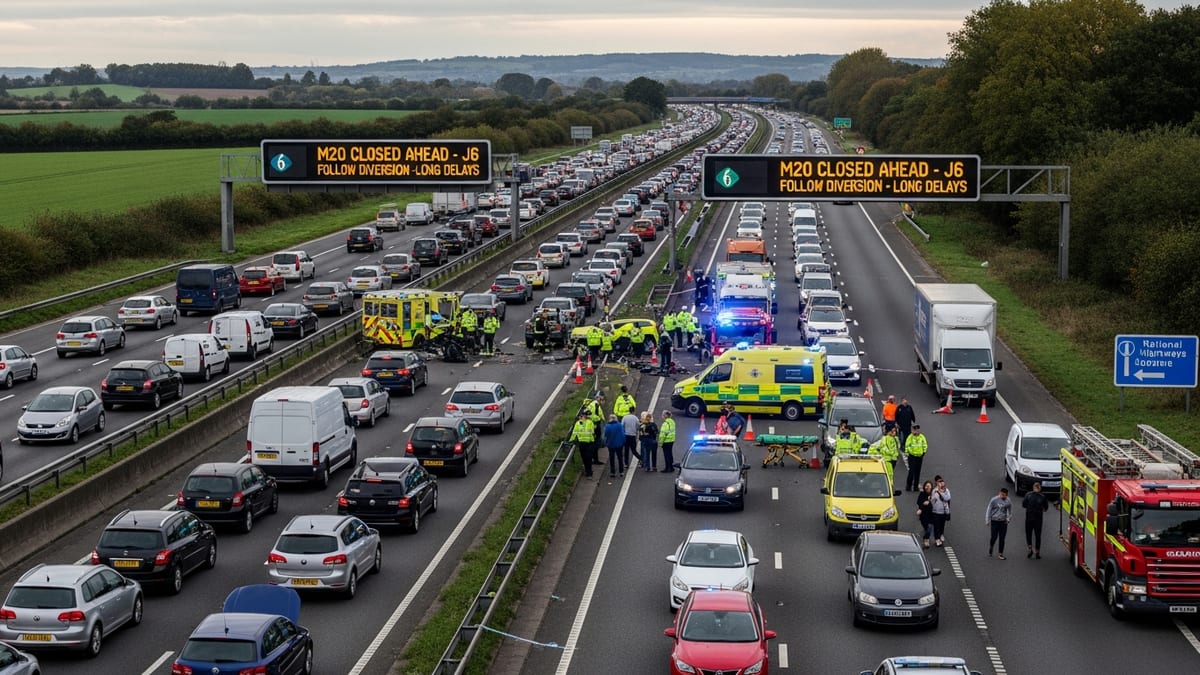
Crash on key SH20 link stalls early peak
Reports indicate the collision occurred on a busy southbound stretch of State Highway 20, part of the primary motorway ring that funnels traffic toward Auckland Airport. Initial information from local traffic updates suggests the crash involved at least one motorcycle and another vehicle during the height of the morning rush.
Emergency services were called to the scene shortly after the incident was reported, with multiple lanes affected as responders worked in the live traffic environment. Motorists travelling toward the airport and nearby industrial areas soon encountered long queues, with some drivers reporting standstill conditions extending well back from the crash site.
Live traffic cameras and commuter reports described a slow-moving corridor in both directions as vehicles rubbernecked past the scene and lane closures compressed already heavy volumes. Some drivers attempting to reach early international departures indicated that they were forced to abandon motorway routes in favour of local roads, adding pressure to surrounding suburbs.
Publicly available information shows that the incident occurred during one of the busiest windows for airport access, when commuter and freight traffic converges with travelers heading for morning flights. The combination turned a localised crash into a network-wide bottleneck for much of the early commute.
Airport access routes heavily affected
SH20 forms a critical link in Auckland’s western ring route and, along with SH20A and SH20B, provides primary road access to the airport precinct. When a serious incident occurs on any of these sections, the impact can spread quickly across the transport network, affecting drivers far from the original crash site.
According to public traffic monitoring platforms, congestion built rapidly on the citybound and airport-bound approaches, with vehicles queued through key interchanges that connect SH20 to other motorways. Travel times from central Auckland toward the terminals reportedly more than doubled for parts of the morning peak.
Motorists relying on navigation apps saw repeated rerouting as congestion spilled onto alternative corridors, including main arterial routes through nearby suburbs. Some airport shuttle operators and taxi drivers noted significant delays in reaching both domestic and international drop-off zones, prompting warnings to allow extra time for travel.
Published coverage of previous major incidents on SH20 and connecting routes has highlighted how vulnerable airport access can be when a single crash restricts capacity. Today’s event followed a similar pattern, with a relatively short section of motorway creating knock-on effects across a wide area.
Warnings for travelers and commuters
Travel advisories shared through local media and traffic services urged those heading to the airport to check conditions before leaving home and to allow considerably more time than usual. Some reports suggested that passengers for mid-morning flights were advised to depart as if they were catching earlier services, in case traffic worsened.
Publicly available information from recent airport-related traffic disruptions shows that missed check-in times are a recurring risk when crashes occur on SH20 corridors. Airlines typically recommend generous buffers for road travel, but sudden motorway closures or severe slowdowns can quickly erode those margins.
Commuters not bound for the airport were also caught up in the delays, particularly freight and logistics operators that depend on reliable access to industrial zones near the motorway. Several companies in past incidents have reported knock-on impacts to deliveries and shift changes when SH20 traffic stalls for an extended period.
Local traffic commentators frequently emphasize that, on mornings with poor weather or heavy roadworks, even minor incidents can be enough to disrupt airport access. A serious motorbike crash during clear, peak-hour conditions, as seen today, underscores how sensitive the network remains to unexpected events.
Ongoing focus on SH20 safety and resilience
Recent planning documents and assessments for the wider airport-to-Botany and SH20 corridor have pointed to the motorway’s dual role as both a freight spine and an airport gateway. Those reports highlight the need to manage crash risks and provide alternative routes so that a single incident does not paralyse access for travelers and freight.
Crash analysis on sections of SH20 and connecting routes has previously noted a concentration of incidents near complex interchanges and high-volume on-ramps. Motorcycles are consistently identified in national road safety data as being particularly vulnerable in heavy, fast-moving motorway traffic, where small visibility gaps and sudden braking can have serious consequences.
Transport safety advocates often refer to national statistics showing that motorcyclists face a significantly higher risk of serious injury per kilometre travelled compared with occupants of cars and trucks. On busy urban motorways like SH20, these risks are magnified when traffic density is high and drivers are competing for limited lane space.
Infrastructure proposals around the airport corridor, including additional public transport capacity and improved ramp design, have been framed in part as ways to limit disruption when crashes do happen. The morning gridlock following today’s crash is likely to renew public discussion about how resilient Auckland’s airport access routes are to sudden incidents.
Advice for motorists after the disruption
By mid to late morning, traffic began to ease as lanes were progressively cleared and the scene was made safe, according to live congestion maps. However, residual delays lingered on connecting routes as the backlog slowly dispersed and drivers adjusted their routes.
Travel services typically advise that, after a serious motorway crash, conditions can remain unpredictable for some time even once lanes reopen. Debris clearance, tow operations and lingering rubbernecking can all contribute to slower-than-normal speeds along the affected corridor.
Motorists planning airport trips later in the day are encouraged by travel advisories to monitor real-time updates from traffic agencies and navigation platforms, and to consider earlier departures than usual if indications of renewed congestion appear. For those with flexible schedules, shifting non-urgent travel outside of peak periods can help reduce pressure on already stressed routes.
Road safety campaigns consistently urge drivers and riders to maintain safe following distances, adjust speeds to traffic flow and remain alert to sudden changes, particularly in high-speed motorway environments. Incidents like today’s SH20 motorbike crash highlight how a split-second loss of control can quickly evolve into a wider disruption affecting thousands of travelers.