


More news on this day
Emergency crews rushed to Marine Corps Air Station Miramar in San Diego on Friday morning after an F-35B Lightning II was involved in an aircraft mishap on the base flightline, prompting a large firefighting operation and a safety investigation into one of the U.S. military’s most advanced jets.
Get the latest news straight to your inbox!
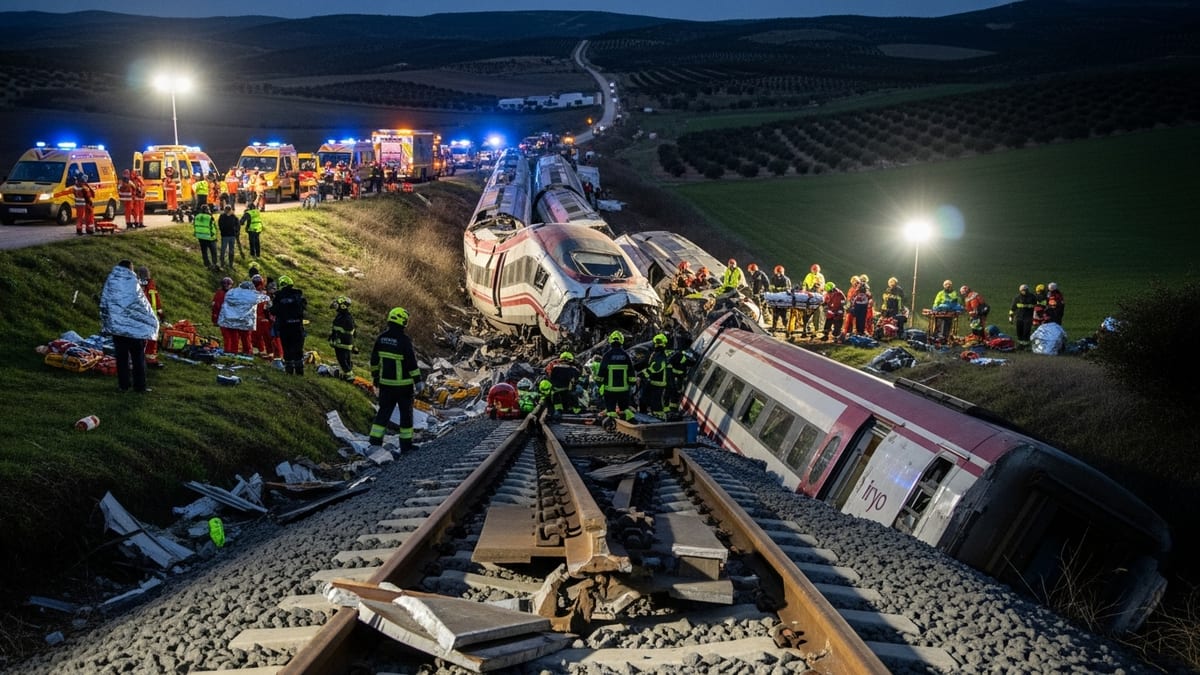
Incident on the Miramar flightline
Publicly available information indicates that the incident occurred at approximately 10 a.m. local time at Marine Corps Air Station Miramar, home to the 3rd Marine Aircraft Wing on the northern edge of San Diego. Initial reports describe the event as an “aircraft mishap” involving an F-35B, the short takeoff and vertical landing variant of the Joint Strike Fighter used by the U.S. Marine Corps.
Images and video circulated by local media and on social platforms show thick smoke and flames rising from the vicinity of the runway area, with airport-style fire vehicles applying foam to burning wreckage and nearby brush. Reports indicate that the mishap triggered a vegetation fire adjacent to the crash zone, which crews worked to contain.
According to publicly released details summarized in multiple news accounts, the pilot ejected from the aircraft and was transported to a local medical facility in stable condition for evaluation and treatment of injuries described as non-life-threatening. There were no immediate reports of injuries to personnel on the ground.
Base representatives indicated in public statements that additional information would be released once the situation had been secured and initial response activities were complete. As of early afternoon, official channels had not detailed the cause of the mishap or the extent of damage to the aircraft.
Emergency response and impact on operations
Fire and rescue units based at Miramar, supported by local San Diego emergency services, converged on the scene soon after the mishap. Video published by regional news outlets shows specialized crash-response vehicles surrounding the burning jet and spraying large volumes of firefighting foam to suppress both the aircraft fire and spot fires in surrounding brush.
Reports from the scene describe plumes of smoke visible from nearby neighborhoods and major roadways, drawing attention from residents accustomed to routine military aviation activity but not to sustained columns of black smoke. Local dispatch summaries cited in media coverage reference an aircraft incident and vegetation fire within the perimeter of the base, minimizing risk to civilian property beyond the fence line.
Information available at this stage suggests that the incident took place on or adjacent to the flightline, rather than in the surrounding urban area, reducing the likelihood of off-base damage or evacuations. There were no early indications of airspace closures beyond standard safety measures tied to the emergency response.
Miramar is a key hub for Marine aviation training and operations, and activity at the installation often continues under modified procedures following such events. Travel-related disruption appeared limited to brief traffic slowdowns near base entry points as additional emergency vehicles moved in and out, according to regional traffic reports.
F-35B role and safety context
The F-35B is one of three main variants of the Lockheed Martin-designed F-35 Lightning II, optimized for short takeoff and vertical landing operations from amphibious assault ships and expeditionary airfields. Miramar hosts units that operate and support the type, making the jet a routine presence in San Diego’s skies.
While each incident involving the F-35 attracts significant public scrutiny due to the aircraft’s cost and central role in U.S. and allied air power, aggregated safety data cited in recent analyses indicate that the fleet’s rate of the most serious mishaps is broadly comparable to or lower than that of many earlier-generation fighters when measured over similar periods of service life. At the same time, several high-profile crashes in recent years, including a Marine F-35B loss in California previously detailed in national media, have kept attention focused on ongoing reliability and training efforts.
In this latest Miramar event, early indications from publicly available reports emphasize that the pilot survived and that the mishap occurred within the confines of an established air station, contrasting with past military aviation accidents near populated areas that resulted in civilian casualties. Even so, the combination of a modern stealth jet, intense post-crash fire and dramatic visuals is likely to renew debate over the risks and costs associated with advanced tactical aircraft.
For travelers and aviation enthusiasts passing through San Diego or visiting nearby attractions, the presence of the F-35B at Miramar remains a prominent feature of the local soundscape and skyline. The base’s air operations, including periodic airshows, have long been a draw for visitors interested in modern military aviation.
Investigation and next steps
Standard military procedure calls for a formal investigation after any significant aircraft mishap, and publicly available statements indicate that such a process is now underway for the Miramar incident. Investigators typically examine flight data, maintenance records, weather conditions, pilot training history and eyewitness accounts in an effort to determine root causes and recommend corrective actions.
Comparable inquiries into previous F-35 incidents have led to detailed technical findings on factors ranging from software behavior and sensor inputs to maintenance practices and pilot decision-making. Those reports have often resulted in refined procedures, equipment updates or additional training designed to reduce the likelihood of repeat occurrences across the fleet.
Until a preliminary assessment is released, analysts following the program caution against drawing firm conclusions about the cause of the Miramar mishap. Historical experience with complex aircraft suggests that such events can stem from a mix of mechanical, environmental and human elements rather than a single point of failure.
Future updates from the Marine Corps and the Department of Defense, reflected in public reporting, are expected to clarify the sequence of events and any implications for F-35B operations at Miramar and other bases. In the interim, observers note that the survival of the pilot and the containment of damage within the base perimeter represent key elements of the unfolding story for San Diego residents and the wider travel community.
Miramar’s aviation legacy and visibility to travelers
Located just north of central San Diego and close to major highways, Marine Corps Air Station Miramar is one of the most recognizable military installations on the U.S. West Coast. The base’s long aviation history, including its past association with the Navy fighter school popularized in film, has made it a familiar name for travelers even beyond military circles.
For visitors arriving by air or driving along the region’s main corridors, jet activity from Miramar is a frequent sight. The appearance of the F-35B in recent years has added a new silhouette and sound profile to the area’s skies, often drawing the attention of plane spotters and photographers who document operations from public vantage points outside the base.
Events such as Friday’s mishap serve as a reminder of the inherent risks of high-performance flight that underpin both military readiness and the aviation displays that attract enthusiasts during open-house events and airshows. At the same time, the swift response visible in images from Miramar reflects the extensive emergency planning that accompanies operations at major air installations adjacent to large metropolitan areas.
As San Diego’s tourism and travel sector continues to grow, Miramar’s dual identity as an active military hub and an aviation landmark remains part of the region’s broader narrative. The outcome of the current investigation, and any subsequent adjustments to local flying activity, will be closely watched by residents and visitors who share the airspace and roadways around the storied base.