

More news on this day
Flight-tracking data indicated widespread disruption across the United States on April 10, with 3,159 flights delayed nationwide and pressure mounting on major hub airports at the height of spring travel.
Get the latest news straight to your inbox!
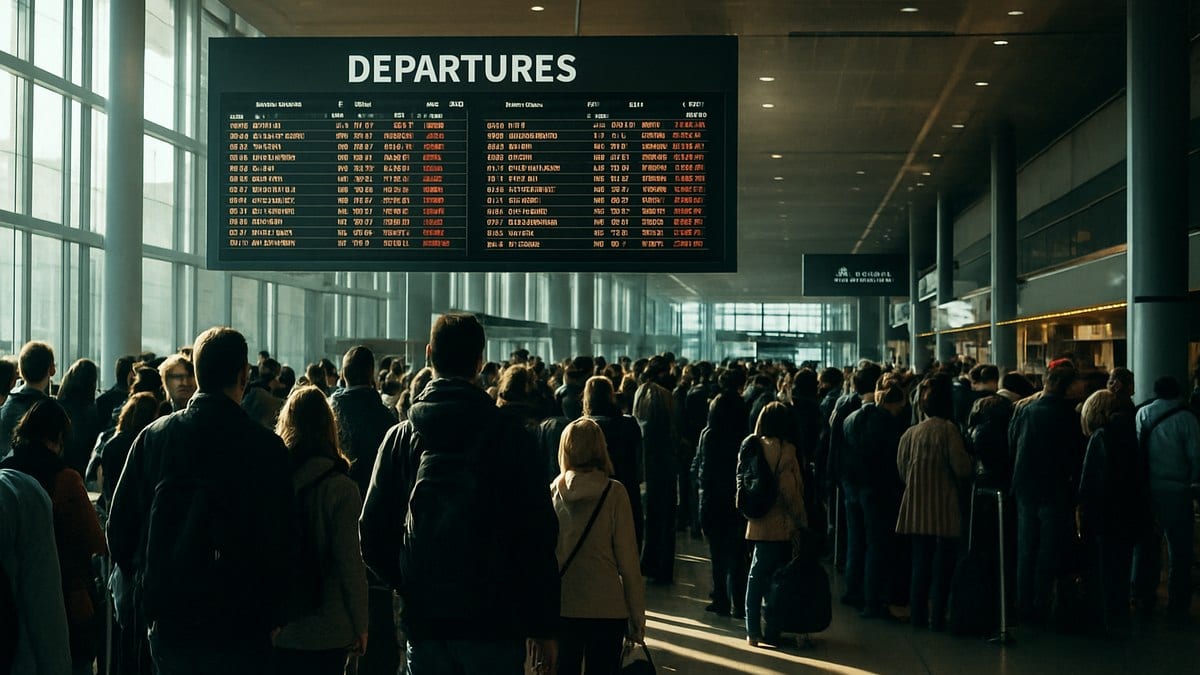
Major Hubs Bear the Brunt of Nationwide Disruption
Publicly available tracking dashboards showed that the brunt of the disruption was concentrated at the country’s largest connecting hubs, where dense schedules left little room to absorb delays. Airports serving Atlanta, Chicago, Houston, Denver, New York, San Francisco and Washington reported elevated levels of late departures and arrivals as the day progressed, with bottlenecks forming around peak morning and afternoon banks.
Reports indicate that operations at these hubs were affected both by local issues and by knock-on effects from problems elsewhere in the network. Late inbound aircraft arriving from already stressed airports reduced the availability of planes and crews, forcing airlines to push back departure times or swap aircraft across routes. As a result, even routes unaffected by weather or local congestion experienced rolling delays.
Spring schedules, which combine business travel, school breaks and early leisure demand, added further strain. Industry analyses published in recent days describe a pattern of high load factors and tightly timed connections that leaves major hubs susceptible to cascading disruption when traffic volumes are near capacity.
While cancellations on April 10 remained comparatively limited relative to the number of delayed services, the sheer volume of late flights created long queues at departure gates and customer service desks, particularly in large connecting airports where missed connections were more likely.
Weather, Congestion and Operational Strain Converge
Available information suggests that April’s unsettled weather played a significant role in the latest round of delays, particularly across the Midwest and Mid-Atlantic. Thunderstorms and low clouds prompted ground delay programs and spacing restrictions around busy airspace corridors, reducing the number of takeoffs and landings that controllers could safely handle in a given period.
When air traffic managers slow the rate of arrivals and departures into an already congested hub, arriving flights can be forced into holding patterns while departures wait for new slots, a pattern that was apparent at several large airports on April 10. This dynamic pushed some delays beyond an hour, even for flights operating on relatively short routes.
Operational constraints also contributed. Airlines have entered the busy spring period with tight staffing patterns and aircraft utilization plans designed to maximize capacity, leaving less slack to recover from disruptions. Recent performance data for North American carriers shows on time arrival rates trending lower compared with earlier in the year, illustrating how quickly schedules can unravel when demand is high and margins are thin.
Combined, these factors created a situation where even modest slowdowns at one or two hubs translated into a nationwide pattern of late flights. Observers note that such convergence of weather, congestion and operational pressure has become more common in recent years as traffic volumes approach or exceed pre-pandemic levels.
Passengers Face Missed Connections and Extended Waits
For travelers passing through the system on April 10, the 3,159 delays translated into hours of additional waiting and a spike in missed connections. Hub airports such as Atlanta, Chicago O’Hare, Houston Intercontinental, Newark, San Francisco and Washington Dulles function as critical transfer points, meaning late arriving aircraft can leave entire banks of onward passengers stranded.
Publicly available coverage of recent disruption episodes shows that even when a single flight is only slightly late, tight connection windows can leave travelers with insufficient time to change terminals or clear congested security and boarding areas. On April 10, that pattern appeared at scale, with long lines forming at rebooking counters as passengers sought alternative routings.
Travel industry guidance emphasizes the importance of building extra time into itineraries that require connections through major hubs, particularly during peak seasons. The latest wave of delays reinforced that message, as those with longer layovers were more likely to make their onward flights or secure options later in the day.
Families traveling for spring holidays and leisure trips were among those most affected, as many had limited flexibility to shift their plans. Extended delays can also add to costs on the ground, including additional meals, airport parking charges or last minute hotel stays when late evening flights arrive after local transit services have wound down.
Airlines Under Renewed Pressure on Reliability
The disruption on April 10 added to growing scrutiny of airline reliability in North America. Data published this week on March on time performance showed a decline across most major carriers compared with the previous month, with the regional average slipping and several airlines seeing notable drops in punctuality.
Analysts point to a mix of structural and short term factors behind the trend, including lingering staffing challenges in some operational roles, aircraft delivery delays and ongoing pressures from elevated fuel costs. Carriers have responded by adjusting schedules, investing in technology to improve crew and aircraft rotations, and promoting tools that give passengers more real time insight into flight status and airport conditions.
At the same time, aviation observers note that the industry is still contending with the longer term consequences of earlier crises, including large scale system outages and holiday meltdowns that highlighted vulnerabilities in both technology and scheduling practices. Each new day of widespread delay, such as the April 10 tally, renews questions about how resilient current operations are to foreseeable disruptions like seasonal storms.
Consumer advocates continue to highlight the gap between airlines’ published schedules and actual performance, arguing that high rates of delay effectively reduce the reliability of advertised itineraries. The latest figures are likely to fuel further debate over what level of disruption should trigger stronger passenger protections or additional regulatory attention.
What Travelers Can Do on High Disruption Days
Travel experts recommend several practical steps for passengers caught up in widespread delays like those recorded on April 10. Monitoring both airline apps and independent flight tracking platforms before leaving for the airport can provide early warning of schedule changes and help travelers decide whether to adjust their plans.
On days when national disruption tallies are rising, passengers are often advised to allow extra time to reach the airport, clear security and move between terminals, especially at sprawling hubs. Early morning departures are frequently less exposed to knock on delays, since aircraft and crews are already positioned from the night before, though severe overnight weather can still impact first wave operations.
For those booking new trips during a volatile period, choosing longer connection windows and consolidating itineraries on a single carrier or alliance can reduce the risk of misaligned rebooking options. Some travel planners also suggest favoring larger hubs with multiple daily frequencies to a destination, which increases the chances of being accommodated on a later flight if a delay becomes lengthy.
While no strategy can fully insulate travelers from the type of system wide disruption seen with 3,159 delayed flights in a single day, informed planning and close monitoring of conditions can help limit the impact. As airlines and airports navigate another busy spring, such skills are becoming a routine part of modern air travel.