

More news on this day
Hundreds of passengers across Russia and neighboring countries faced major disruption on February 28, 2026, as Sheremetyevo, Vnukovo and Pulkovo airports reported dozens of cancellations and hundreds of delays affecting services by Aeroflot, Rossiya, Emirates, FlyDubai, Etihad and other carriers.
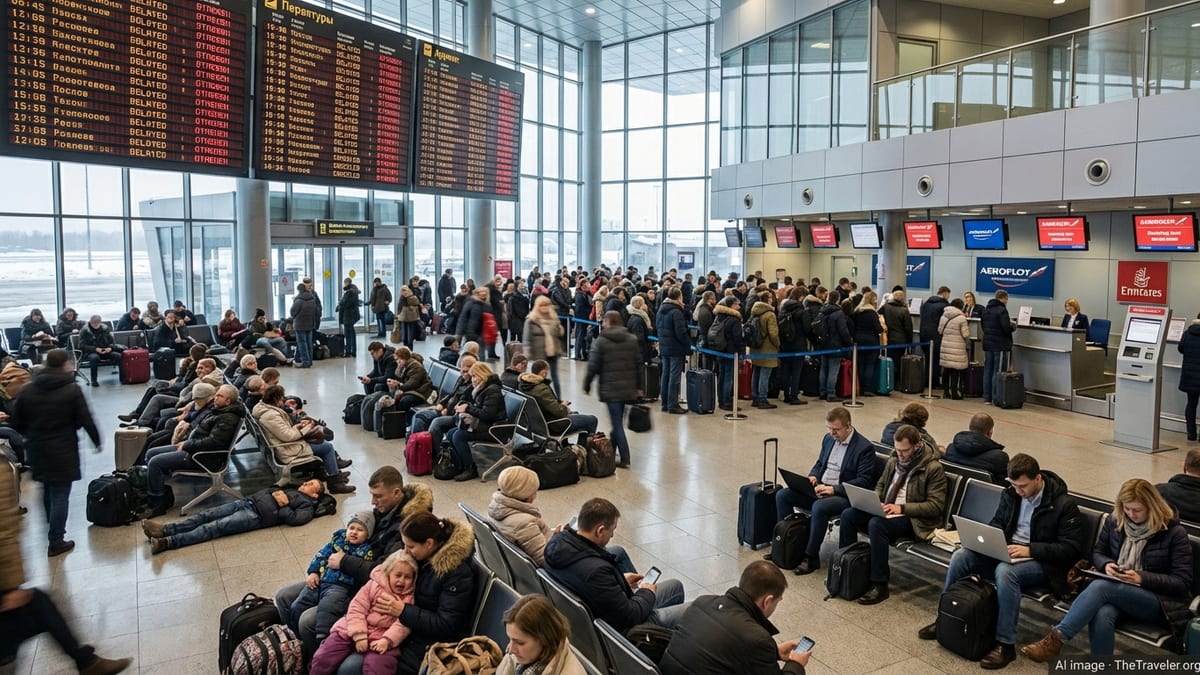
Three Major Hubs Buckle Under Mounting Disruptions
The latest operational data from Russia’s northwest and capital-region airports show a sharp spike in irregular operations, with a combined 37 flights canceled and at least 263 delayed across Sheremetyevo in Moscow, Vnukovo in Moscow’s southwest and Pulkovo in St. Petersburg. The figures capture only a snapshot of a turbulent travel day, but they underscore the fragility of regional air connectivity during periods of intensified strain on airspace and ground operations.
At Vnukovo and Pulkovo alone, recent monitoring pointed to more than 180 delayed flights and several cancellations in a single reporting window, impacting both domestic and international routes to cities including Moscow, St. Petersburg, Almaty, Tbilisi and Dubai. Sheremetyevo, Russia’s busiest international gateway, reported further knock-on delays as arriving aircraft missed their scheduled slots and rotations.
The irregularities came against a backdrop of already elevated delay levels at Moscow’s airports. Average delay figures in recent weeks have hovered well above one hour at both Sheremetyevo and Vnukovo, according to independent aviation tracking platforms, with roughly one third to nearly half of daily flights experiencing some form of disruption.
Flag Carriers and Gulf Airlines Forced to Pare Schedules
Among the hardest-hit operators on February 28 were Russia’s own Aeroflot Group airlines and several major Gulf carriers. Aeroflot and its subsidiary Rossiya, which together operate dense shuttle-style schedules between Moscow and regional centers, were forced to cancel multiple services and push back departure times on dozens more. Aircraft and crew that failed to arrive on time created a domino effect, with later rotations departing hours behind schedule.
On the international front, Emirates, FlyDubai and Etihad all reported disruptions to services linking Moscow and St. Petersburg with Dubai and Abu Dhabi. At Vnukovo, a FlyDubai departure to Dubai was among the flights marked canceled, while other Middle Eastern and Central Asian services registered extended delays as they waited for revised departure slots and improved conditions in congested airspace.
Uzbekistan-bound traffic was also affected. Flights connecting Russian hubs with Samarkand and other Uzbek cities saw delays as ground handlers struggled to reposition aircraft and process passengers from earlier late-arriving services. For travelers heading onward from Russia to Central Asia or the Gulf, missed connections became a serious concern as turnaround times at transit airports shrank or disappeared entirely.
Weather, Airspace Constraints and Operational Backlogs Collide
Airport authorities and aviation analysts pointed to a convergence of factors behind the latest wave of disruption. Seasonal winter weather around Moscow, including low cloud ceilings, fog and reduced visibility, has periodically forced controllers to increase spacing between arrivals and departures, cutting runway capacity at critical moments of the day. Even short-lived reductions can rapidly cascade into large backlogs when airports are operating near capacity.
In parallel, tighter airspace management constraints over parts of western Russia have narrowed routing options for both domestic and international flights. When flights are compelled to reroute or hold, arrival banks can shift unpredictably, putting further pressure on terminal gates, ground handling teams and baggage systems that are already working at full stretch.
Operational backlogs from previous days of heavy disruption have compounded the problem. Airlines reported aircraft out of position and crews approaching duty-time limits, forcing schedule adjustments even when weather conditions temporarily improved. Aviation industry observers noted that such systemic strain leaves little margin to absorb additional shocks, whether from local storms, technical issues or broader regional security concerns.
Passengers Face Long Queues, Missed Connections and Limited Recourse
For travelers, the statistics translated into hours of waiting in crowded terminals at Sheremetyevo, Vnukovo and Pulkovo. Check-in counters and transfer desks saw long queues as passengers sought to rebook missed connections to destinations across Russia, Central Asia and the Middle East. Families returning from holidays, business travelers on tight itineraries and migrant workers commuting between Russia and Uzbekistan were among those most directly affected.
Eyewitness accounts from Moscow and St. Petersburg described flight information screens that updated repeatedly as estimated departure times slipped back in 30-minute increments. Some passengers reported being held on board aircraft while crews awaited final clearance to depart, only to be returned to the gate after duty times expired or slots were reassigned.
While most airlines offered standard options such as rebooking on later flights or refunds for canceled services, same-day alternatives were limited on heavily booked routes. Hotel accommodation was provided in some cases, particularly for international travelers facing overnight delays, but others were left to arrange their own lodgings in already busy airport districts.
Airlines and Authorities Pledge Reviews as Peak Season Looms
Russian aviation authorities and airport operators said they were working with carriers to review the sequence of events at Sheremetyevo, Vnukovo and Pulkovo and to identify measures that could reduce the impact of similar disruptions in the coming weeks. Proposals under discussion include more flexible use of slots during adverse weather, additional staffing for peak travel periods and improved coordination between air traffic control and airport ground operations.
Airlines, meanwhile, are reassessing their contingency plans and crew rostering strategies. With passenger demand remaining strong on routes linking Russia to the United Arab Emirates, Uzbekistan and other regional markets, carriers face the challenge of maintaining high-capacity schedules while building in more operational resilience. Some industry experts have suggested modest timetable padding and more conservative aircraft utilization to absorb inevitable winter-weather and airspace-related delays.
For now, travelers booked through Sheremetyevo, Vnukovo and Pulkovo are being urged to monitor flight status closely, arrive early at the airport and maintain flexibility in their onward plans. As the latest disruption shows, even a few dozen cancellations and a few hundred delayed flights can ripple far beyond Russia’s borders, affecting itineraries from Central Asia to the Gulf and adding fresh uncertainty to an already complex regional air travel landscape.