

More news on this day
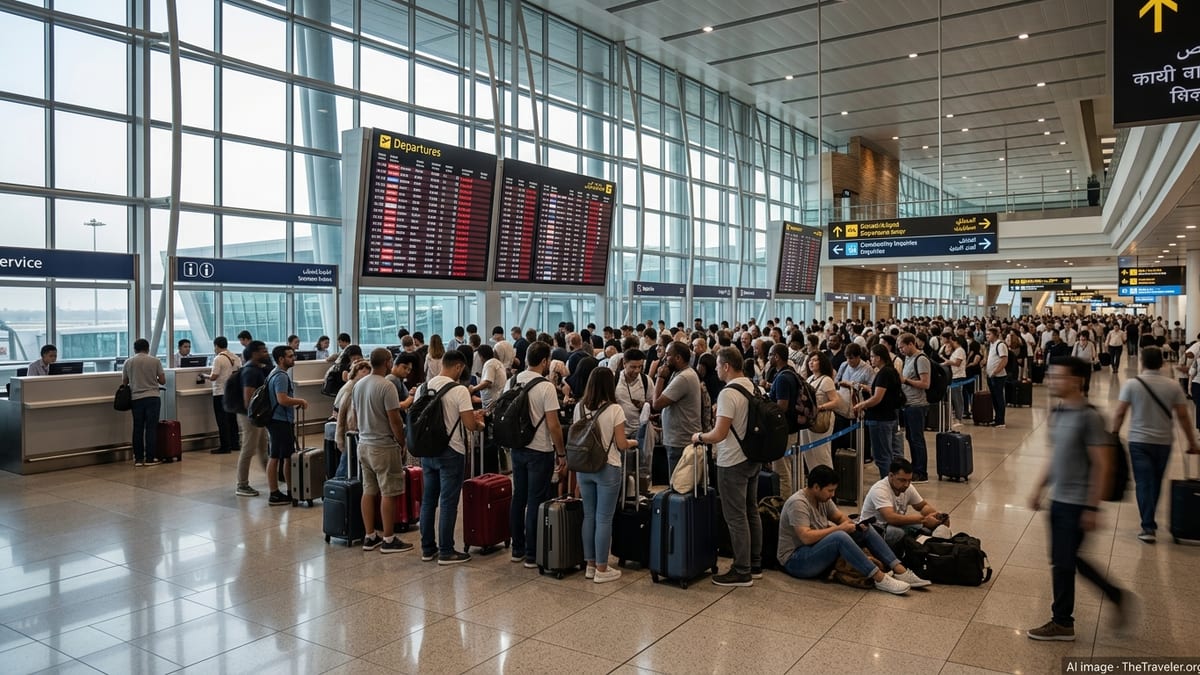
Hundreds of passengers were stranded across Asia on April 9 as China Eastern, Batik Air, Korean Air and Uzbekistan Airways canceled 58 flights and delayed 361 more, disrupting tightly timed itineraries across China, Uzbekistan, South Korea, Indonesia and several connecting hubs.
Get the latest news straight to your inbox!
Ripple Effects Across Key Asian Gateways
Aggregated data from live flight-tracking dashboards and regional aviation coverage for April 9 indicate that the bulk of disruptions were concentrated on short and medium haul routes linking major Asian gateways. Beijing’s two airports, Capital and Daxing, featured prominently, with cancellations and rolling delays radiating across domestic China as well as to Northeast and Southeast Asian cities.
In South Korea, delays affecting Korean Air services through Daegu added to bottlenecks already building at Seoul-area airports from earlier weather and congestion issues this week. Publicly available schedules show that Daegu functions as an important secondary node for both domestic and regional links, so even a modest number of cancellations can create pronounced gaps in connectivity on specific routes.
Jakarta, a core base for Batik Air, saw knock-on effects for travelers heading to and from secondary Indonesian cities and onward to regional capitals. Local aviation reports describe passengers facing extended waits at transfer counters as staff worked through queues of rebooking requests after multiple Batik Air departures slipped well behind schedule or were withdrawn entirely.
Uzbekistan’s main airports, including Tashkent, were also affected as Uzbekistan Airways pulled several services and posted delays on others. Network maps show these flights acting as key connectors between Central Asia, East Asia and the Middle East, meaning that disruptions there quickly cascaded into missed long haul connections for travelers attempting multi-leg journeys.
China Eastern Again Prominent in Delay Tallies
China Eastern has figured prominently in recent regional delay tallies, and April 9 continued that trend. Flight performance dashboards for China show the airline among the carriers with the largest number of impacted services, particularly on trunk routes touching Beijing, Shanghai and several provincial capitals.
Industry monitoring over the first week of April already highlighted elevated disruption levels on China Eastern routes in and out of major hubs. That context helps explain why fresh issues on April 9 immediately translated into widespread queues at check-in, service counters and boarding gates as passengers tried to salvage connections on complex itineraries.
Operationally, a mixture of localized weather constraints, air traffic flow management and aircraft rotation challenges appears to be driving the latest wave of delays. Publicly accessible data from Chinese airports show traffic levels close to or above pre-pandemic volumes at several coastal hubs, leaving airlines such as China Eastern with little slack to recover when a bank of flights begins to run late.
For passengers, the result was a familiar combination of missed meetings, curtailed holidays and hurried rebookings as the 58 cancellations and 361 delays rippled outward from Beijing and other focal points into secondary cities across the region.
Stranded Travelers in Daegu, Jakarta and Beyond
In Daegu, passengers on Korean Air services faced extended waits when aircraft and crews arrived out of sequence, reducing the airline’s ability to turn planes quickly for onward legs. Aviation forums and social media posts referenced clusters of travelers camped out near gate areas as departure boards repeatedly revised estimated takeoff times.
Jakarta’s Soekarno Hatta Airport experienced similar scenes as Batik Air worked through its disrupted schedule. Public flight boards showed waves of late departures stacked against limited gate capacity, a dynamic that can slow airport operations even further when ground handling teams must repeatedly adjust plans for aircraft parking and baggage flows.
Central Asian travelers connecting through Tashkent and other Uzbekistan Airways points reported missed onward services toward East Asia and the Gulf. According to published coverage, same-day alternatives were limited on some city pairs, leaving passengers to accept overnight stays or rerouting through entirely different hubs such as Istanbul, Doha or Dubai where capacity allowed.
Even travelers not directly booked on the four most affected airlines felt the knock-on effects. When one carrier cancels or heavily delays a cluster of flights, other airlines serving the same city pairs often see last minute surges in demand, rapidly filling remaining seats and narrowing options for disrupted passengers seeking a way around the problem.
Why So Many Flights Are Still Vulnerable
The April 9 disruptions come amid a broader pattern of volatile on-time performance across Asian aviation. Recent analyses of punctuality metrics show that even carriers with historically strong records, such as Korean Air and certain Indonesian operators, face mounting pressure as demand rebounds faster than infrastructure upgrades and crew training pipelines can keep pace.
Weather remains a perennial challenge, particularly in spring when rapidly shifting systems over northern China and the Korean Peninsula can trigger air traffic control restrictions. Once caps are introduced on arrival and departure rates at key airports such as Beijing Capital or major Korean and Indonesian hubs, knock-on delays accumulate quickly across airline networks.
Aircraft and crew rotations represent another pressure point. Complex multi-leg patterns that take a plane from, for example, a morning departure in China to an afternoon hop in Korea and an evening return to Southeast Asia leave little margin for recovery if the first leg runs late. The April 9 pattern, in which issues appeared simultaneously in Beijing, Daegu, Jakarta and Central Asia, is consistent with that kind of tightly coupled scheduling environment.
Infrastructure capacity also plays a role. While Beijing’s dual-airport system offers redundancy, some secondary cities touched by the disrupted flights have more limited runway and terminal resources. Once delays begin to bunch there, airlines often resort to cancellations as a last resort to reset their schedules, contributing to the headline figure of 58 scrapped services.
What Impacted Passengers Can Do
For travelers caught up in the April 9 turmoil, publicly available passenger rights information and airline policies offer several potential avenues for recourse. Many carriers, including the four affected in this latest incident, outline options for fee-free rebooking in cases where disruptions are attributed to operational or scheduling issues rather than extraordinary circumstances such as severe weather or airspace closures.
Reports from recent disruption events around China and wider Asia suggest that contacting the airline through multiple channels can improve the odds of securing a timely alternative. While airport counters remain the most visible touchpoint, call centers, official mobile apps and messaging channels sometimes show rebooking options earlier than they appear on departure boards.
Travel industry experts frequently recommend maintaining flexible itineraries when transiting regions that are currently experiencing elevated delay rates. Leaving extra connection time, avoiding the last flight of the day on critical segments and monitoring flight status from 24 hours before departure can all help reduce the risk of becoming stranded when cancellations spike, as they did on April 9.
With Asia’s aviation recovery still in a delicate balancing phase, the experience of passengers disrupted by the 58 cancellations and 361 delays serves as a reminder that even routine travel days can quickly unravel when multiple carriers across several countries encounter simultaneous operational stress.