

More news on this day
Air travel across the United States faced fresh disruption today as major hubs including Atlanta, Chicago, Los Angeles, Houston and New York reported 3,159 delayed flights and 125 cancellations, snarling schedules for passengers flying on American, Delta, United, Alaska, Republic and several other carriers.
Get the latest news straight to your inbox!
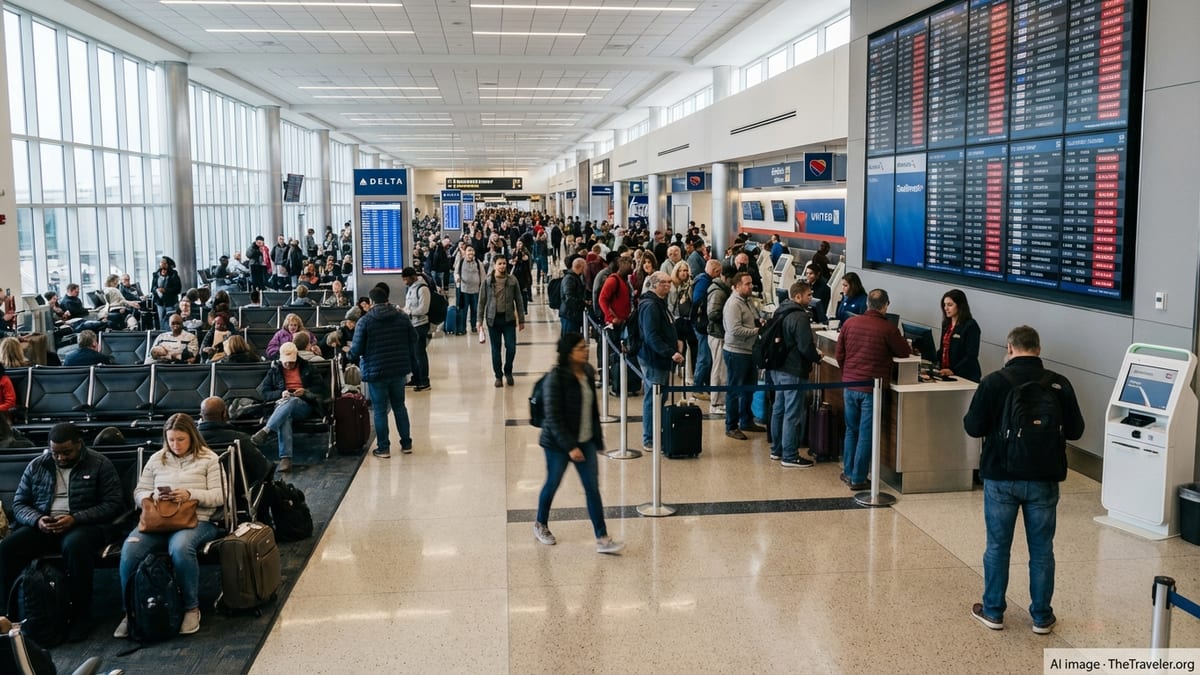
Major Hubs Bear the Brunt of Network Disruption
Data compiled from national flight tracking services shows that the latest wave of disruption is concentrated at some of the country’s busiest airports, with Atlanta Hartsfield-Jackson, Chicago O’Hare, Los Angeles International, Houston’s George Bush Intercontinental and New York area airports all reporting elevated delay and cancellation numbers compared with a typical spring weekday.
Reports indicate that these hubs collectively account for a significant share of the 3,159 delays and 125 cancellations recorded across the domestic network today, as knock-on effects ripple through departure and arrival banks. Even modest schedule changes at these high-traffic nodes can quickly cascade, leaving crews and aircraft out of position and compressing already tight turnaround times.
At Atlanta and Chicago, where connecting traffic is a core part of the business model for several major airlines, the disruption translated into clusters of late departures and missed onward connections through the morning and early afternoon. In New York and Los Angeles, heavy transcontinental schedules and international links amplified the impact on travelers attempting to make long-haul itineraries.
Houston, another key connecting point for domestic and Latin American routes, has seen growing strain on its afternoon and evening banks as earlier delays feed into peak departure periods. Passengers there and at other major hubs have reported longer lines at customer service desks and tighter windows for rebooked connections.
American, Delta, United, Alaska and Republic Among the Most Affected
Publicly available tracking dashboards show that the disruption is spread across multiple large and midsize carriers, with American Airlines, Delta Air Lines, United Airlines, Alaska Airlines, Republic Airways and other operators all registering heightened delay counts. The mix reflects the dense presence these airlines maintain at the affected hubs combined with the interdependent nature of regional and mainline operations.
American and United, both with substantial schedules in Chicago, Houston, Los Angeles and New York, have seen pressure on their midmorning and early afternoon departures, particularly on short and medium haul routes feeding into those hubs. Delays on these segments can quickly affect aircraft utilization, forcing adjustments elsewhere in the network.
Delta, which maintains a large operation in Atlanta and a strong presence in New York and Los Angeles, has been contending with a combination of late-arriving aircraft and congested departure banks that limit flexibility to recover lost time. In busy connecting complexes, a single late inbound flight can affect several downstream departures if there is limited spare capacity in both crews and gates.
Alaska Airlines and regional operator Republic Airways, while smaller than the three largest network carriers, play critical roles as feeders and code-share partners. Their aircraft and crews are tightly woven into the schedules of the bigger brands, meaning that delays or cancellations on regional spokes can reverberate onto mainline flights, especially at hub airports already operating near capacity.
Operational Strains, Weather Pockets and Airspace Constraints
Although no single nationwide cause has been identified for today’s elevated totals, the pattern aligns with familiar springtime challenges for US aviation. Industry data and recent government reports highlight how a combination of localized weather, airspace constraints and airline operational pressures often converge to produce concentrated days of disruption.
Even minor storm systems or low clouds near major airports can trigger ground delay programs, reducing the number of arrivals allowed per hour and forcing airlines to hold or reroute flights. When this occurs at the same time as high passenger demand, carriers may struggle to absorb the schedule shock without resorting to cancellations to stabilize the operation.
Operational strains within airlines also play a role. Staffing models for pilots, flight attendants, maintenance crews and ramp workers are calibrated to typical conditions, and irregular operations can push those systems to their limits. When incoming flights arrive late, duty-time limits and crew rest rules can make it difficult to keep aircraft flying, leading to a cycle in which delays on early segments translate into cancellations later in the day.
Air traffic control capacity remains another factor. Several US facilities that manage traffic flows into and out of dense metropolitan areas have been operating with limited staffing margins. When weather or traffic surges force reroutes or holding patterns, throughput falls and delay minutes can mount rapidly across multiple airports that share the same airspace corridors.
Impact on Travelers Across the Domestic Network
For passengers, today’s figures translate into missed connections, extended airport waits and, in some cases, the need for overnight rebooking. With key hubs such as Atlanta, Chicago and New York experiencing large clusters of delayed departures, travelers on multi-leg itineraries have been particularly exposed to knock-on effects, even if their origin or destination airports are not among the worst hit.
Families and business travelers alike are encountering crowded gate areas and longer lines at customer service counters as airlines work to re-accommodate disrupted passengers. Those traveling through Los Angeles and Houston have reported especially tight connection windows where even short delays can mean a missed onward flight, forcing same-day standby or next-day travel.
The disruption also affects airport operations, from baggage handling to concessions and ground transportation. Extended gate holds and aircraft swaps require bags to be offloaded and rerouted, sometimes separating travelers from their luggage overnight. Ride-share and taxi queues can grow as delayed passengers arrive in clusters instead of a smooth flow, while airport concessions may see surges in demand as travelers spend unexpected extra hours in terminals.
Airline loyalty programs and travel insurers are likely to see increased activity as passengers seek compensation or coverage for hotels, meals and missed events. Policy details vary widely, and outcomes depend not only on whether a flight was canceled or delayed, but also on the underlying causes attributed by the carrier.
What the Disruption Signals About the Spring Travel Outlook
Today’s figures arrive as the industry heads into the heart of the spring and early summer travel period, when passenger numbers usually rise and schedules grow denser. Recent federal consumer reports on air travel have documented how even with improved on time performance at some carriers, large disruption days can still occur when weather and operational stress coincide.
The concentration of delays and cancellations at key hubs suggests that resilience remains a challenge for a system operating near capacity. When airlines run tight schedules to maximize aircraft utilization and seat availability, there is limited slack to recover after a morning of irregular operations. That reality can turn localized issues into nationwide waves of disruption.
For travelers planning upcoming trips, the current pattern underscores the value of building buffers into itineraries, especially when connecting through Atlanta, Chicago, Los Angeles, Houston or New York. Earlier departures, longer connection windows and awareness of peak congestion periods can help reduce the risk that a single disruption will derail an entire journey.
Industry observers will be watching whether carriers adjust schedules, add additional spare aircraft or modify crew planning as the season progresses. With demand expected to remain strong, the balance between efficiency and reliability will remain at the center of how airlines manage their networks on busy days like today.