

More news on this day
Spain’s two busiest airports were hit by fresh travel turmoil on Friday as at least 19 flights operated by Qatar Airways, Ryanair, Emirates, Cathay Pacific, Iberia and other major carriers were grounded and dozens more delayed at Madrid-Barajas and Barcelona-El Prat, amid widening airspace closures linked to the conflict in the Middle East.
Madrid and Barcelona Bear the Brunt of Latest Wave
Operational data from airport and industry sources on 6 March indicate that Madrid-Barajas and Barcelona-El Prat saw a concentrated cluster of cancellations and late departures on routes tied directly or indirectly to Gulf and broader Middle East hubs. While both airports continued to handle thousands of passengers, disruption to a relatively small portion of long haul and feeder services created outsized knock-on effects across the day’s schedule.
In Barcelona, several departures and arrivals linked to Doha and Dubai were pulled from the board after Gulf carriers extended earlier cancellations. These cancellations, combined with rolling delays on European and domestic sectors that connect to long haul services, left queues snaking through terminals as airlines rushed to reaccommodate passengers on alternative routings via northern Europe and North America.
Madrid, which serves as Spain’s primary intercontinental hub, recorded a similar pattern, with Iberia, Qatar Airways and partner airlines trimming or cancelling selected flights as they navigated evolving restrictions on overflying parts of West Asia. Short haul flights feeding these long haul departures experienced creeping delays through the morning peak, as crews and aircraft were rotated at short notice.
Airport sources stressed that the number of cancelled flights remained small compared with the more than 5,000 daily movements across Spain’s network. However, the targeted nature of the cancellations, largely focused on trunk routes and long haul connections, meant that individual passengers could face rebooking delays of 24 hours or more.
Middle East Conflict and Airspace Closures Ripple Across Europe
The latest disruption in Spain is part of a wider wave of cancellations and schedule cuts spreading across Europe after airspace closures in key parts of the Middle East. Since the end of February, authorities in several countries have restricted overflights, effectively severing some of the most heavily used corridors between Europe and Asia and forcing airlines to ground or reroute services.
Global carriers based in the Gulf, including Qatar Airways and Emirates, have temporarily suspended many services or are operating sharply reduced schedules while their home hubs grapple with capacity constraints and safety restrictions. Asia-Pacific airlines such as Cathay Pacific have also paused selected Middle East routes or added significant routing detours, lengthening flight times and complicating aircraft rotations.
European airlines, including Iberia and low cost giant Ryanair, have responded with a mix of proactive cancellations and tactical delays on services that either transit affected airspace or rely on disrupted codeshare connections. Industry analysts say the network effects are particularly acute in Spain, where Middle East hubs play an important role in connecting travellers to emerging markets in Asia, Africa and the Indian Ocean via one stop itineraries.
Travel rights organisations report a growing volume of passenger claims and assistance requests tied to the conflict-related changes, with Spain ranking among the most affected European markets in terms of schedule reliability for long haul itineraries this week.
Passengers Face Long Queues, Missed Connections and Tight Rebooking Options
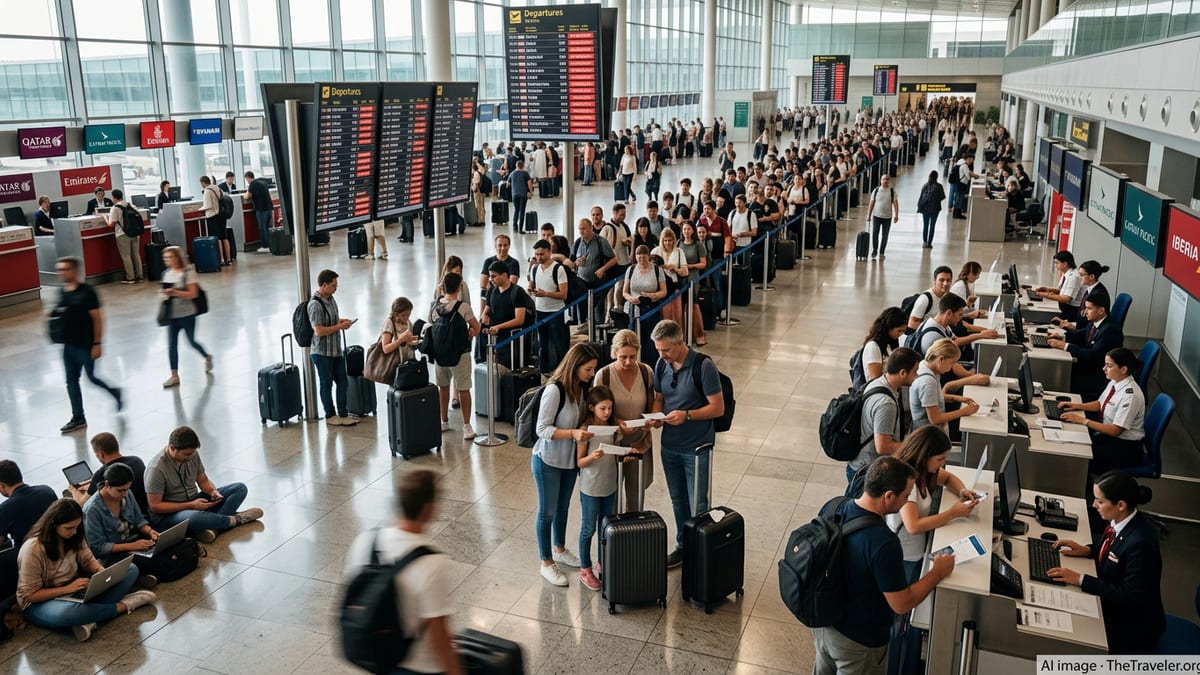
For travellers on the ground in Madrid and Barcelona on Friday, the impact of 19 outright cancellations and a swathe of delays was immediately visible in crowded check in halls and busy customer service desks. Families returning from winter sun holidays, business travellers bound for Asia and students heading to connecting flights in the Gulf all scrambled to secure new itineraries as airlines worked through backlogs.
Ground staff at both airports reported that rebooking options within Europe were often available the same day, particularly on high frequency routes to London, Paris and Frankfurt. However, for passengers needing to reach destinations in Southeast Asia, the Indian subcontinent or Oceania, seats were far scarcer as remaining services operated close to full and alternative routings added hours to journeys.
Some travellers accepted rerouting via northern European hubs or even transatlantic detours that connected onward through North America and back into Asia. Others chose to postpone trips entirely, opting for refunds or travel vouchers where offered. Extended waiting times for baggage retrieval and hotel vouchers were also reported, especially for those whose flights were cancelled late in the boarding process.
Despite the difficulties, airport operations remained orderly, with additional staff deployed to manage queues and provide information. Public address announcements and flight information displays were updated frequently throughout the day, urging passengers to confirm departure times before heading to security checkpoints.
How Major Airlines Are Responding in Spain
Qatar Airways, which has temporarily halted many operations through Doha, continued to cancel Spain bound services on Friday, maintaining only limited assistance flights to reposition stranded passengers and crews. Affected travellers in Madrid and Barcelona were being offered rebookings on later dates or rerouting via partner airlines where seats existed.
Emirates also maintained a reduced program to and from Dubai, with several rotations to Spain grounded and others subject to significant delay as aircraft and crew were repositioned around bottlenecks in Gulf airspace. The airline has advised passengers holding tickets in the coming days to check their booking status frequently and to allow extra time at the airport.
Iberia, Spain’s flag carrier, adjusted a number of departures that rely on overflights across the Middle East or feed into partner networks in the region. While the airline’s core transatlantic program remained largely intact, selected services to the Gulf and beyond faced cancellations or aircraft downgrades, tightening capacity on remaining flights.
Ryanair, which operates extensive short haul services into Madrid and Barcelona, reported delays on some sectors that connect into affected long haul partners or rely on shared ground handling resources. Although the low cost carrier’s point to point model has so far shielded many passengers from the worst connection issues, local disruptions at congested gates and stands contributed to rolling delays throughout the day.
What Travellers Should Do Next
Travel authorities and airline representatives in Spain are urging passengers scheduled to fly to or through Madrid and Barcelona over the coming days to take a proactive approach. Travellers are advised to monitor their bookings closely, using airline apps or contact centres, and to keep an eye on live departure boards before heading to the airport.
Passengers whose flights are cancelled are generally entitled to rebooking at the earliest opportunity, and in many cases may request refunds instead. Given the constrained capacity on long haul routes, experts recommend accepting reasonable alternative routings even if they add extra travel time, as waiting for a direct replacement flight could mean longer delays.
Those already at the airport are encouraged to seek assistance promptly at airline service desks and to retain all receipts related to meals, ground transport and accommodation while disrupted, which may be useful for later claims. Travellers should also keep boarding passes and original booking confirmations, which can speed up the handling of compensation and reimbursement requests under European passenger rights regulations.
With no clear timetable for full reopening of all affected airspace, airlines operating in Spain are preparing for several more days of volatility. For now, the message to passengers passing through Madrid and Barcelona is to stay informed, build extra flexibility into their plans and be prepared for last minute changes to even confirmed itineraries.