

More news on this day
Air travelers across Georgia, California, Texas and Florida are facing another bruising weekend of disruption as dozens of flights are canceled and hundreds more delayed, snarling operations for Delta Air Lines, Spirit Airlines, American Airlines and Lufthansa and leaving many passengers stranded far from their destinations.
Get the latest news straight to your inbox!
Disruptions Concentrated at Major Southern and West Coast Hubs
Published data from flight tracking and industry reports indicate that at least 84 flights have been canceled and roughly 477 delayed across key airports in Atlanta, Dallas Fort Worth, Austin, Houston, San Antonio, Los Angeles and major Florida gateways. The figures highlight how a relatively modest number of outright cancellations can combine with a much larger wave of delays to create severe knock-on effects for passengers.
Hartsfield Jackson Atlanta International Airport in Georgia, the country’s busiest hub and a cornerstone of Delta’s domestic network, has again emerged as one of the hardest hit facilities, with rolling delays feeding into missed connections across the Southeast and beyond. Similar patterns are being reported at major Texas hubs, where disruptions at Dallas and Houston have affected regional and long haul services operated by American, Spirit, United and their partners.
On the West Coast, operations at Los Angeles International have been hindered by a combination of late arriving aircraft and tight turnaround schedules, affecting flights into and out of California for all four carriers named in the latest disruption tallies. In Florida, the concentration of leisure and Caribbean bound traffic has amplified the impact of schedule changes, with passengers in Orlando, Miami and Fort Lauderdale reporting extended waits and limited same day alternatives.
Although the number of cancellations is lower than during historic meltdowns in previous years, the clustering of affected flights at large connecting hubs has led to a disproportionate number of missed itineraries and overnight stays, particularly for travelers relying on tight domestic connections.
Airlines Grapple With Staffing, Weather and Network Strain
Publicly available information suggests no single underlying cause for the latest wave of disruption. Instead, airlines appear to be contending with a familiar mix of localized weather, crew availability constraints and aircraft positioning issues that ripple quickly through tightly wound schedules.
Delta Air Lines, with a heavy reliance on its Atlanta hub and a dense network throughout the Southeast and coastal markets, has seen delays spread across multiple banks of departures when inbound flights arrive late or when storms temporarily halt ground operations. Such interruptions can leave aircraft and crews out of position, complicating efforts to protect later flights in the day.
Spirit Airlines continues to operate an aggressive utilization model for its fleet, which can limit slack in the system when even minor storms or technical problems arise. Industry analyses of recent performance patterns describe how a single delay during the morning period can propagate into extensive late day disruption if an aircraft cycles through multiple cities without sufficient recovery time built into the schedule.
American Airlines and Lufthansa have also experienced pockets of disruption, particularly on routes linking major US hubs with international gateways. For Lufthansa, any irregular operations at key European hubs can quickly affect services into Georgia, Texas, Florida and California, where long haul aircraft are tightly tied to onward connections and crew duty time limits.
How the Chaos Is Playing Out for Passengers on the Ground
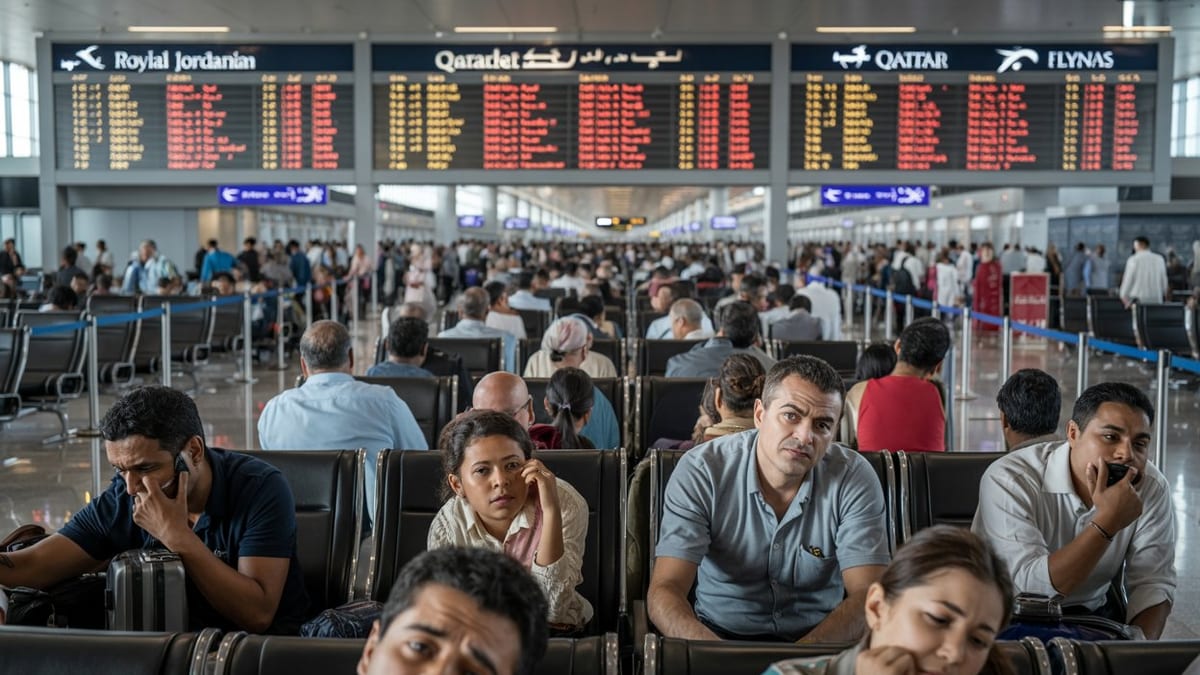
Reports from affected airports describe scenes that will be familiar to many frequent flyers: long lines at rebooking counters, crowded gate areas, and passengers attempting to juggle work and family obligations from terminal seating while waiting for updated departure times. In several cases, travelers have been left overnight in concourses or nearby hotels after late evening cancellations closed off same day options.
Because many of the hardest hit airports serve as connecting hubs, a large share of the stranded passengers are not originating in Georgia, California, Texas or Florida but are instead caught in transit. Missed onward connections can mean travelers are separated from checked baggage, particularly when bags are already loaded onto aircraft that never depart or when they continue on to destinations without their owners.
The disruption is also creating challenges for families and groups traveling together, as limited remaining seats make it difficult to secure rebooked itineraries for all members on the same flight. Some passengers are turning to nearby alternative airports within driving distance, attempting to piece together new routings on competing carriers when original airlines have no timely options available.
While social media posts have amplified particularly difficult experiences, industry performance data underline that even relatively small percentages of canceled flights can translate into thousands of displaced passengers when they involve large aircraft, peak travel periods or high density leisure routes.
What Travelers Can Do Before and During Their Trip
For travelers with upcoming itineraries involving Georgia, California, Texas or Florida, experts recommend a more cautious approach to scheduling until operations stabilize. Building longer connection times into multi segment trips can reduce the risk of misconnecting when the first leg is delayed. Choosing earlier departures in the day can also improve the chances of finding same day alternatives if flights are canceled or significantly delayed.
Monitoring flight status closely through airline mobile apps and airport information boards remains essential. Same day schedule changes are often reflected in digital systems before they are announced at the gate, giving proactive passengers a head start on rebooking through online tools rather than waiting in physical lines. Some carriers also allow same day changes to nearby airports, which can be an important option in regions with multiple large facilities.
Travelers booking new trips may wish to review fare rules and consider flexible tickets or add on products that permit no fee changes, particularly for itineraries involving tight connections or critical events. Independent travel insurance may offer some reimbursement for hotel stays and incidental expenses related to delays, but benefits and exclusions vary widely and must be reviewed carefully.
Passengers with checked luggage can reduce complications by packing essential medications, documents, chargers and one change of clothes in carry on bags. When disruption strikes, having these items on hand can make forced overnight stays or unplanned rerouting more manageable, especially when access to checked baggage is delayed.
Knowing Your Rights When Flights Are Canceled or Delayed
Travelers affected by cancellations should be aware that, under long standing federal rules, airlines operating within the United States must offer refunds when a flight is canceled and the passenger chooses not to travel, even on nonrefundable tickets. Many carriers also advertise additional customer service commitments, such as meal vouchers or hotel accommodations in certain circumstances, which are detailed in their contracts of carriage and customer service plans.
For delays that fall short of outright cancellation, compensation policies vary significantly between airlines and depend on whether the disruption is attributed to factors under the carrier’s control, such as crew or maintenance, or to weather and air traffic constraints. Publicly available consumer guides from aviation regulators and passenger advocacy organizations encourage travelers to document the cause and duration of any delay when seeking assistance.
When rebooking, passengers may be able to request changes to alternative flights or even different airports within the same region if seats are available. Some airlines, during periods of widespread irregular operations, issue travel waivers that temporarily relax change fees and fare differences for affected dates and routes. Checking for such waivers before calling or visiting a counter can speed up the process.
As the latest disruption across Georgia, California, Texas and Florida continues to unfold, the practical takeaway for travelers is clear: leave extra time, stay informed in real time, and make full use of the tools and rights available to minimize the risk of becoming stranded when schedules unravel.