

More news on this day
Hundreds of passengers across Australia and New Zealand are facing long waits, missed connections and unexpected overnight stays as a wave of disruptions hits key airports, with 43 flight cancellations and 806 delays reported across carriers including Qantas, Air New Zealand, Virgin Australia, Emirates and Jetstar.
Get the latest news straight to your inbox!
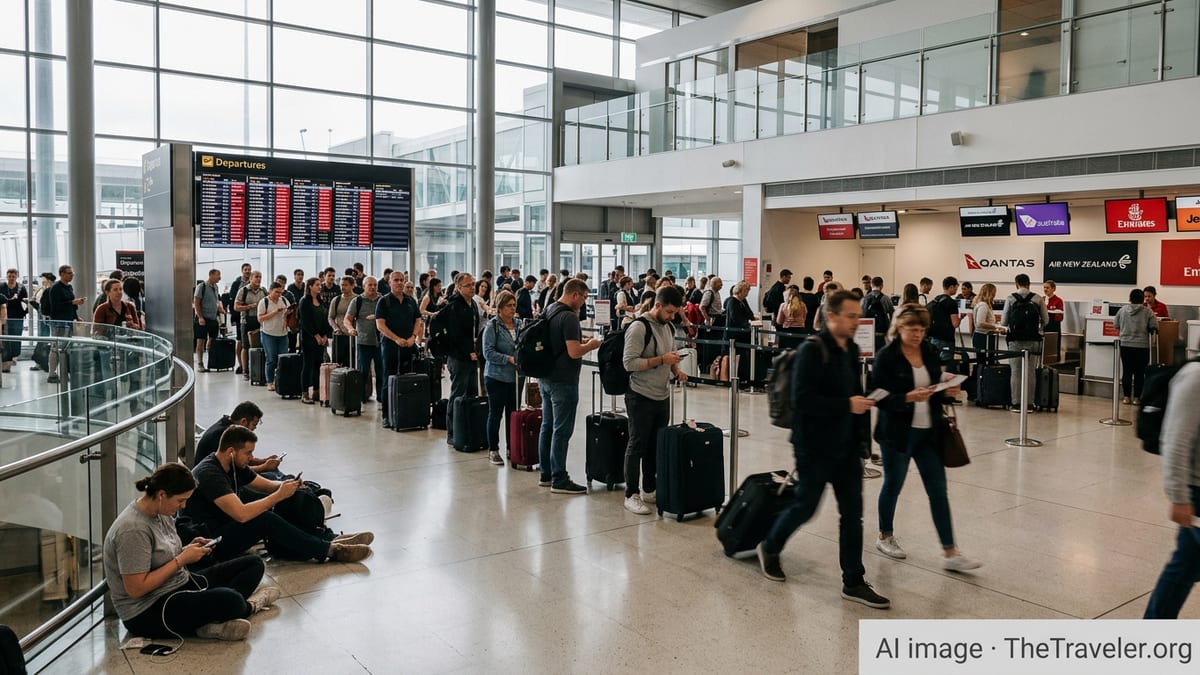
Major Hubs From Adelaide to Auckland Buckle Under Strain
Operational data and airport tracking dashboards on Tuesday point to a heavily disrupted day across some of the region’s busiest hubs, including Adelaide, Melbourne, Sydney, Auckland and Christchurch. The pattern shows a mix of outright cancellations and rolling delays affecting both domestic and international schedules, compounding pressure on already busy late-summer travel corridors.
Publicly available tracking information indicates that 43 flights have been cancelled across the network, with 806 services delayed by at least 15 minutes. The impact is concentrated at large gateways such as Sydney and Melbourne in Australia, and Auckland and Christchurch in New Zealand, but secondary airports feeding into these hubs are also experiencing schedule knock-on effects as aircraft and crews fall out of position.
Passengers on disrupted flights are reporting missed onward connections to Asia, North America and Europe, as well as broken trans-Tasman itineraries that link Australian cities with New Zealand’s South and North Islands. With many services operating close to capacity in March, rebooking options within the same travel window appear limited, leaving some travellers temporarily isolated in transit cities far from home.
The widespread nature of the disruption is particularly acute on routes where capacity has been carefully rebuilt since the pandemic, including busy Sydney–Auckland and Christchurch–Melbourne sectors. Historical performance data from Australian and New Zealand aviation agencies already shows these corridors operating with relatively tight margins for delay recovery, a vulnerability that is now visible in real time as today’s problems cascade across the network.
Multiple Carriers, Shared Routes and Cascading Delays
The disruption is notable for the breadth of airlines involved. Schedules from Qantas, Air New Zealand, Virgin Australia, Emirates and Jetstar all show affected flights, reflecting how intertwined carrier operations have become on key trans-Tasman and domestic trunk routes. Code share arrangements and shared airport infrastructure mean difficulties for one airline can quickly feed into the performance of others.
Industry reporting over the past year has highlighted how Qantas, Jetstar and Virgin Australia dominate much of Australia’s domestic market, while Air New Zealand maintains a strong position across domestic and regional New Zealand services and long-haul connections. Internationally, carriers such as Emirates and other global brands add widebody capacity through Sydney, Melbourne and Auckland, providing onward links to Europe and the Middle East. When delays ripple through these shared hubs, passengers can find themselves caught between multiple operators and booking references as they seek alternatives.
Published on-time performance figures for 2025 already suggested that on some routes even modest disruption could lead to significant schedule slippage. On sectors like Sydney to Auckland and Christchurch to Melbourne, official statistics for that year showed cancellation rates in low single digits but with substantial variability in punctuality between airlines. Today’s 43 cancellations and hundreds of delays magnify those existing stresses, especially where aircraft are tightly rostered and turnaround buffers are slim.
For travellers who began their journeys on smaller regional services into cities such as Adelaide or Christchurch with the intention of connecting to long-haul flights, today’s disruption is especially serious. With limited alternative departures and few spare seats, these passengers may find themselves stranded at intermediate airports overnight or forced to accept routings through entirely different continents to reach their destination.
Passengers Isolated in Transit as Rebooking Options Shrink
The operational numbers translate into very real challenges in departure halls and transit lounges. Accounts circulating on social media and travel forums describe passengers in Adelaide, Melbourne, Sydney, Auckland and Christchurch discovering cancellations only upon reaching the airport, with rebooking queues stretching for hours at peak times.
Several travellers recount being offered alternative itineraries days later than originally planned, or routings via additional hubs such as Singapore, Los Angeles or other Asian and North American gateways. In some cases, connecting flights on other airlines are departing as scheduled, but passengers cannot reach those departure points due to earlier domestic or trans-Tasman legs being cancelled or significantly delayed.
This has left a subset of passengers effectively isolated in unfamiliar cities. With accommodation around major airports often heavily booked on short notice, travellers are relying on a mix of airline-provided vouchers, travel insurance and personal funds to arrange places to stay while they wait for new flights. Reports indicate that families with children and travellers with fixed event dates, such as cruises or tours, are among those hardest hit by missed connections.
While today’s figures of 43 cancellations and 806 delays are significant in themselves, the broader concern for affected travellers is the knock-on effect over several days. Once aircraft and crew rotations are disrupted, it can take time for schedules to stabilise, particularly for airlines already operating near their capacity limits on popular routes linking Australia and New Zealand.
Weather, Capacity Pressures and Infrastructure All Under Scrutiny
Early commentary around the disruption points to a familiar mix of contributing factors that have been building across the aviation sector. In both Australia and New Zealand, airlines have been contending with tight labour markets, high fuel costs and airport infrastructure under strain from steadily rising passenger numbers. Official traffic reports for 2025 showed international and domestic volumes climbing toward, and in some cases surpassing, pre-pandemic levels, even as operators work through fleet changes and staffing challenges.
At the same time, major airports are in various stages of long-term redevelopment. Auckland Airport, for example, has announced an extensive multi-year program to upgrade runways, airfield layouts and terminal connections, a project that airlines including Qantas and Air New Zealand have previously argued could put upward pressure on charges for carriers and, ultimately, ticket prices. While this investment is intended to improve resilience over the long term, the construction period adds additional complexity to day-to-day operations.
Weather has also been a recurring complicating factor for flight schedules in the region, with storms and low-visibility conditions periodically disrupting Melbourne, Sydney and New Zealand’s coastal airports. Even when weather is only part of the story, it can serve as the immediate trigger that exposes underlying fragilities in staffing, equipment availability and air traffic management.
For passengers stranded today, these structural issues may feel far removed from the immediate problem of getting to their destination. Yet the combination of constrained capacity, infrastructure works and volatile operating conditions helps explain why, once disrupted, the system struggles to quickly absorb a shock measured in dozens of cancellations and hundreds of delays.
What Travellers Can Expect in the Coming Days
With schedules still in flux, publicly available information suggests that airlines are prioritising the restoration of core trunk routes between major hubs such as Sydney, Melbourne, Brisbane, Auckland, Wellington and Christchurch. Services that connect these centres are critical not only for point-to-point demand but also for feeding long-haul departures to Asia, North America and Europe.
Passengers holding tickets over the coming days are being encouraged, through airline websites and travel agent advisories, to monitor flight status closely and build additional time into connections where possible. In some cases, carriers are waiving change fees or offering flexible rebooking windows, a practice that has become more common in periods of significant disruption.
Travel forums show some passengers opting to reroute themselves via alternative hubs at their own expense, particularly where business or personal commitments make substantial delays unacceptable. Others are choosing to postpone trips altogether, with the expectation that operations will stabilise once today’s backlog has been cleared and aircraft rotations return to a more normal pattern.
For now, the figures of 43 cancellations and 806 delays serve as a stark snapshot of how quickly a tightly wound aviation system across Australia and New Zealand can unravel, leaving hundreds of passengers isolated between continents and reminding travellers that even in a period of recovery and growth, resilience remains a work in progress.