

More news on this day
Thousands of passengers were left stranded across Australia and New Zealand today as cascading flight delays and cancellations crippled operations at major hubs including Sydney, Melbourne, Brisbane, Auckland and Christchurch, disrupting schedules for carriers such as Emirates, Qatar Airways, Jetstar, Air New Zealand and several others.
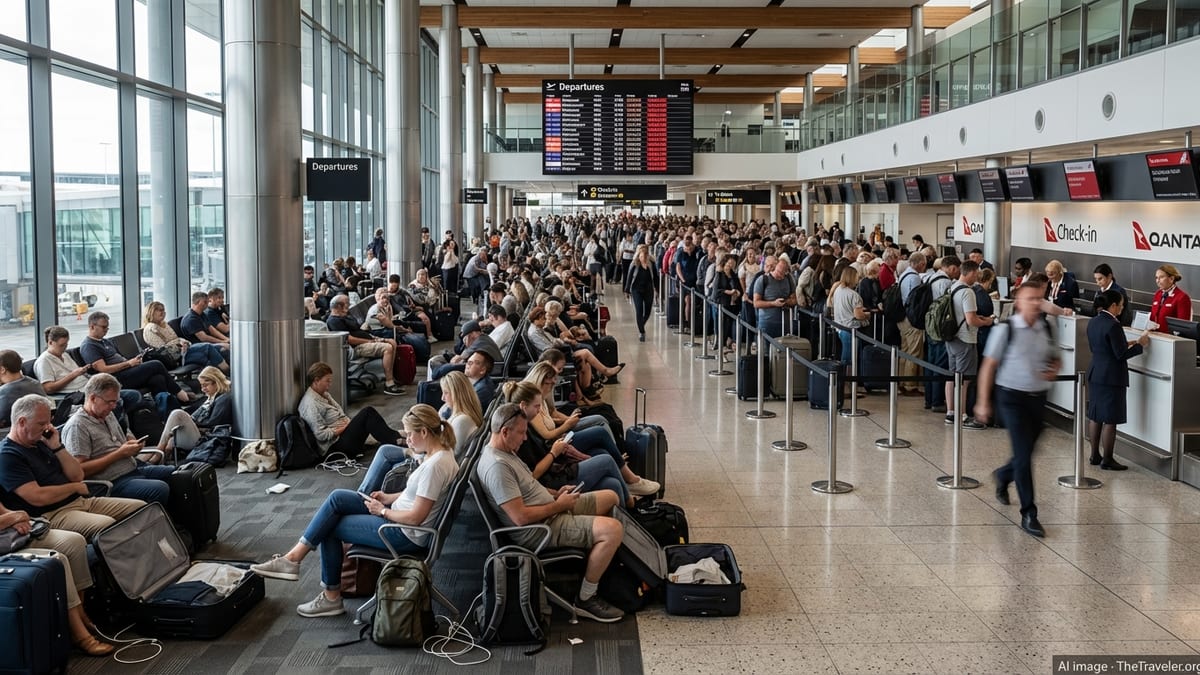
Widespread Disruptions Across Key Trans-Tasman Hubs
Operational data from airport and flight-tracking services showed a total of 65 cancellations and 587 delays affecting departures and arrivals across the region on March 2, as the shockwaves from airspace closures in the Middle East rippled through global networks. While some services managed to operate with extended journey times and diversions, many passengers faced missed connections, overnight layovers and last-minute rebookings at already busy terminals.
Sydney and Melbourne recorded some of the heaviest disruption, with departure boards dominated by late-running services and rolling schedule changes through the day. Brisbane and Perth also reported mounting delays as aircraft and crews were left out of position, complicating already tight turnaround windows and stretching airport resources.
Across the Tasman, Auckland and Christchurch were hit hard as well, with delayed long-haul arrivals from the Gulf and Asia creating knock-on problems for connecting domestic and regional flights. Travellers bound for popular leisure destinations in New Zealand reported hours-long waits in transit areas as airlines struggled to reassemble disrupted schedules.
Airport staff in several cities were drafted from other duties to manage queues at rebooking counters and assist with triage for the most vulnerable passengers, including families with young children and elderly travellers. Despite those efforts, many reported limited information, crowded terminals and a shortage of available hotel rooms near major hubs.
Airlines Juggle Cancellations, Diversions and Crew Limits
Among the worst affected carriers were big Gulf and regional players whose networks intersect over the Middle East. Emirates and Qatar Airways both saw schedules to and from Australia and New Zealand heavily disrupted, with some flights cancelled outright and others forced to reroute around closed or restricted airspace, lengthening travel times and burning through additional fuel and crew hours.
Regional and domestic operators were drawn into the turbulence as aircraft due to feed local networks failed to arrive on time. Jetstar, Virgin Australia, Qantas and Air New Zealand all reported significant delays on key domestic and trans-Tasman routes as they worked to reposition aircraft, rotate crews and protect priority services serving business corridors and essential links.
With many airlines still operating with leaner staffing and aircraft rosters after the pandemic, the margin for error remains thin. When long-haul rotations from Europe or the Middle East are disrupted, it can take multiple days to restore normal patterns, meaning today’s cancellations in Sydney or Auckland may still be felt in regional centres later in the week.
Industry observers noted that the overall number of flights cancelled remained relatively modest compared with peak pandemic disruptions, but the breadth of today’s delays across several national carriers and key hubs underscored ongoing fragility in global aviation networks.
Middle East Conflict Sends Shockwaves Through Global Aviation
The immediate trigger for the turbulence is the fast-evolving conflict in the Middle East, which has led authorities in several countries to close or restrict their airspace to commercial traffic. Long-haul services between Australia, New Zealand and Europe or parts of Africa typically rely on routings through the Gulf, making them vulnerable to sudden changes in overflight permissions and risk assessments.
In recent days multiple international hubs in the region have curtailed or suspended operations, forcing airlines worldwide to divert or cancel services. Flight-tracking data shows that thousands of flights have been delayed or rerouted globally since airspace restrictions came into force, with knock-on effects now evident in far-flung markets such as Australia and New Zealand.
Carriers are responding with ad hoc rerouting and schedule reductions, but such measures come with operational and financial costs. Longer flight paths require additional fuel and can push crews beyond duty-time limits, while rolling cancellations undermine passenger confidence and strain call centres and airport support teams.
Analysts say that as long as airspace in key transit corridors remains constrained, travellers in the southern hemisphere should expect further volatility, particularly on routes connecting to Europe, the Middle East and parts of Asia that normally rely on seamless hub operations.
Passengers Face Long Queues, Limited Support and Insurance Gaps
For passengers caught in the middle of today’s upheaval, the experience has been defined by uncertainty and long waits. At Sydney, Melbourne and Auckland, lines formed before dawn at airline service desks as travellers sought rebooking options, meal vouchers and accommodation after overnight delays or last-minute cancellations.
Some passengers arriving on delayed long-haul services found that their onward domestic connections had already departed, leaving them to scramble for scarce seats later in the day. Others reported difficulty accessing timely information via airline apps and websites amid high traffic and rapidly changing schedules.
Travel industry groups have urged affected travellers not to cancel tickets pre-emptively, warning that voluntarily abandoning a booking can jeopardise eligibility for refunds, credits or complimentary rebooking options. Instead, they advise passengers to wait for official notifications from airlines or travel agents, document all expenses and keep records of delay or cancellation messages.
Experts have also highlighted a lesser-known complication: many standard travel insurance policies exclude disruptions directly linked to war, conflict or official airspace closures. That means some travellers may discover that hotel stays, missed tours or additional transport costs incurred as a result of today’s disruption are not covered, adding financial stress to an already frustrating situation.
What Travellers Can Expect in the Coming Days
Airlines serving Australia and New Zealand have indicated that recovery from the current wave of disruption is likely to take several days, as aircraft and crew rotations are gradually restored. Even where flights are operating, passengers should brace for longer than usual journey times, aircraft swaps and schedule changes at short notice.
Travel agents and tourism bodies are advising anyone due to fly in the coming week to monitor their booking closely, use airline apps for real-time updates and allow extra time at airports in case of check-in queues or security bottlenecks. Those with non-essential trips, particularly to or through affected parts of the Middle East, are being encouraged to consider deferring travel where flexible ticket conditions allow.
For now, the scale and duration of the disruption will hinge on how quickly airspace restrictions ease and whether tensions in the Middle East stabilise. Until then, the scenes of crowded terminals and weary travellers across Sydney, Brisbane, Auckland, Canberra, Melbourne, Perth and other gateways offer a stark reminder of how swiftly geopolitical shocks can reverberate through the global travel system.