

More news on this day
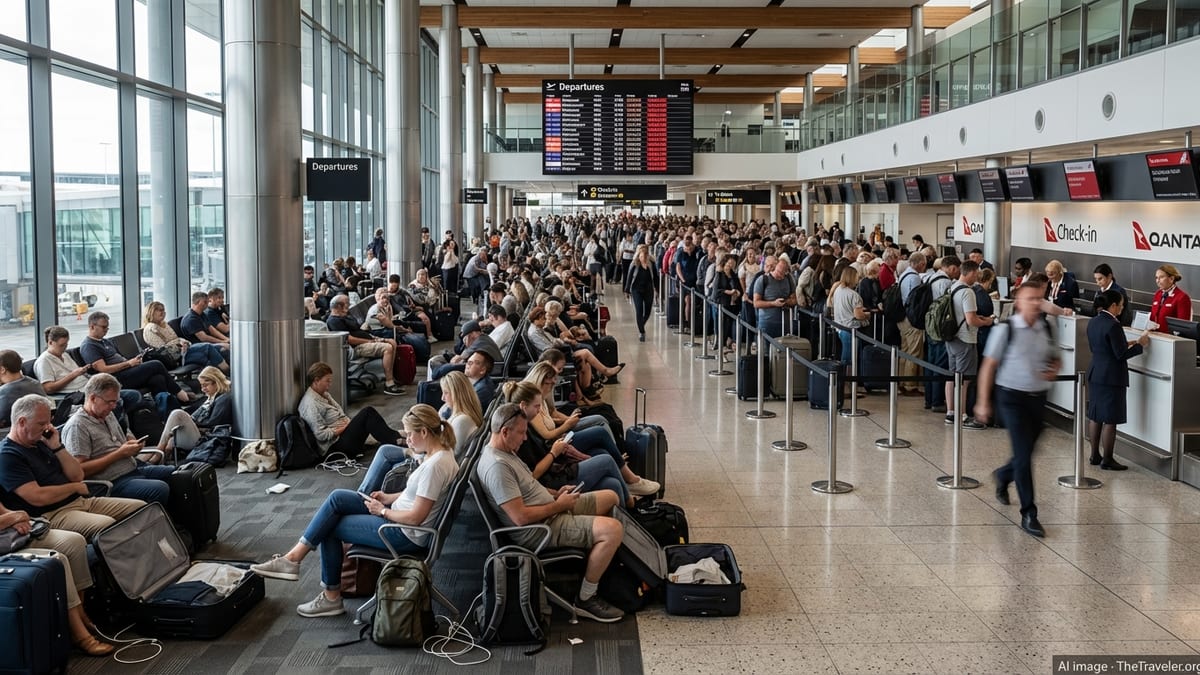
Thousands of passengers across Australia and New Zealand are facing major travel disruption after a wave of cancellations and delays hit key airports in Melbourne, Sydney, Auckland and Wellington, with services from Qantas, Jetstar, Virgin Australia, Air New Zealand and several smaller carriers heavily affected.
Get the latest news straight to your inbox!
Widespread Disruption Across Major Trans Tasman Hubs
Publicly available flight data and media coverage indicate that a total of 63 flights were cancelled and around 370 services delayed across Australia and New Zealand on Sunday, affecting a mix of domestic and trans Tasman routes. The disruption has been most visible at the region’s busiest gateways, including Melbourne Tullamarine, Sydney Kingsford Smith, Auckland International and Wellington, with knock on impacts reported at secondary airports such as Christchurch, Brisbane and Adelaide.
Reports show that the cancellations and delays span the networks of Qantas, Jetstar, Virgin Australia and Air New Zealand, alongside a range of regional and international partners. Morning and early afternoon departures bore the brunt of the disruption, with some services scrubbed from schedules entirely and others departing several hours behind timetable. The combined effect has left thousands of travellers unable to reach their destinations on the day of travel or forced into lengthy waits inside congested terminals.
Airport operations appear to have been placed under significant strain, with queues for check in, security and customer service counters building steadily through the day. While the total number of affected passengers is still being assessed, the scale of schedule changes across multiple airlines and hubs points to a substantial volume of missed connections and abandoned short break and business trips.
Airlines Grapple With Capacity, Weather and Operational Pressures
The precise causes of today’s disruption vary by route and airline, but published information suggests a familiar mix of factors that have challenged carriers across the region in recent seasons. Adverse weather patterns, including low cloud and gusty winds around coastal hubs, can quickly reduce runway capacity and slow arrivals and departures, creating backlogs that ripple across tightly timed domestic networks.
Operational constraints are also playing a role. Industry analyses throughout the past year have highlighted continuing pressure on crew availability, aircraft maintenance schedules and spare fleet capacity for major Australian and New Zealand airlines. When one aircraft is taken out of service or a crew rotation falls out of alignment, carriers can struggle to re protect passengers at short notice, particularly on busy trunk routes between Sydney, Melbourne, Brisbane, Auckland and Wellington.
Broader economic conditions are adding another layer of complexity. Elevated fuel costs and inflation in labour and airport charges have encouraged airlines to run leaner schedules with fewer standby aircraft. While this approach can improve short term efficiency, it reduces resilience when weather or air traffic control issues emerge, heightening the risk that a localised problem at one airport will cascade into widespread cancellations and long delays.
Impact on Travellers From Holidaymakers to Business Flyers
The disruption is affecting a broad cross section of travellers, from families returning from school holidays to business passengers relying on early morning flights between key cities. Reports from terminals describe long lines at airline service desks as people attempt to secure rebookings, hotel accommodation or meal vouchers after missing connections or having their flights removed from the schedule.
Passengers on trans Tasman services between Australia and New Zealand are among those hardest hit, with delayed flights in one country often missing available slots in the other, further compressing already busy evening banks of departures. Those booked on connecting long haul itineraries through Sydney, Melbourne or Auckland are facing the added stress of re arranging onward travel to Asia, North America and Europe, sometimes at short notice and limited availability.
For travellers heading to regional centres within Australia and New Zealand, the consequences can be particularly severe. Many smaller routes offer only one or two daily frequencies, meaning a single cancellation can strand passengers overnight with limited alternative transport options. In some cases, disrupted flyers are being rerouted via multiple hubs or shifted onto later services, turning journeys that normally take a few hours into day long odysseys.
What Passengers Can Expect From Airline Support and Rights
Each of the major airlines affected operates its own policies for handling delays and cancellations, but publicly available guidance outlines some common themes. When a flight is cancelled for reasons within an airline’s control, carriers typically seek to rebook customers on the next available service to the same destination at no additional cost. Depending on the length and cause of the disruption, they may also provide meal vouchers, hotel accommodation and ground transport, particularly for overnight delays.
In situations attributed to weather or air traffic control restrictions, the level of compensation and support can be more limited, though airlines usually still aim to re route passengers as quickly as possible. Travellers are often encouraged to manage changes through airline apps or online portals where feasible, as digital channels can reduce the need to queue at airport counters during peak disruption.
Consumer advocates in both Australia and New Zealand regularly advise passengers to retain all receipts for additional expenses incurred during delays, such as meals or accommodation, and to review the specific conditions of carriage and any relevant travel insurance policies. While coverage varies widely, many comprehensive policies include benefits for extended delays or missed connections, which can help offset the financial impact of a severely disrupted journey.
Ongoing Strain Highlights Fragility of Trans Tasman Networks
Today’s wave of cancellations and delays follows a series of recent disruption episodes across Australasia that have raised concerns about the resilience of the region’s aviation networks. Industry data over the past year has pointed to elevated rates of late running and higher than usual cancellation levels for several major carriers, particularly on busy domestic trunk routes that connect into trans Tasman and international services.
Analysts observing the sector note that strong demand for air travel between Australia and New Zealand has returned more quickly than some airlines had forecast, outpacing the restoration of full staffing and fleet capacity. As a result, peak travel days can leave little margin for error when storms, fog or staffing constraints affect key hubs such as Sydney and Auckland.
For now, travellers booked to fly over the coming days on Qantas, Jetstar, Virgin Australia, Air New Zealand and other operators across the Tasman are being urged by publicly available advisories and travel updates to monitor their flight status regularly before leaving for the airport and to allow extra time for check in and security. With schedules still adjusting in response to today’s disruption, further knock on delays and isolated cancellations remain possible as airlines work to reposition aircraft and crew and return operations to a more stable footing.